

Leadership in the age of AI podcast
Share this content


Artificial intelligence is transforming how organisations operate – accelerating decisions, redistributing responsibility and raising new questions around trust, ethics and the future of human-centred work.
In this episode of the Emerald Podcast Series, Rebecca Torr speaks with three experts across responsible management, organisational behaviour and sustainability education. Together, they explore how leadership expectations are shifting, where ethical boundaries are being tested and the skills leaders need to support teams in hybrid human-AI environments.
Speaker profiles

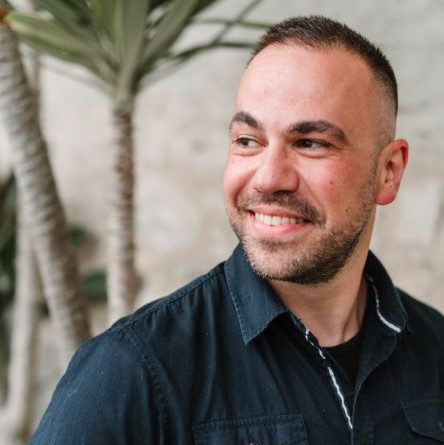

(Left to right, Dr Margaret A Goralski, Dr Constantine Manolchev, Dr Laura Steel)
Dr Margaret A Goralski is a professor of strategy in the School of Business, Quinnipiac University (QU), USA. She is QU’s Coordinator of UN PRME (United Nations Principles for Responsible Management Education) and serves on the QU Sustainability Implementation Committee. Goralski is an Albert Schweitzer Fellow, a board member of the Academy of International Business US Northeast, and the International Academy of Business Disciplines. She serves on the UN Higher Education Sustainability Initiative (HESI) AI, Research & Development implementation team, is the UN PRME Global Working Group Liaison, and a member of the UN PRME North America Steering Committee. She has published numerous book chapters and academic journal articles on a vast array of topics.
Dr Constantine (Costa) Manolchev is a Senior Lecturer at Sustainable Futures, University of Exeter Business School. He is the School Sustainability Champion and a Faculty Climate Advocate. Costa is a South Wales and South West Local Network Co-Lead for PRME (Principles for Responsible Management Education) and sits on the PRME UK&I Steering Group. He is an educator and researcher interested in compassionate AI pedagogies in the context of ethical and responsible management education.
Dr Laura Steele is a Reader of Business Ethics and Sustainability Education at Queen’s Business School, Queen's University Belfast. Her teaching and research focus on the intersection of ethics, responsibility, sustainability, and technology, with particular emphasis on artificial intelligence. She also serves as Director of Ethics, Responsibility and Sustainability (ERS) within the School. Elected in 2022 to the Principles for Responsible Management Education (PRME) UK & Ireland Chapter Steering Committee, she currently holds the role of Vice-Chair. In 2025, she co-edited AI and Work: Transforming Work, Organizations, and Society in an Age of Insecurity (London: Sage).

Podcast host
Rebecca Torr is a co-producer and host of the Emerald Podcast Series. She is the Publishing Development Manager for Sustainable Structures and Infrastructures and works with authors and organisations in engineering subjects such as civil engineering and the built environment to further the impact of research in the real world.
Further resources
- Read our mission: ‘Who’s really in charge – leaders or algorithms?’
- Blog: “The hidden power shift in decision-making” by Dr Margaret A Goralski.
In this episode:
- How AI is reshaping leadership expectations
- What accountability looks like when AI decisions go wrong
- The line between insight and surveillance
- Whether emotional intelligence still gives leaders an advantage
- How organisations can prepare leaders for hybrid human-AI teams
Transcript
Leadership in the age of AI
Laura Steele (LS): The leaders will need to decide not only what can and what should be done with artificial intelligence, but equally, if not more importantly, what should not be done by artificial intelligence in terms of the impact on consumers or society in general, or whether it's on employees or other stakeholders. So, I think that's going to be a really important aspect is that moral and ethical judgement.
Rebecca Torr (RT): Hi, I’m Rebecca Torr, and this is the Emerald Podcast Series – research-led conversations about ideas shaping real-world impact. Today, we’re exploring a question many leaders are facing: What does leadership look like in the age of AI? As AI speeds up decisions, reshapes responsibilities and raises new ethical questions, leaders are being asked to think differently about accountability, transparency and what it means to stay human-centred. To explore this, I’m joined by Dr Margaret A Goralski, Professor of Strategy at Quinnipiac University (QU), USA; Dr Costa Manolchev, Senior Lecturer in Sustainable Futures at the University of Exeter Business School, UK; and Dr Laura Steele, Reader in Business Ethics and Sustainability Education at Queen's University Belfast. Join us as we examine how leadership is changing – and what today’s decision-makers can take forward as AI becomes part of everyday organisational life.
RT: Hi everyone, and welcome to the Emerald podcast series. It's an absolute honour to have you with us today. So, thank you for your time, and I'm really excited to find out your thoughts and your insights on this very important topic of leadership in the age of AI. So, to kick us off, I'd like to talk about what probably is on everyone's mind, which is the role of the CEO. And obviously, Laura, your work sits at the intersection of ethics, responsibility, sustainability and technology. So, I'd love to hear your thoughts on this. If AI can make faster, more accurate decisions than humans, what's the future role of the CEO?
LS: Oh, that's a great question, Rebecca, and I would agree with you that it's one that is attracting a lot of attention at the minute. Suppose two things immediately come to mind for me, and one really is about that decision making aspect of a CEO's role, and the other thing would be about the role of a CEO in general. So just reflecting on the decision-making component, it is one of the key aspects of the role of a CEO, and you're absolutely correct in alluding to the fact that AI is going to have a significant impact on that, it will be able to make faster decisions. I would question whether it can make more accurate decisions. It really depends on how you view accuracy and the different components of accuracy. So I think you know the question really does highlight that speed accuracy are important, but if we think about what other key considerations form part of decision making, the ones that come to mind for me are the likes of strategic alignment, so the long term vision and the strategy of the organisation, and really the core organisational values that underpin it, and I think the CEO plays a really important part in shaping those values. You know, setting the tone at the top, as we say, I teach business ethics, and sometimes we'll also use the phrase the fish stinks from the head. So, whether that CEO is setting a positive tone or whether they're setting a negative tone within the organisation. So, one of the things I also think about is the human CEO has the capacity to really acknowledge and demonstrate awareness of the impact on stakeholders, whether that's your employees, your customers, your investors, partners and regulators as well. So, I think this can be somewhere where AI can identify those stakeholders, but I believe the CEO, and that is human, has the edge in terms of being able to identify and respond to their needs. Some other things that come to mind for me are really around execution and follow through. So even the very best decisions, that the fastest and most accurate decisions to use the wording of the question, they really have very little value without clear communication if they're not aligned with incentives within the organisation, and they're also subject to ongoing monitoring and adjustment, so that, again, I think, is somewhere that the human CEO can really excel. This was the final point to highlight in terms of decision making, and it's something I suspect that we're going to come back to during the podcast, is around accountability and ownership, so taking account for an accountability for outcomes and learning lessons, and both in terms of successes and failures, and it's about whether AI can do that, and to the same extent as the human CEO. You've used studies that I have come across recently, which I think help us to understand this quite well. So back in 2019 there was a study by Peter harms and. And Guo Hong Han, they published a paper arguing that of the 14 core functions of leadership, which were identified by Gary Yuckle, which include things like planning and organising, clarifying objectives, problem solving and so forth, they argue that only three, specifically networking, representing the organisation and envisaging change, are not in immediate danger of being automated. So, I think that's quite a provocative piece that they publish, and probably a driving force behind some of the discussions that we've been having recently around the role of the CEO. But interestingly, there's a study that came out in 2024 by a team at Cambridge Judge Business School, and they find that generative AI and so obviously, if you are aware of the dates there, you'll know that 2019 precedes and the launch of ChatGPT and the real rise in generative artificial intelligence. And the 2024 study takes account of that, and they find that generative AI had the potential to significantly outperform human CEOs and data driven tasks such as product design and in marketing. But interestingly, it faltered when it kind of unpredictable or so-called black swan events. So, we're getting into situations that are novel or ambiguous. This is where artificial intelligence tends to struggle, and we know that across the board. So essentially, what we have in terms of the evidence at the moment is that artificial intelligence is going to significantly reshape the role of the CEO. It's going to de-emphasise some skills, the likes of those data and harder skills, but it's probably going to really increase the importance of others softer skills and the capacity to deal with those novel and ambiguous events. So, in essence, change is coming. It is already on its way for CEOs. And as a result, it's really important for them to understand what leadership in the age of AI looks like.
RT: I mean, it's absolutely fascinating to sort of see what's actually going to be impacted. And you do think the role of relationships, you know, within sort of like the three skills that really stand out, you know, networking and representing the company, but yeah, the role of being a human, essentially, having that relationship and understanding people. And you know what difference that can make, you know, being a characteristic of leadership. I don't know if anyone's got any other thoughts,
MG: So I was just going to add to that, that I think the role of the CEO is definitely going to evolve, and CEOs in that long term vision will more define the culture and ensure ethical alignment with the organisation, and they may even have to become storytellers, inspiring stakeholders and articulating why the organisation exists beyond profit. So perhaps most importantly, trust and influence will remain human traits with CEOs focusing on building those relationships that you talked about. But also, their role will require emotional intelligence and diplomacy.
CM: I really like this, Margaret. I really like and Laura, I love the idea that those skills that are truly human and networking being one of them, remain into the realm of the humanity of the CEO. And I'm wondering whether it's this humanity which is, by definition, inherently imperfect, is what allows us to connect with each other, and what allows us to see ourselves represented in by our managers. And we talked about empathy. I wonder if it's this ability to create common meanings, shared meanings, that CEOs would be particularly important for, so that they can see the direction, whereas the AI is good at analysing, predicting what might come next. But as you mentioned, not so good in responding in a creative or curious way to those black swan events. So, it's kind of this human playfulness and ability to stay engaged with with each other in the present time, rather than automised and segmented people in front of the screen that will keep us in the same organisation, following a leader.
RT: It's very exciting to think you know what AI is going to do for the for the CEO and and for the organisation. However, there is always another side to it, bit of a darker side, potentially. So, I was wondering if we could sort of dig into the consequences of AI decisions, particularly for CEO, you know, sort of saying with that leadership responsibility, so should leaders be held accountable for the unintended consequences of AI systems they deploy? Or is there a get out? I mean, Laura, could I come to you again?
LS: Absolutely, well, I think that's a very topical question, because I was looking yesterday at the 2026, World Economic Forum Global Risk Report. An interesting number eight on the list in terms of global risks that was identified was adverse outcomes from AI technologies. And all of the data that we're seeing is that, as you would probably expect, that as AI is becoming more deeply embedded within business and society. We're seeing increasing numbers of adverse events, and what we see in response to that is calls for accountability. And so accountability is a really a major point of discussion within sort of the AI ecosystem at the minute, because these systems can make, or certainly shape very high impact decisions, and it's not always clear who is actually responsible, because there are so many people involved and so many organisations involved in how AI is being designed, deployed and and how it’s outcomes affect different people, and so as a result, being able to assign accountability there can be, can be really challenging, and I suppose just to clarify that when we’re talking about accountability, often, we can view it in a simple sense, as being answerability, answerability of various kinds. You know, who must answer for what and to whom. And it is hard to achieve, as I said, within the context of AI in one side, because of all the different factors involved, but also because of the so called black box problem that a lot of algorithms, and in particular, some of the most powerful and accurate algorithms are opaque in nature. They're those black boxes, so it can be difficult to understand how a particular decision has been reached. And the other side of the coin for accountability is transparency, and so the principle that systems and processes should be accessible to those who you're there, affecting whether that's in terms of being understandable, or those people having meaningful input into their design. There's a couple of interesting cases that I would like to highlight in terms of the accountability question within artificial intelligence. So, there's one that people might have heard of. It's a very high profile one at the moment involving ChatGPT. So, the parents of a Californian teenager called Adam Rein have filed a lawsuit against open AI and its CEO, its leader, Sam Altman, alleging that their son tragically took his own life in April of 2025 as a result of interactions he was having with ChatGPT. So his parents have stated that he was having very intensive conversations with ChatGPT over a period of several months, he discussed a method of suicide, and in the transcripts of his conversation with ChatGPT, it seems that it provided advice on whether that method would work, and even offered to help him write a suicide note to his parents. So really disturbing what happened. So, his parents are there claiming that ChatGPT launched too soon and that there weren't sufficient guard reels built into the system. And an important thing to highlight there is LLMs like this. Systems like chat GPT, they're designed to be agreeable. You know that the developers of them want you to use them. They want you to spend as much time as possible on their platform. And so, in order to do that, they make them highly agreeable. I think if you had ChatGPT was being rude or being obstructive to you, you'd go and find something else. So, as a result, they want it to give you answers that you will you appreciate and that you will feel that you benefit from. And what happened then, in Adam's case, was that it really endorsed or validated some of the harmful and destructive thoughts that he was having at that time. Interestingly, in the wake of his parents launching that suit, there's been several more lawsuits filed against ChatGPT in California, including one where they allege that it was a suicide coach, as you probably expect, open AI and Sam Altman, they're really vigorously defending their actions, and they've said that in cases like Adam Rein’s, they're due to misuse of the technology. So, from the accountability perspective, they're pushing accountability back to the user, and and trying to make them take responsibility for it, rather than them taking accountability for it. What they have said is that they are developing tools that are going to be able to more accurately detect and respond to users who are experiencing mental and emotional distress. So, but is still unfolding. We don't know what the results of that case are going to be. But even more recently, just in January of 2026 if you're in the UK, I think people might have heard of this case involving the Chief Constable of West Midlands Police, Craig Guildford, so he was subject to really severe criticism whenever an investigation revealed that West Midlands Police Force had made a series of errors and how they gathered and handled intelligence related to a decision to ban McCabe Tel Aviv football fans from attending a match in 2025 so specifically, West Midlands Police cited a match between Maccabee Tel Aviv and West Ham football club as part of their evidence to support the ban. Problem was the football match never actually took place. It was completely fabricated. So, whenever they looked into it, they have claimed that the error rose from a hallucination by Microsoft co-pilot. So, the person compiling, or the people compiling the report, have been using Microsoft co-pilot, and during that process of research, it seems that it scraped some information from the web about this fictitious match. It was included as part of the report, and then it came to light that it was, in fact, a hallucination. Interestingly, from a leadership perspective the Chief Constable Craig Guilford initially refused to stand down. He said that he was going to keep his role, and instead, he would work to rebuild trust with stakeholders. But eventually, the Home Secretary in the UK stated that they'd lost confidence in him as a result of this AI hallucination. His position became untenable, and he had to step down. So, they're two interesting places, but they're really only the tip of the iceberg in terms of what is coming for leaders, for chief executives across the public, the private and the third sector, and probably we're going to see an avalanche of unintended consequences. And many leaders grappling with what to do in situations like this, do they try to push accountability onto the user, onto the developers of the technology? Do they try and hold their ground and say, I will rebuild trust you I understand that I have let you down. I think it's going to be an interesting time for CEOs who are navigating these novel circumstances.
RT: Absolutely yes. Thank you. Thank you for alerting us, you know, to what's more to come, really. And does anyone have any comments on that?
MG: So, I looked at this from a different perspective, and it made me think about accountability for unintended organisational consequences, and who is held accountable now for those. so that would be senior leadership, the CEO directors, the board, the board members. So, since organisations must accept liability for adverse, unforeseen results stemming from their actions or development, it would seem reasonable that leaders will be accountable for AI systems that they deploy. And as Laura mentioned, AI accountability is difficult too because it's the systems are complex and they have opaque, opaque data influence. They have distributed creation and the lack of traditional human intent, so it would be very difficult to blame AI, and then that leaves leaders accountable again, the same as any organisational flaws that occur.
CM: I really like this Margaret now I was trying to play this scenario, a hallucination, in an alternative universe where there's no AI, where perhaps it's human error in data collection or in analysis that leads to an erroneous report presents by to the leader. In that situation, perhaps the leader would still be held accountable, but there'll be some organisational learning that follows, and there'll be some almost stratified accountability, where those subordinates down the hierarchy could learn, and there could be measures put in place. And as you say with AI, the question remains of who learns? How has the organisation benefited from the system being trained from the error? There's no human benefit, in that sense, no learning, no shared learning that can be taken forward to repair the trust, as you said, Laura as well. And, and it's almost this outsourcing responsibility without knowing the levels of risk and without the guardrails, as you said, also, Laura is quite concerning.
RT: Yeah, absolutely. It's quite interesting. You're saying, you know, who learns, and if it was a different error, if it didn't come from AI, and that sort of brings up, like, the elements of trust, you know, sort of, you know, we trust people. And you can understand there is human error, but you can always sort of trace it back to where that problem happened. With something like this, we are trusting I mean, I expect people are checking it, you think so, but we are just trusting it. We are just trusting it. And to what degrees do we trust it? Are we missing out some checks? That is that where the accountability is, because are we missing out some of these checks that we would ordinarily do because it's humans doing it? Are we not doing those sorts of checks because it's AI? I don't know. Anyway, let's move on to another question, which is about sort of looking at it from, you know, we were talking a bit about this earlier, about the qualities of a CEO. As AI is going to continue taking on different tasks, and it's going to grow as you said. What qualities are we going to hold on to as leaders? You know, what are those leadership traits that are truly irreplaceable? You've mentioned some of them, but as we put AI more in the forefront, you know, every organisation's doing that. What's really going to stand out in those leadership positions?
LS: Well, I think it's, I think there's a number and there are things that have already been touched upon. So probably the first on my list would be around moral and ethical judgement. I think that's going to be really foundational, as both Margaret and Costa highlighted there, that you know, leaders will need to decide not only what what can and what should be done with artificial intelligence, but equally, if not more importantly, what should not be done by artificial intelligence, and especially in domains where there's values in conflict or where there's uncertain consequences of deploying artificial intelligence. Whether that is in terms of the impact on consumers or society in general, or whether it's on an employees or other stakeholders. So, I think that's going to be a really important aspect, is that moral and ethical judgement. Similarly, and again, we've touched upon it around accountability and ownership. And so whenever outcomes really start to impact people's livelihoods, their human rights, their physical safety, your organisations are going to need leaders who are willing and able to take responsibility, to explain the decisions that they've made, and to be open to scrutiny, and, one would hope, open to critique and to feedback in regard to it. I suppose the final one that I will give, because I'm sure Margaret and Costa have thoughts on this as well, are really about substance making under ambiguity. I think that's going to be another really critical trait. So it goes back to the point that I'd made before about, you know, artificial intelligence really excelling around pattern recognition within quite defined parameters. But leaders, they need to be able to interpret, you know, incomplete, contested or novel situations, and also to integrate, you know, social, cultural and strategic dimensions that sit outside of the data and be able to use that to make those high quality decisions that have really ethics at their core.
MG: I'll jump in here because I think this is a really critical question for shaping leadership development in the age of AI, so definitely visionary thinking, because AI cannot create a compelling vision for the future, and then ethical judgement, because leaders must make decisions that balance profit, fairness and societal impact. Emotional intelligence, that includes empathy and trust building and cultural sensitivity that remain uniquely human, and then also emotional intelligence is needed to inspire teams and manage change and resolve conflicts and adaptability and learning agility, so leaders must embrace change and learn continuously and be able to pivot their strategies at a moment's notice, and then they must remain curious and open to innovation. and perhaps Lastly, relationship building, and we talked about this in the opening, stakeholder trust depends on human connections and credibility. Leaders act as bridge builders between people and the technology that's being implemented. So human centric traits like vision, ethics, empathy, adaptability and creativity will define irreplaceable leadership value.
CM: I absolutely love this. I love this because, again, I was thinking about what it is like to be part of an organisation, a modern organisation. Appreciate we've got the digital economy. If we go back to an early and 80s definition of organisations and institutions as complex systems, and some of the work of Nicholas Lumen on complexity theory discusses organisations, these complex systems that are surrounded by meanings. And what do we do with meanings? We communicate them. So I feel that the beautiful, ethical human profile that both both Laura and Margaret had built, I feel that I can only add this level of embodied presence and compassion in there, because I feel that going back to this idea of communication, this I think it's the Moravian model, where the argument is that we communicate in so many ways, what we say is a small part of being able to resonate and connect with somebody else. So, leaders need to be present. They need to be able to resonate. And I suppose it's their behaviour, and it's their ability to stay with complexity, to stay with the trouble, sometimes of a workplace, of a culture, without necessarily coming up with a picture perfect solution, but trying to maybe give the batten to others to come up with this visionary solution that you mentioned, Margaret, that AI can produce and facilitate and orchestrate the voices of others to come up to a shared solution simply by being there and and being human, in its glorious imperfection. That's a hope, what would be retained by future leaders.
RT: That's so interesting, because I think sometimes it's not the outcome, but the exercise that people go through with their leaders to come up with, you know, whether it's a brand identity or strategic direction or something, that's what it seems like, sometimes just the exercise of bringing those people together and giving people an opportunity to voice whatever they want to say, that actually then moves the organisation ahead, not necessarily, like you say, the picture perfect sort of solution. But, yeah, it's really interesting, because you're now going into, obviously, this is your expertise Costa into the human side of leadership. And you've all, you've all mentioned that, and you know it's about what's the difference between the machine and the human? You know, and these attributes are what you're highlighting here. So, given your work Costa on compassionate AI education and your perspective here, do you think it's ethical for leaders to use AI to monitor employees, like with their productivity, you know, and what's the line? What's the line between insight and surveillance? I mean, it is something that we're all fearing and worrying about. So put you on the spot there.
CM: I love the question, and it has to be such a careful answer not to go into a territory that'd be very difficult to defend. So, I would try and start by disaggregating some of the concepts, just so I can be completely transparent in the spirit of the preceding conversation, in my perceptions and my own positionality to the issue. So, the line between insights, between surveillance and then AI and productivity. So, my starting point into this debate is that AI can facilitate and it can bring about patterns, traits and trends in organisations and in certain behaviours and organisations that are pre-existent. It does not necessarily create them for all its disruptive capacity for ChatGPT being the most downloaded app since becoming publicly available in 2022 my argument would be that AI is simply another stage in the evolution of the ability to process data. Manuel Castells has this thesis of the network society, and he argues that we're the current stage of human evolution where for the first time, we don't produce artefacts through knowledge. In the past, maybe you'd have a master craftsman who'd produce a beautiful figurine or beautiful statue or beautiful painting. But for the first time in human evolution, we put in knowledge, and we get more knowledge. We create this layering of knowledge, and because of this, we ourselves are wrapped in knowledge, in metrics, in biometrics and in data. We have smart watches. We track our calories, perhaps we measure the litres of water we've drunk during the day. We produce data all the time. Some of this data we share, some of this data makes us, allows us to create playlists and to have really good consumer recommendations when we go online after a very long week of marking. I appreciate I'm probably projecting here a little bit, and some of our data is collected without our explicit knowledge. So, London, here in the UK, is a city that has one of the highest camera to person ratios in the world. It's over-surveillance so insight and surveillance is a difficult balance to and consent to each is a difficult balance, and sometimes it's provided implicitly. And that takes us to the question of whether it's ethical to use this and to use it for a particular purpose. And this is a fascinating debate, because both Laura and Margaret have touched on the point that actually we need to be clear about the ethical frameworks, the kind of perspective that we adopt in order to ascertain. So, if we looked at a utilitarian perspective, we would say that, well, what's good, what's ethical is that which brings the greater good for everybody. And on one hand, that could be great because that could lead to beneficial outcomes. On the other hand, that can be taken to extreme totalitarian category, and we can be talking about the gulags of the Soviet Union. So, what stands between, for me is the human. It's the leader, it's the manager, and it’s the purpose for which data is collected. So, in 2022 JP Morgan's WADU unit, and the acronym is workplace activity data utility. It's a unit which is able to track employee behaviour online, so anything from messages on teams to cursor movements to time and to keystrokes. That was leaked by the Business Insider who suggested that this is used for dark surveillance purposes. But at the same time, JP Morgan argued that actually this is done so they can monitor the well-being of employees where they're actually taking the breaks needed, and whether, simply, employees are aware of the negative in the impact of screen exposure. And that takes for me, it takes me back to those key traits that Laura and Margaret have discussed. The ethical side is determined by the intentions, the transparency, of the purpose. Are employees aware? Have they had the opportunity to give consent to this information being used? Are their voices represented, perhaps through collective representation and trade unions? Is their welfare considered as part of this process? So, is this simply, is data simply utilised to streamline efficiency and productivity, or is the employee welfare taken into account? And I think the AI as, as you saw with Laura’s harrowing, example of the AI assisting, essentially suicide, the AI cannot be held accountable and cannot exercise judgement, moral or otherwise. It has to be the human, and it has to be the collective responsibility of the leadership team as well as the employees. And for that, we need to have ethical organisations.
RT: Fantastic. Thank you. That was very diplomatic. I like that. I even sort of say yes or no to that question. Does anyone else have any thoughts?
MG: So I think you know, just to add on to what Costa said, you know, what we've seen in the business world is not just tracking keystrokes and screen time or physical movements without consent, but then docking people's pay for not having spent their 40 hours working. So even if somebody is reading, somebody is looking into a contractual agreement, they're not doing keystrokes, they're not having screen time. And so, their pay is docked, and they don't know until they get their pay check, and they don't even know that this surveillance is is happening. So those are the things that build distrust of AI, of the of the whole human team as well, because somebody has given the okay for for this to be implemented. And that's where I think you find really angry employees, and then the whole system breaks down.
LS: Yes, this was one thing that I just wanted to add. So, in some writing that I did previously, we looked at the idea of that, you think Jeremy Bentham's panopticon, and this idea of the all seeing the all-seeing eye, which comes from sort of a design of a prison. And I think one thing that sometimes gets left out of this discussion is that we adopt our behaviour if we're aware that we're being surveilled. Obviously, Costa highlighted that sometimes this is overt and sometimes it is covert, but where it is happening overtly, that we do adopt our behaviour when we know that we are being surveilled. And again, to go back to go back to Costa's point, you from a utilitarian perspective, if that produces better behaviour and people are more productive and their relationship to their co-workers are more positive than perhaps there's an argument for that, but if it stifles the natural criticism of the organisation, or perhaps push back against inappropriate behaviours or unethical behaviours. I think that is where it can be worrying where people are are managing and moderating their behaviour in a way that is potentially causing them harm, or causing, you know, harm to or others within the organisation, or preventing important issues from being addressed. That is where I think another kind of ethical concern would arise for me.
RT: Thank you. I mean, it's such a fascinating discussion. And you think about, you know, there's that whole thing of, what is work? Because how many of us think about work? You know, in the middle of the night, you might wake up write stuff down, you know, you're doing your food shop and, you know, driving your car, and you're thinking about work. You're on LinkedIn, not on your your work computer, but you're on LinkedIn at, you know, your mobile is that what's work and what isn't? See, that's another question. But, you know, I think surveillance is very worrying for any employee. But you know, if it was to make sure someone's, you know, not working over their hours, if it's if it's about that, you know, and there's a worry for people's well-being, you can sort of see where it could be helpful.
TS: If you're interested in conversations like this, the Emerald podcast series brings together voices from across disciplines to explore ideas shaping our shared future, from the future of work and education to global sustainability and fairness in society. Find all episodes at Emerald group publishing.com, forward slash emerald hyphen podcast, hyphen series.
RT: We sort of touched on this next question and sort of sticking with that, you know, ethical tension, so to speak. I mean, AI we know can simulate empathy. Might not feel it, but it but it can actually simulate it, and that's the danger, in a way, why, you know, you've got some of these, these court cases. So, if AI can simulate empathy as it can, you know, where does, where does that leave a leader? You know, does it, will emotional intelligence still give them a competitive advantage? What do you think, Costa,
CM: I absolutely love the question, and I love the fact that it links with the need for emotional intelligence, which is something that Margaret spoke to as a topic earlier when we talked about leadership, and we have discussed it also with the examples that Laura gave when we talked about leaders being accountable or not for AI hallucinations. And I would like to perhaps throw a curve ball, just because I feel that it's a good time for a curve ball in the conversation. I would like to, just to start with a couple of couple of stories. So, the first story, imagine you are coming home after a long day at work, and my kind of stories start from a long day from work, and I apologise again. I think this is perhaps some projections. You're carrying groceries in a bag, in a sustainable bag, so, so no single use plastic, but it's a it's a textile bag, and all of a sudden, the handle snaps, and all the groceries just spill on the ground. Now passers-by walk by, and they look on this spectacle that has unfolded before their eyes. Now those who kind of look and say, Ah, oh dear. That's sympathy as a human feeling. That's a form of connection. It's pity disguised as a more generous emotion. But it doesn't really help us. It doesn't really help me to know that somebody feels sorry for me. Empathy is good. Empathy is a is a better emotion, because it kind of probably allows the passerby to think, oh, you know, it's happened to me, really, really sucks, and makes me feel good, probably for a moment or two, but my groceries, shopping, is still on the floor, so the AI could simulate empathy. But I believe leadership, moving towards compassion, and compassion is a bit like empathy, but it has intent, and it and it has purpose. The compassionate response when passed by will be to say, where’s your car, or I've got a bag. I can help you with this. And it kind of takes me back to so if the question is, is there a place for leadership, and can leaders still exhibit emotional intelligence when AI can can simulate empathy, I wonder if we need more than the simulation. Now, very early on in her definition of AI, Laura spoke of how AI is agreeable. And I think the terminology was that actually the AI is agreeable and it has agreeableness rather than accountability, because that allows the user to keep going back. But I wonder if we can truly develop compassion when we speak in an echo chamber. I wonder if compassion requires sometimes to look beyond our own ego and our own beliefs and understand that maybe the difficulty in communication or the raised tone of voice or even the unreasonableness in the other person comes not from malice and not from ideological disagreement or massive rift based on beliefs, but from suffering. And that suffering can come in from anything that can happen in the thorny world of the modern workplace, or it could come in from personal circumstances. And it feels to me that unless we have experienced this and been through this, or perhaps have been on the receiving end, we can’t be truly compassionate, because compassion is formed through adversity and in indifference. And I feel that, of course, leadership training could be augmented through AI where empathy can be developed, but the extra humane step, the emotional intelligence, the ability to exercise ethical judgement, the ability to show compassion, the ability to show critical thinking and curiosity and creativity, all the traits that Margaret and Laura discussed as critical for leaders that can only be formed relationally in and situationally. And I feel that the AI is still not able to live our lives for us, so there is still responsibility for us to develop that that part of our skill set.
RT: Fantastic. Thank you. I mean, you've given so much to for us to think about, especially that you know is compassion, the one thing that makes us stand out differently as leaders. I don't know if anyone else has got any thoughts on it, so
MG: I think you know, humans can adjust empathy in real time based on evolving situations, emotions and relationships like Costa referred to and trust is built on that perceived sincerity of the person who's involved. I think the competitive advantage will come from leaders who combine emotional intelligence with AI literacy, using the technology to inform decisions, but at the same time maintaining genuine human connections. And so that's a very difficult thing for any leader to balance, but that's where the competitive advantage will come into it.
LS: I'll be honest, I was so engrossed with what Costa and Margaret were saying. I completely agree. What I loved about both of those was, you know, I think Costa’s was absolutely right to throw that curveball, and I think I'm gonna be borrowing Margaret's phase, that phrase of being able to kind of pivot in real time, which I think is something that that is, you know, a uniquely human trait when it comes to empathy and compassion and the ability to see and respond to the whole person,
MG: and like Costa said, the the knowledge of having dropped your own bag in the. In in the past, or, you know, you have this build-up of what's important and and how to manage things that AI just doesn't have. And you and you can train it, but it's a training thing, and training is not the same as living.
LS: And to go back to the point actually, or the example of of Adam Rein, the ChatGPT, was demonstrating empathy to him. It was validating the sort of the dark thoughts and the and the self-harm impulses that he was demonstrating. But it was a really, it was a really artificial and dark form of empathy that that ultimately may have contributed to him taking his own life. So, it might have been artificial empathy, but it's, you know, it certainly wasn't true compassion.
MG: And with no knowledge of the situation.
RT: I suppose another thing then you know that it's coming out like I'm hearing, is, you know, experience. I mean, you know the experience of living, the experience of being a leader, that you know, then there may be, and I'm sure there will be so many leaders now that they may not have the experience. So instead of being thinking from a human point of view, they may be going onto whatever the AI system is, and ask an AI, what should I do in this situation? Not a bad thing. It's another point of view. But is that where it ends? You know, is it just I don't know what to do? Okay? AI says that, you know, perhaps I should speak to that person on their own. And then you, then you verbatim, almost, you know, rehearse that script that AI gives you. I mean, the outcome of that, you know, we've got to get, you know, that critical thinking. Where does that go? And I'm sure you're going to talk more about this, but I think that is what, you know, that's the worry, because, and it's not just obviously, for leaders, but, you know, anyone that's got a responsibility for anything, you can turn it over to AI, but it's back to the experience. You know, you have that innate, you know, if you've experienced it, you know what to do straight away, like you said, Costa, you know, a solution, like, Can I help you? You know, can I get a car and help you pick up your shopping or whatever? You know, it's it, you're motivated, and that's an instinct, almost, because you've been there.
CM: I really like it, just as a thought, Rebecca and I love the idea of that that, again, Margaret and Laura have touched on this, the need, the need to to be present, to respond as a human being to other human beings, not simply to what they're saying, but maybe with a more holistic awareness of the situation. And my, there's a, there's a very short, short story. It's a thought experiment that I love, and it can be applied to any situation. But in this state, it's a, it's a thought experiment, experiment by a philosopher called Frank Jackson, and he formulated it in the early 80s. And it's called Mary in the black and white room. And it's about this scientist. It's a colour scientist who studies colour, and called Mary, who knows everything about the colours in terms of the different nuances, in terms of the way they impact the retina, in terms of the way our brain processes colour. But she's never seen colour because she lives in a monochrome room, and the argument and the question is, would she learn anything when she sees red for the first time? Having researched and studied all aspects of the colour red in an abstract and theoretical sense, and I think we could prepare ourselves to an enviable degree of expert level of knowledge working with with AI, but until we have the chance to experience, make mistakes, develop our own understanding, so then we can share it with others, become storytellers, as Margaret said, I think that human experience, until that is present, we are not leaders. We could be trainee leaders. We could be artificial leaders, but we're not leaders in the truest human sense, leaders who are able to resonate and connect with others.
RT: Thank you. We will move on a little bit in the conversation. And I was wondering if I could come to Margaret next. And you're highlighting, you know through this, you know how deeply human connection still matters. And from a global and a strategic perspective, Margaret, which is obviously your expertise, is it responsible in leadership to, you know, automate jobs in developing economies, for example, where employment is already fragile, should we be thinking about these issues?
MG: So, this is an incredibly important ethical and strategic question, because it touches on responsible leadership, global equity and the unintended consequences of technological progress. Some key ethical considerations include impact on livelihoods, efficiency versus social responsibility and the global power dynamics. So quite a while ago, I spoke at a conference in China, and I asked this question. And so, if we look at cultures like China, India. Mexico that have a large population, don't have enough jobs for their own employees. Where does AI factor into that? But on the other hand, we know that global power dynamics are going to take precedence. No country is going to want to fall behind in this global power of AI advancement. So again, we're back to that very delicate balance. And so, is it more important for countries to be powerful and be at the forefront of AI Innovation and Implementation, or is it more important for them to give positions to to the people in their country? And this is where governments come into the to the equation. Governments are supposed to be preparing these social safety nets. We keep hearing about, you know, repurposing people into new positions. You know, retraining them, upgrading them in their positions. But are we seeing that happening? Not really, and not all people will fit in that so are governments building these safety nets for their people or not? And this is something that we're looking at because obviously, if you're having AI take over positions, even entry level positions that were, in the past, jobs that were done by people then, then, yes, it affects people's livelihoods. When we go shopping, we can choose self-checkout, or we can go to a person. You know, when I go to a hotel, I can choose to have my room cleaned, or I can choose to be sustainable, which is the way it's put to me and not have my room cleaned, but these are all jobs that people are not fulfilling anymore, and so it's, it's not inherently unethical to automate, but doing so without mitigating harm in fragile economies is irresponsible, and leaders need to balance that innovation with inclusivity, ensuring technology serves as a tool for progress, but not a displacement of their own people. It's, it's difficult. It's, it's going to be a difficult road for any country to travel.
RT: Thank you. I mean, you're bringing up questions that I think every leader listening to this is going to be sort of reconsidering what their standpoint is, you know, and how many sides there are to, you know, stopping something, doing something, you know, any choices that we make and the impacts that it has beyond the container that it's put in, like you mentioned, sustainability,
MG: We're so attuned to like Amazon and Amazon deliveries and things being quick, using a microwave instead of an oven and waiting for something. And so, what do we do? We say, I'm just gonna go to the self-checkout because it's quicker, right? It's quicker, but you're also doing somebody out of a position that they've held in the past and is not being, you know, retrained to do something, something other than that. And and how many people at that self-checkout? How many people are monitoring the self-checkout? One. And so, these are all jobs that are, you know, being put aside, not to mention, you know, the whole thing of autonomous vehicles, you know, and all the jobs that that will replace.
RT: Yeah. I mean, it's very worrying because, I mean, obviously people say, you know, there will be this new wave of jobs that will be created from, you know, and I'm sure there will be at some point, but there's definitely going to be a whole generation of people that are unable to retrain for whatever reason, or unable to do whatever job it is, and what happens to them, and what burden, in a way, if you want to call it burden, it has on society and on the flip because you know, they still have to be supported in some way. And you hopefully in those economies which do support their people, but obviously there's lots and lots of economies that don't support their people, so or unable to so yeah, it's it's very worrying.
CM: I'm reminded Rebecca of the Luddites. The Luddites in the 19th century, textile workers who were smashing machinery that was brought in through industrial revolution. And the misconception is that the Luddites were technophobes, that they were actually trying to stem the introduction and penetration of technology, but no, they were protesting against the pay and terms and conditions of work. And I completely agree with Margaret on this point, that. That if there were safety nets, if workers who are being replaced by technology were given the opportunity to retrain and to find better employment, better paid employment, we're reminded of the SDG eight sustainable development goal on the access to decent work, then we would have a true symbiotic relationship between innovation, technological innovation and perhaps sustainable decent work growth. But if we're removing jobs, and we reminded that in the UK, for example, we have an hourglass labour market with lots of entry level jobs and lots of jobs that are high paid, but not very many progression ladders in between, and if we're removing more jobs in the middle, then we're creating inequality.
LS: Thank you, Costa, that was actually the point that I was I was going to raise something that deeply concerns me is around the stepping stone jobs. And we are starting to see some data that, in particular, artificial intelligence is impacting those jobs. So, stepping stone jobs, so and for the like the for example, likes of an accounting technician or a paralegal, and for many people, especially if they're not from privileged backgrounds, they can be a way into your profession and to a good career over time. But there are also some of the jobs that are more automatable at the moment, and so you can automate a lot of the role of an accounting technician or a paralegal, those jobs are starting to disappear, and as a result, there's potentially going to be fewer opportunities from people from from low income or underprivileged backgrounds who don't have necessarily the not only the financial capital, but the social and cultural capital, to allow them to to apply for an avail of those particular jobs. Certainly, I would agree with Costa, with Margaret, about sort of concerns about where those jobs are disappearing from, and whether it's sort of hollowing out the middle.
MG: And the more worrisome part of that is that if you don't have those entry level positions, and you don't have the mentorship to take people to the next level, then right now, humans are being, the human openings, job openings are for facilitating human and AI management and also for assuring quality of the of those agentic work systems. But if you're not building that, then how are humans going to know if it's quality or not quality? And so, without those entry level positions and those mentorships bringing you up to where you know what you're doing, where you have the knowledge to oversee the positions, well, then what do you have? So, it's, it's a sort of sticky wicket that people aren't necessarily looking at, well, where are these next steps going to be and where are they going to take us, and where are these humans who are overseeing the quality going to come from?
RT: Thank you. I mean, the questions that you're raising here are obviously going to have to be answered. Well, hopefully they'll be answered by, you know, whether it's policymakers, but you know, lots of them are going to be answered, you know, from a corporate sort of leadership point of view. And just to wrap up this, this conversation, I thought if we could just look ahead a little bit about the next generation of leaders and what that looks like in, you know, in terms of they will be leaders that will need to lead teams that include both humans and machines. And so how do we prepare those leaders? Because, you know, it's not innate. It's not something that we've, you know, we've had going for, you know, decades. This is very, very new in a lot of ways. Maybe not you know, you could replicate some things, but I just wondered what your thoughts were. How do we prepare that next generation of leaders?
MG: so, I can jump in. I think we have to think differently and stop emphasising some of the traditional skills like strategic thinking, decision making and operational oversight, which are things that AI is increasingly strong in, and we need to prepare the next generation of leaders to work collaboratively with artificial intelligence. We can we know what AI excels at, data driven insights, but leaders will need to interpret AI outputs. Question the assumptions and integrate them into broader strategic context. And leaders are going to need to understand how algorithms work, their biases and their limitations. They're going to have to need ethical oversight and ensure that AI aligns with organisational values and societal norms. And the next generation of leaders will need that human, those human centric skills like emotional intelligence, storytelling and cultural stewardship. Leaders will act as orchestrators of human-AI teams, leveraging technology for efficiency while preserving human creativity and empathy. And perhaps the most important thing is an emphasis on critical thinking about AI outputs, ethical frameworks and the relationship building that we've been talking about in a tech driven world. And when I teach human intelligence and artificial intelligence and collaborative partnerships with students, I emphasise that they are going to an into an AI world and and so they need to know how to form those collaborative partnerships. Not see AI as competition, but how can we solve some of the UNSDGs? How can we create social good in combination with AI, and I think that's what the next generation is going to have to embrace, and and, and sort of enjoy, if you can think of it as enjoyment.
RT: Thank you very, very much. That's fascinating and absolutely so much for us to think about maybe some final words from Costa and Laura?
LS: Well, to really endorse everything that Margaret has said. I've been in complete agreement, and I suppose for me, fundamentally being ethical, responsible and sustainable in terms of decision making. And I know Margaret said that part of the the strengths of AI is around, you know, its ability to, if not make decisions, to at least suggest and different options. But I think humans retaining especially control of really important decisions and decisions where there is a significant ethical component. When I'm teaching business ethics, I sometimes say to students that we can often trace back significant ethical failures within organisations to four different factors: greed, speed, laziness and haziness. So perhaps, when CEOs or leaders are making decisions around artificial intelligence to really reflect you know are they motivated by greed and the potential rewards? Are they making decisions at speed that could result in them not taking count of all of the potential consequences that could arise. Are they hazy, and in terms of, you know what they're doing, why they're doing it, and what the outcomes might be, and finally, are they being lazy? Are they taking shortcuts? Are they not putting in the work that needs to be done whenever it comes to integrating AI in an ethical, responsible and sustainable way?
CM: I wonder if I can add this. Margaret, you presented a list that is more comprehensive than than I could and Laura, you added the depth and the weight of responsibility, and I wanted to, if I can finish with with a quick paragraph. So, my son has been reading Fahrenheit 451, and just as a reminder, it's a book about a world where where divisive and dividing and different opinions don't exist. Everything which could stand to upset somebody or offend somebody is being burnt, which is and since the burning point of paper is 451 degrees Fahrenheit, hence the name of Ray Bradbury's book. And there's a paragraph by the fireman chief who is actually, point is, who leads a squad, the team who burn books so that nothing exists that can upset people. This is what he says. And this is a conversation with one of his subordinates who is beginning to get doubt. So, he says, the important thing for you to remember, Montag, is that with the happiness voice, the Dixie duo, you and I and the others, we stand against the small tide of those who want to make everyone unhappy with conflicting theory and thought. And I think future leaders should be prepared to make people unhappy by standing up for the right things, even if the AI consensus and best practice says so, and they should be confident enough in their in who they are as people, in their own values, to take the responsibilities that they have for the team, for for the environment, personally, so that and and closely enough so that they can speak for those don't have a voice and stand up for those who don't have the power to stand, even if it's quite a lonely and upsetting and ultimately conflict causing undertaking.
MG: That's what leadership is, right?
RT: Thank you very, very much for being with us today, and it's been an absolute honour and privilege to hear your insights and your fantastic research. So come back again. We want to hear more. Thank you.
RT: That’s all for today’s episode. You’ll find the full transcript, guest profiles and related research on our website. This episode was produced with the support of our studio partners at This Is Distorted. Thanks to my guests and to you for being part of the conversation. See you next time.