

Translating research for policy
A thought-provoking policy publication
Share this content


The inaugural winning project from our Interdisciplinary Research (IDR) Award in 2019 was a project called “Seeing Change: Gender, Ethnicity and Democracy in Morocco” from the University of Lincoln, UK. It set out to work with a hard-to-reach group (young Amazigh women in rural Morocco), using creative participatory visual methods to make their voices heard.
The IDR Awards aim is to reward an innovative research project that promotes action on the UN Sustainable Development Goals/global challenges. This project very much did just this. Aligned to the UN Sustainable Development Goal 5 (Gender Equality), the project planned to use sustainable methods to address gender inequality, enhance education, and combat discriminatory norms.
The completed project has now been turned into a thought-provoking policy publication, using collaborative photography to investigate the impact of climate change on the Amazigh women of Aoufous, Morocco.
The team involved have found an innovative way to translate knowledge so that a wider audience can understand it, using eye-catching imagery and short text, instead of scientific jargon. It’s also been translated into both French and Arabic.
ⵜⴰⵖⵓⵔⴰⵔⵜ, Gender, Ethnicity and Desertification in Aoufous, Morocco
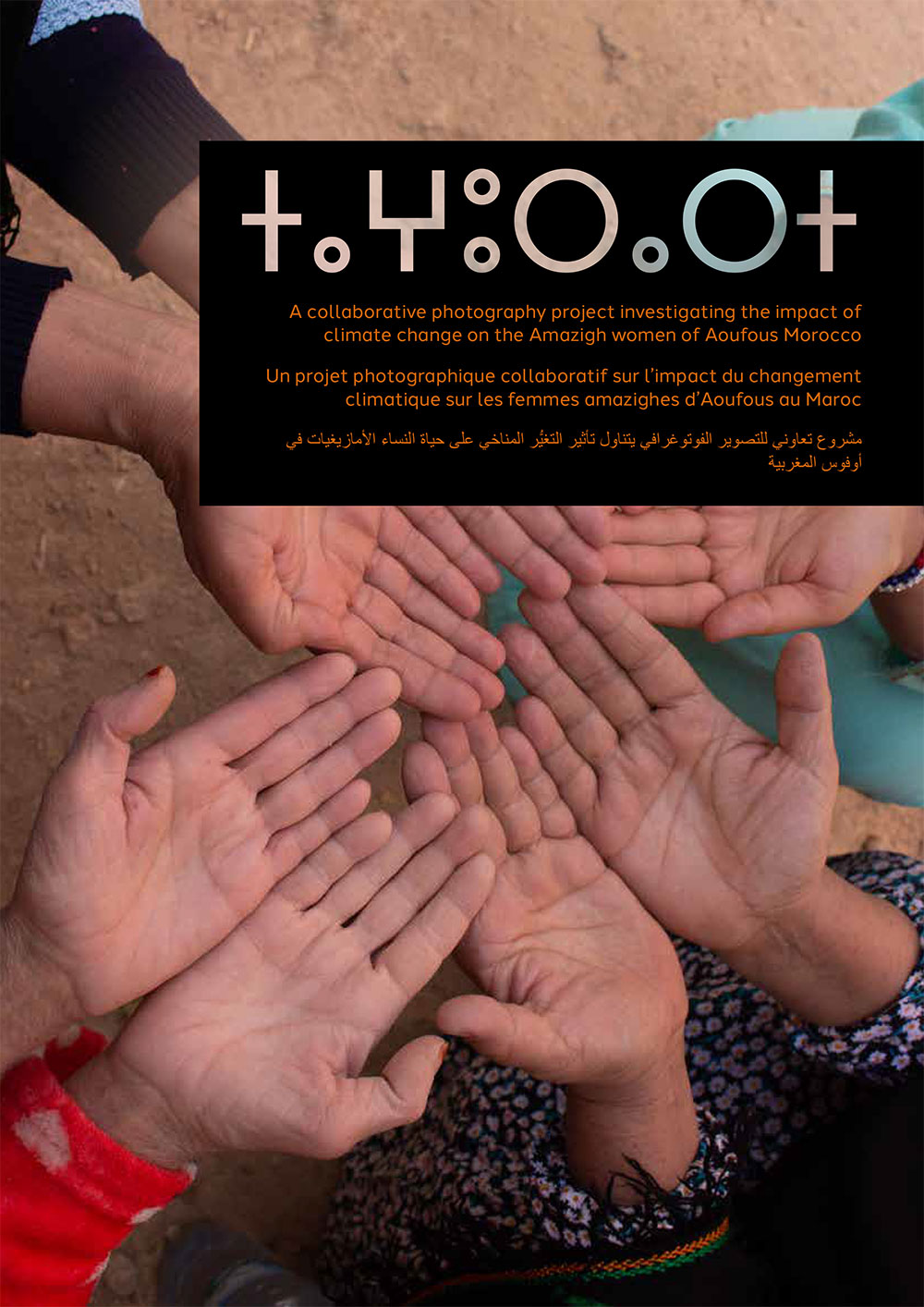
Publication date: November 2024
Publisher: Emerald Publishing Limited
DOI: 10.1108/EGP-11-2024-0001
Authors: Thomas Martin, Michelle Walsh, Kaya Davies Hayon, Fadma Aït Mous, Fatima Oujana, Fatima Bourezi, Kheira Alhiane, Zahra Najm, Aicha Oulkhalef, Nezha Oujana, Zahra Ouchtal. Mohamed Sammouni, Kheira Hmmatti, Khadija Bango, Khadija Hajhouj, Asma Elgdou, Khadija Azzawi
Overview
Morocco sits at the heart of the MENA (Middle East & Africa) region and is experiencing its driest decades in a millennium with more droughts and periods of intense heat than ever before (Jacques 2023: 1).
Through this publication, ⵜⴰⵖⵓⵔⴰⵔⵜ, Gender, Ethnicity and Desertification in Aoufous, Morocco, the authors foreground empowering images taken by the Amazigh women and girls of Aoufous to help tell the story of their experiences and to illustrate the far-reaching consequences of climate change on their daily lives.
The publication calls on officials to investigate the situation, and to support the women. Reviving the local co-operative workplace according to state standards will allow the women to work and benefit from the land they have lived in all this time. This is crucial to their well-being and sustaining their way of life.



Share this content