

Smart cities, old foundations: The future of urban infrastructure podcast
Share this content


As cities grow and evolve, their infrastructure faces increasing pressure. Ageing bridges, roads, and utilities struggle to meet modern demands, while smart technologies promise innovative solutions. But how can cities successfully integrate cutting-edge technology with infrastructure designed decades ago?
In this episode of the Emerald Podcast Series, Rebecca Torr chats to Dr Rick Robinson, Director of Smart Places and Global Principal of Connected, Secure & Smart Cities & Places at Jacobs, and Katie Adnams, Associate Director at Smart Places & Digital Infrastructure, Jacobs. Together, they explore how smart city initiatives can enhance sustainability, resilience, and economic growth, even in cities with ageing infrastructure.
Drawing from international projects and hands-on experience, our guests examine the challenges of implementing smart city solutions, the transformative power of digital connectivity in urban resilience, and the future of cities as they embrace new technologies while managing ageing infrastructure.
Speaker profile(s)
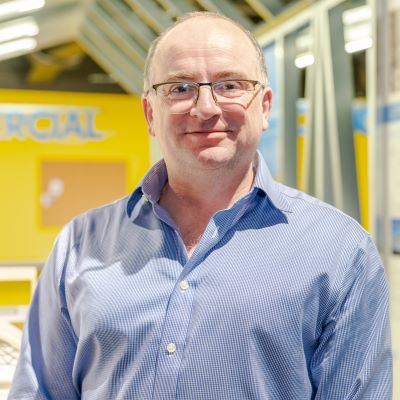
Dr Rick Robinson is Director and Global Principal for Smart, Connected and Secure Cities and Places for Jacobs. He advises clients on the role of technology in improving places, infrastructure, and services in the interest of communities, business, and the environment. He has worked on some of the largest and most ambitious smart city and buildings programmes around the world, ranging from masterplanning projects in the Middle East and Asia, to the UK Houses of Parliament. Previously, he has led Smart Cities businesses for Arup and IBM, and was Director of Technology for Amey, where he was responsible for an innovation programme driving advances in digital technology into services and infrastructure used by about 1 in 4 people in the UK every day.

Katie Adnams is Associate Director in Smart Places & Digital Infrastructure at Jacobs, experienced in delivering projects that look at the intersection between technology, innovation and cities. She has led on large-scale smart city projects both in the UK and internationally, ranging from national innovation programmes to the masterplanning of new cities. Prior to Jacobs, Katie led the Urban Innovation team at Connected Places Catapult, the UK's innovation accelerator for cities and transport. With a background in urbanism and data science, Katie specialises in taking a user-centred design approach to ensure data and technology is leveraged to deliver greener, resilient and more inclusive environments.

Podcast Host
Rebecca Torr is the Publishing Development Manager for Sustainable Structures and Infrastructures and works with authors and organisations in engineering subjects such as civil engineering and materials science to further the impact of research in the real world. As part of her hosting role on the Emerald Podcast Series, Rebecca interviews experts who use research to create real impact.
In this episode:
- What is a smart city and how has the concept evolved over time?
- How do smart cities contribute to sustainability, resilience, and economic development?
- What lessons can be learned from international smart city projects?
- How does retrofitting existing infrastructure differ from masterplanning new smart cities?
- What future trends will impact smart cities, and how can cities prepare?
Transcript
Intergenerational harmony: Building bridges for across generations for productive collaboration
Rebecca Torr (RT): Hi, I’m Rebecca Torr and welcome to the Emerald Podcast Series. Today, we’re exploring a critical challenge for cities worldwide: ageing infrastructure and how smart cities can offer solutions that are not just innovative, but practical and sustainable. Joining me are two experts who work at the forefront of this space: Dr Rick Robinson, Director of Smart Places and Global Principal of Connected, Secure & Smart Cities & Places at Jacobs, and Katie Adnams, Associate Director at Smart Places & Digital Infrastructure at Jacobs. We’ll be looking at what truly makes a city "smart"—beyond the buzzwords—how technology is reshaping the way we manage transport, housing, and public services, and what real-world projects, like those in Glasgow, can teach us about balancing innovation with ageing infrastructure. Let’s get into it!
Rick Robinson (RR): I always start that discussion around outcomes, actually. I mean, often it's around technology, and that is important, because the reason we're interested in smart cities is that technology gives us new possibilities. But for me, it's the outcomes that are important. So I often think of a smart city as one in which we're looking to create better social, economic or environmental outcomes from the resources and often the finances available to us, oftentimes that includes making a profit on behalf of investors as well. So smart cities are really a challenge of squaring a circle between those things, but technology gives us the opportunity to do that in a better way than we could before, by making it easier to start a business or to acquire schools or operating infrastructure more efficiently, because we've got the technology and data to measure things take better informed decisions. So there's a lot wrapped up in all of that, you know, not least around how on earth do we figure out what's better from a social, economic, environmental point of view. We could talk about that for a whole series of podcasts. But for me, that's what a smart city is all about. And I know Katie, you've also been looking at sort of the history of where the concept evolved from in different ways, haven't you?
Katie Adnams (KA): Yeah, absolutely. And just to build on what Rick was saying, and maybe bring a different lens of this, we find that there are very many different interpretations of smart cities around the world. And I think it's interesting to look at how the concept evolved over time. And we can first start to see the word being used and the concept being used in the early 1990s and there was initially an emphasis on the technology aspect, you know, thinking a bit futuristically about our cities, and how great would it be if sensors and drones, you know, and technology generally, could make our lives more efficient and better. And then, you know, you can see some of the tech companies starting to invest in this. And then there was a further evolution, perhaps more, towards the concept of what the intelligent city is where you think about data and connected systems. So how could this technology then start to give you further insights on how cities are operating, and then, I think increasingly, from the 2010s onwards, and today we're seeing more citizen-centric smart cities. So there was perhaps a little bit of a pushback on this kind of tech utopia that was being envisaged that was maybe seen as a little bit top down, or tech first, rather than challenge first. And I think when you start to think about those three components, you start to think about together what makes a smart city. It's all of these components together. It's applied technology for a challenge. It's the connected systems allowing us to make data, data for better decisions. But also the system, where does the citizen sit in all of this and making sure we create human-centered spaces? And I think also, given given the current status where we're at, there's an economic perspective to it. There's the kind of consideration of entrepreneurialism, and what is the role of small startups in this space, starting to experiment with cities as well. So you get the sort of business focus of it as well. And I think those components overall should be considered together. When you think about the smart city, it's not one of them.
RT: Brilliant. Thank you so much. I mean, I think that's music to a lot of people's ears, that people are now more of the focus, you know, sort of, at least, they're considered as a, you know, you know, in the center of any, any sort of new development or changes to to an existing city. On the on the positive, with people as the center of smart cities, how do smart cities support sustainability, resilience and economic development?
KA: Yeah, sure. I think I'd first and foremost say digital is an enabler. So it's we think of it as very cross cutting. You're only going to it's only worth investing in if it supports those wider goals. You wouldn't invest in technology for the sake of it, and that was part of what was saying earlier about that initial pushback. So I think user centric design and the way we think about the use of these digital systems is absolutely key, and particularly when you're master planning and thinking about spaces, we need to be thinking about, how do people live in 20 to 50 years time? It's a much longer time horizon that we need to account for when we're thinking about the built environment and how that's going to iterate in future, particularly if you think about this time scales of infrastructure projects and so forth. And we know digital is already a key component of the way we live our lives today. We can think of a million different instances of where technology has changed the way we inhabit, use and maintain our spaces, whether it's, you know, ride hailing apps changing car ownership patterns and the way the night time economy works, whether it's e-commerce and delivery, you know, creating congestion in our cities and the navigation of spaces even now. You know, we are navigating based on apps. You know, whether you're thinking about Google or city mapper, and the places we're visiting are also mediated by algorithms and the way we rate places. So that's even now when we can think that's only set to accelerate in future, and you can either let that disruption happen to you or to a city, or you can plan for it and mitigate and allow the flexibility for that in future to ensure it meets those positive outcomes, which is what we try to do in our work, which is why we bring the kind of citizen at the focus of it and understand what the impact of those digital services are, rather than going from a technology first approach. So I'm really excited about how it can support those sustainability goals and also resilience associated with that, how you can start to connect infrastructure systems and play out scenarios and start to plan for that, whether that's digital twins for climate adaptation, predicting floods, all those kind of things as well.
RR: I think in answering any of these questions, we need to think about the diversity of cities in a single country like the United Kingdom, where we all live, versus globally, where we work. And we see incredible diversity from some of the global mega projects that everyone can find out about there that widely reported where there are enormous ambitions to use very advanced technology to create really differentiated user experiences, and where the focus is on things like extended reality technologies, artificial intelligence, to really create experiences that people have never had before and adapt themselves to individuals and their preferences, and also to fully take advantage of technology in the design and delivery of infrastructure and buildings that can be as efficient as possible. I know Katie recently led a project on this, taking some really leading edge ideas from the world of technology and academia and making them relatable for people pulling up buildings and planning infrastructure to create a city that really does take advantage of technology to be as sustainable as possible. Here in the UK, there are plans, obviously, for new towns, lots of news housing, but there's also lots of existing cities, and so we need to look at how technology can contribute to making them more resilient and sustainable. And there was a fascinating project carried out just a couple of 100 meters from where I'm sitting at the moment, on my local high street in Kings Heath in Birmingham, which is often cited, I don't know if it's true, as one of the busiest in Europe. So it's got a lot of buses that go down a single, you know, single carriageway, high street, with lots of pedestrian crossings, lots of shops, some on street parking. So there was a project to sense the arrival of busses and other large diesel powered vehicles, and to adjust the timing of the traffic lights and the pedestrian crossings to minimise the number of times those vehicles have to break or decelerate, which is both fuel inefficient, but also creates a lot of dust from brake pads. And so projects like that, maybe at smaller scale, but equally important and actually capable of making an enormous difference to people. And that, I think, is what keeps me really fascinated by this work and really excited by the potential of it, because it's easy to get carried about, carried away thinking about things that are most attention grabbing, and they are really attention grabbing, and they can give us an insight into the way the world is developing. And I think that really will show us how, in general, we'll start to use technology in different ways. But equally, there's lots of things that can affect places everywhere, including places that already exist and the communities in them. And we really value our work there as well.
RT: Thank you. I mean, I think it's really exciting, isn't it, to think that you can how you can use technology to improve quality of life. And actually those existing cities are not being left behind. You know, work is going into them to actually upgrade them and and make sure that they, you know, they have the same, or, you know, opportunities as the new cities, in terms of, and I don't know how difficult that is, and I suppose that brings me to my next question. You know, it sounds really exciting, and, you know, there's lots of opportunities, but there are lots of challenges, especially when you have an existing city. Obviously you've got different challenges when you're creating a new city or a new area for people to live in. And I just wonder, what are your challenges in your industry? What are the challenges when it comes to coordinating some smart cities. So you know what? What are your sort of, maybe some of your common challenges that you find?
RR: So there are lots of challenges we're making this work in practice. One of them is just that this is a new way of delivering projects and changing communities and the built environment. I mean, technology has been around a while now. I was first taught to program more than 40 years ago, but its role in society at large and in places is still quite new and evolving rapidly. And so understanding how to fit the strategy, the design, the delivery of technology into a built environment project is not really something as an industry that we know how to do particularly well, yet, as a whole, I like to think we've learned a lot about it on the projects we've been working on over the past few years, but we still really need to get that knowledge adopted within the industry, and so that there's often a need just to make a really good case for why it's important to do it. And so that's something that we we work a lot on. And then I think there's also the challenge of accepting the fact that it means doing things differently. So one of the things I'm really conscious of is living in an existing city that's got roads that were sort of laid down and updated in the 1950s and 1960s and the local authority has wrestled with them ever since, um, the way that our transport works currently is probably not consistent with us getting to net zero when we think we need to however many of those petrol and diesel engines we replace with electric motors. So we're probably just going to have to move less and use private vehicles less, and all of those implied behavior changes, which I know as a citizen and a car user are not easy to contemplate. I think engaging with communities and understanding how that will work and how it can nevertheless be a benefit to them is a really important part of the process. I think, as well, we need to look at the opportunity that flows from doing all of this. You know, there's work that goes back to Schumacher, the economist in the 70s, on on accessible technologies, and the fact that those best placed to pick up new technologies and benefit from them are often those who already have the means to access them, to acquire the skills. So we also need to look at, how do we make the benefits from doing this more generally accessible? And there's some great initiatives going around in order to do that. So we did some work in South Birmingham a little while ago on the role technology plays in enabling third sector organisations to better enable communities with access, with skills, etc. And I know there's there's one institution locally who's done some great work with no code platforms, and the way that they can enable people with very few hard technical skills to nevertheless start an online business. So there's lots of different access to this, but we need to look really carefully at the challenges to do with understanding, skills, accessibility, business cases, the way projects are deployed in the built environment and all of that to really make it work.
RT: Amazing. Thank you. I just wonder if you could share maybe some examples of, you know, from your international experience in planning smart cities as part of sort of master plans and sort of what that looks like. And maybe you've already touched on some of it, but really interesting for our viewers just understand, sort of it in specific terms, you know, sort of what that looks like?
KA: Yeah, absolutely. I can start with a couple of broad oversights on that. And you know, we're working on some of the most ambitious projects and development in the world at the moment, and that's really exciting, and we feel very privileged to be part of that. But they are also the most competitive in that they want to attract world class investment. So we can't go into too much of the specifics, but what we can do is provide some broad overview of our impressions and learnings from those. So we are working a lot in the Middle East at the moment, and you know, the projects we've come across are incredibly ambitious. You know, on leading world-class digital services for people and becoming world class destinations. And the interesting thing about that is it's very fast paced. So being at the cutting edge of this means you're very rapidly learning as you go and developing things, and a lot of the time you're doing things for the first time in each project looks quite different. But I think what we're going to increasingly see is going from a project, you know, smart service delivery, to actually how these projects across a wider region start to link up and talk to each other, which is quite interesting. And we are seeing a desire to be at the cutting edge of things, but also growing pragmatism as the market matures. So going back to the point about who owns, operates and maintains these and how that technology is going to manifest and work in a real world. So not jumping straight to the technology first, but really thinking about those other factors. And we find that how cutting edge you are as well depends on the scale of project and the time scale that you're looking at. So if you're thinking about massive master plans or transit oriented development, that is quite a long term horizon for the scale of projects that are currently being undertaken in the Middle East. And I think the second one I'd raise that we alluded to earlier was master plan project we worked in Asia, which was quite large scale. And as Rick you were saying, some of the smart services that were being considered in the vision that was quite established by the time we came in was very ambitious and quite academically driven. And our role was to come in and think about what are the practicalities of achieving this vision, and how do you translate that into something that operates on the ground? And so we found there was real value in translating an overall vision and a long list of desirable things in a tech Utopia city down to something where a contractor would understand, or a developer would understand, what smart services means for their development. How smart, what data do I, does my development need to share with with someone else, with the city. And that governance piece was incredibly important, who shares data with who, and what connections do you mean? And the other interesting thing, I would say, was really interesting about that case study specifically, was when you're thinking over that long term horizon, you want to think about how technology is going to evolve, but you don't want to get a situation where you're over specifying what the technology should be, because the pace of technology change is so rapid, and we can't predict that. So how do you develop a set of guidance that allows for that flexibility? And we think the answer is in you know, specifying what, what what the technology should do, and the outcomes that it should provide, and what the interdependencies are, but not the technology itself. So really creating the framework that allows the outcomes and provides sufficient flexibility. And I'm sure Rick, you'll have many more examples on other international projects as well.
RR: I think one of the things that always surprises me is that the mobility that ideas have. I remember a few years ago being asked by a market town to go and talk to them about how this idea might apply, and being asked to go and talk about other similar towns in the UK. And I said, Look, that's the wrong starting point. Let me come and understand you a little bit and then see what's relevant. And one of the things that ended up being relevant was an idea that had first risen in a business park in China, and had next found relevance in the towns and villages of North New York State, and next went and landed in the northeast of the UK. And it was, you know, not a completely generic idea, but it was just related to what the economics, demographics, the particular challenges of those places were, and it happened to be relevant to all three or four of them. So I think that idea of transferability is really important. I think Katie is also hooked in on something really interesting around the governance and the data sharing, and so you know that comes out as a common theme in a lot of these ideas. For the reason that you said that the way that technology can help make places better is often by better integrating data between different systems. So we're not just swapping a diesel engine for an electric engine and making a vehicle more efficient. We're understanding movement patterns and transactions in the economy better and finding more efficient transactions for people to undertake, so that we move goods and people over less distances. That implies both the permission to share data, but also the technical standards to enable it. And one of the things that's been really interesting to see is the degree to which we've been able to pick up things like the Gemini standards from the UK national digital twin initiative and then apply them to this thinking that's taking place elsewhere. Then correspondingly, I think some of the things that have been driven by particular pressures elsewhere. So, you know, smart buildings over in in Asia are really a necessity to deal with water security, high temperatures, climate change, etc, but we can bring what we learn there back to make buildings over in Western countries or in Europe, in Northern Europe more sustainable as well. So, so the things move around, and I think one of the maybe things we need to get a little bit better at moving around is that the insight that all of us gives it gives us into which technologies are going to be economically important in future, in terms of things like skills and being able to get a job, because then we need to push that into the education system so it becomes something that's broadly distributed, so that everybody is ready to have the jobs undertake the work that will be part of the world that our children, who are in school now will grow up in in 5, 10, 15 years time.
RT: I mean, that's absolutely fascinating. I think when you you know, it's again, it's looking at the broader picture, isn't it, and sort of the ecosystem of, you know, what if that's what the the, you know, the future world, or the future cities will need, you know, how do we make sure that happens? Who's going to deliver those smart technologies, who's who's going to do that piece of work? And do we have those skills and, and obviously, these skills probably don't exist at the moment, you know, potentially. So, yeah, so how does that look from a broader perspective? Really, really fascinating. And just to move the conversation on a little bit, you have already alluded to this and spoken a bit about it, but about aging infrastructure, and I know you've, you've been involved with lots of projects in terms of, you know, how do you how do you integrate sort of smart technologies in these cities that may have been there for hundreds, 1000s of years. And I know there was a project that you did in Glasgow, and I don't know how much you're allowed to talk about that, but I was wondering if you were able to sort of share some insights of how that, how that happened, and you know, so what did it do? Like, what were you able to address, and what was sort of the outcomes of that, or if it's still ongoing?
KA: So we're working with the Glasgow City Region on their 5G innovation regions program, and that's an initiative funded by the Department of science, innovation, technology, and it was one of 10 successful regions. And it's really about, how do you look at the scale of benefits that are possible through advanced wireless connectivity? So not just the technology itself, but actually, how can it support wide scale transformation? So we've been working with the Glasgow City region, specifically looking at social housing and social care, which you could argue are very much aging infrastructures and public sector services that we need to think very differently about in future, not least because of our aging, significantly aging housing stock, which is one of the oldest in Europe, and it's something we're increasingly going to think about as we tend to meet our net zero goals, and also as we think about the health of the home being incredibly important for citizens going forward. So in social housing, we're looking at the opportunity that environmental sensors present in understanding damp and mold issues and flagging maintenance issues earlier on. So it's about taking a more proactive approach to the care and maintenance of our properties, and on the other side, is also more of a net zero lens. So how can you verify and understand what energy efficiency and retrofit measures work best in practice. Currently, we rely quite a lot on EPC measures, whereas there's a massive opportunity for environmental sensors to get us a more granular, real world insight into how these properties are functioning. So that's really exciting. And we're we're looking at what would happen if you were to scale that up, and if the public sector would roll something like this out, what is the scale of benefits? And actually, what would the cost benefit look like to doing this? So we're lucky to be able to get into the granularity of that and thinking further forward towards the practicalities of how you adopt this technology and for actually changing the way public services are driven, and then the other side, on the social care side, is related to that, because it's also looking at the opportunities that connectivity could provide to an aging population. So how do you support elderly individuals to live in their own home for longer? And this is a very hot topic at the moment. We all know there's a lot in the headlines around the NHS and social care transformation at the moment, and you know, independent living is going to become an increasingly important topic to that. So we're looking at the opportunity of resilient connectivity and things like smart speakers and wearables and full detection center sensors, and how those can help with mitigating issues that elderly people may find as they get older. And I think that speaks to an interesting trend about the increasing ubiquity of technology. We think of technology as screens, but increasingly, how do we think about a connected home, and what does that mean in terms of outcomes for people as they live longer? So things like voice recognition and motion detectors could be really important, but I should say the technology is quite nascent at the moment. So we're looking at how we can drive further innovation in that space by signaling the public sector appetite to move towards these transfer, you know, these transformative models and future and a massive element of this is change management. So the technology is there. That's one thing that needs to be tested. But associated with that, there is a big piece around the service, and how the service integrates into public sector services, and what action is derived from that increased data and being able to show that that change is possible. So that's really the focus of this program as well, is not just the technology, but that change management and how it's used and integrated in future. So it's all very exciting.
RT: It's really exciting. It's very hopeful as well, that you know, there are some answers, you know, to these really huge questions and problems that you know as a society, that you know we have, we have to come with some solution, because we can't carry on the way we're going. I think as we're drawing to a close now, it would be really interesting. And I know you've touched on this already, but just when you look at sort of, what does the future look like, what are the future trends? And you've mentioned some of them there. I just wondered, how you see, like, what the biggest trends that are going to impact the evolution of smart cities, particularly those new technologies, and you mentioned, you know, ageing infrastructure. And you know, how will they impact? How are those new trends, those that impact the projects that you're working on now, especially when you're looking at, you know, what does the city look like in 50 years time?
RR: So I'm often reminded that back in the early, mid noughties, my job for a tech company was to evangelise what was then called Web 2.0, to our customers. So that was the early days of social media, big data, ubiquitous computing. Most of the time, the customers I was talking to told me I was wasting their time and told me to go away and that this was trivial and unimportant. About 10 years later, seven or eight of the most valuable privately owned companies in the world were technology companies who'd either built the technologies that enabled that or built business models based on it, and nowadays we're doing this over some of those technologies. We buy things online, we go on holiday, we sort our travel online. The way we organise transactions in the economy has changed, enabled by these technologies, and for me, that was because what we used to call web 2.0 particularly the advent of smartphones, just represented a step change in improvement in the accessibility of information. We'll see future step changes. One of them is in voice assistance. So, you know, Katie's mentioned AI, and it's got lots of uses that people are looking at at the moment, but one of the basic, most basic ones, I think, will be one of the most important. It's now our interface to the world of information. We don't get out a screen and a keyboard and type questions in at the dinner table. We call out to our smart speaker and ask a question. So that's the new battleground for attention, and I think that's going to got a number of years to play out with. Yet beyond that, you then see the next generation of interfaces people are looking at. So probably more than 10 years ago, again, at a tech company, a couple of my colleagues used a headset that had been developed for the gaming industry that measured magnetic field created by brain activity to recognise the direction someone was thinking about, and they hooked it up to a London taxi cab, and they drove it, drove it around an airfield. That technology has continued to develop. You can see similar things, more intimate integrations between technology and the brain in the news. They're all a little bit out there at the moment, and none of them really look that mainstream yet, but they will be, I don't know which one of those will be the breakthrough, but at some point that will lead another step change in the ease of which we can integrate our own thinking, our intention with information and technology, and the world will change again. So that sounds quite far out, but it's something we have to look at some of the projects work with because they have these 10, 20, even 50 year time scales. Sometimes it's not a million miles away from what some of the most ambitious projects in the world are already looking at, and it's right here and now in every time you call out to your smartphone to answer basic questions, which is seeing development from there. So I think we're still quite early on in a really exciting and challenging way that the world works and the way that we relate to it. Because, again, bringing back all the way to the start, it's about the outcomes that we want for it. The economy will innovate with all of this technology, and it will come up with new ways of doing all sorts of different things. The question is, do we want to just accept whatever the outcomes of that are, or do we want to think about the places that we're responsible for, the places that we're part of, and develop strategies for the outcomes that we want and how we achieve them?
RT: And that’s a wrap on today’s conversation about smart cities and ageing infrastructure. A huge thanks goes to Dr Rick Robinson and Katie Adnams for sharing their expertise and bringing these ideas to life. If today’s discussion sparked your curiosity, you can explore more on this topic through Emerald’s latest mission campaign on Smart cities and ageing infrastructure. A full transcript of this episode is also available on our website. Big thanks, as always, to our Podcast Producer, Daniel Ridge, and the team at This is Distorted for bringing this episode together.
I’m Rebecca Torr and this has been the Emerald Podcast Series. See you next time!

Sustainable structures and infrastructures
We are passionate about supporting researchers, policymakers, and practitioners in their efforts to minimise the environmental impact of structures and infrastructures.