

Who are the top 1% in the USA?
19th September 2025
Share this content


Author: Juan Diego Zamudio Padilla, Universidad Nacional Mayor de San Marcos, Peru
There are many billionaires in the world , yet surprisingly little is known about their microdata . Public debate and media analysis often focus on a few iconic individuals , usually those highlighted in Forbes lists . While these figures shape perceptions of wealth, they do not reflect the broader realities of income distribution. This raises two important questions: ‘What do the numbers say about the wealthiest?’ And ‘Are there differences in age, gender, education, or race?’
This blog post aims to provide evidence on these issues by examining who the top one percent in the United States actually are. I shall first describe the sociodemographic characteristics of the wealthiest and then examine their potential role in shaping a more sustainable and resilient society.
The analysis is based on data from the Current Population Survey (CPS) Annual Social and Economic Supplement, March 2024. From this dataset, I calculated percentiles and identified that the top one percent— 68 out of 6,825 individuals who reported their annual salary—earn between $0.4 and $1.4 million per year (Figure 1). When plotted, their salaries stand out sharply from all others. This statistical evidence allows a closer look at who they are.
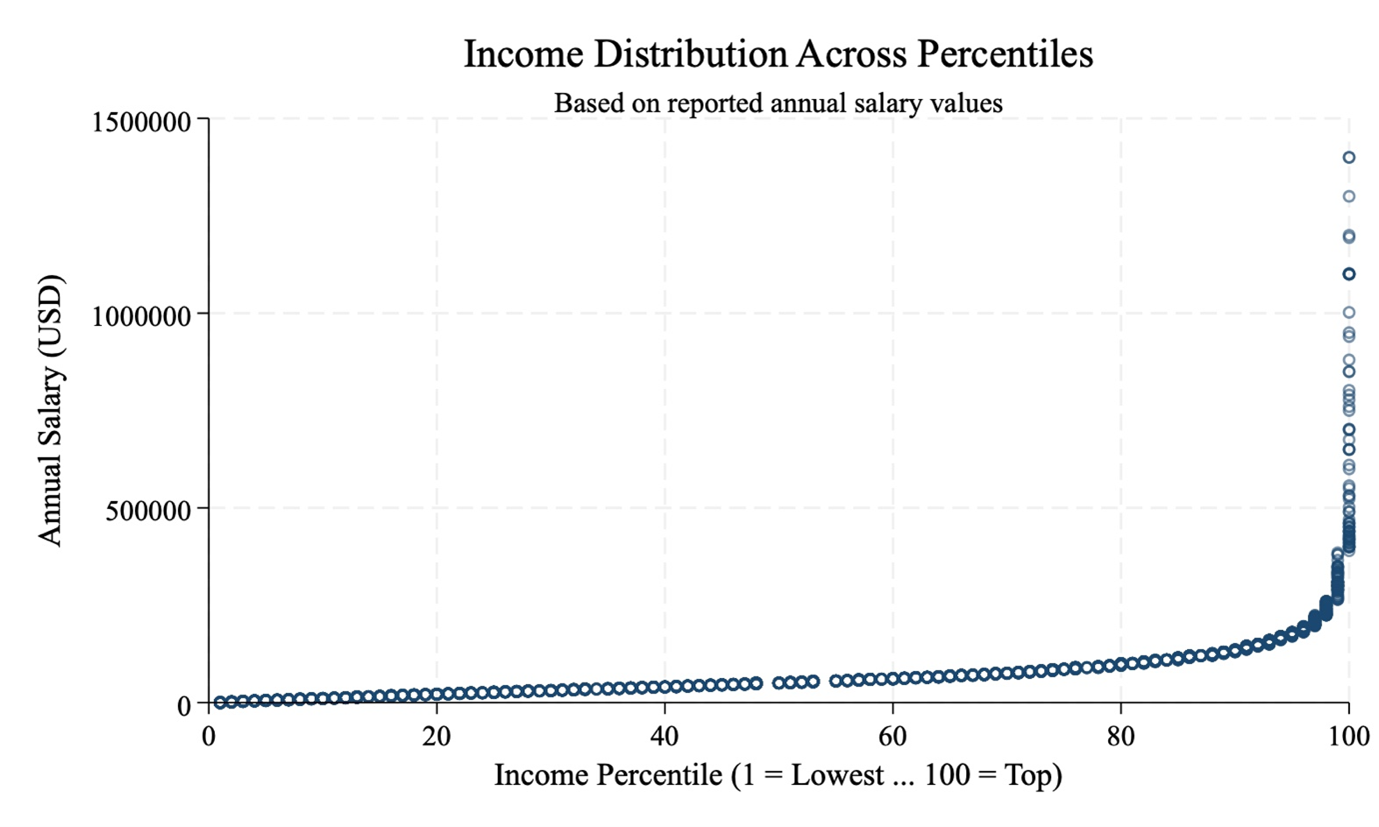
Figure 1 Income Distribution Across Percentiles: The Author
First, age. Contrary to the perception that the wealthy are mostly older individuals, the average age of the top one percent is around 50. This shows they middle aged and are at a stage in their lives where they have both the accumulated resources and the time ahead of them to influence society. The question is whether younger generations within this group will behave differently in responding to global challenges such as sustainability.
Second, education. The media often highlights entrepreneurs who dropped out of college, reinforcing the idea that education is unnecessary for wealth. Or that we do not need any education, and we can be billionaires tomorrow. Yet the data tell another story: 32 percent have a bachelor’s degree, and 50 percent hold postgraduate qualifications (master’s or PhD). Only 18 percent did not complete college.
Third, gender. Inequality persists. Only 12 percent of the top one percent are women, while 83 percent are married. This reflects both the barriers’ women face in reaching top incomes and the role of family structures in the top one per cent. Research shows that women in leadership positions foster more inclusive hiring and help reduce gender gaps , but the data here remind us how far we are.
Finally, race and ethnicity. Within the top one percent, 71 percent identify as white only, 15 percent as Asian only, 9 percent as Black only, and around 6 percent with Latin American heritage. As someone from Peru, I find it interesting to see representation from Latin America, and hopefully a spirit of development. Initiatives such as scholarships and private funding for international education show how wealth can be used to broaden opportunities and promote cultural understanding.
In summary, examining the top one percent offers insights into age, gender, education, and race among the wealthiest in the United States. Beyond numbers, these characteristics show evidence of who holds economic power and what this might mean for the future and a fairer society.
Juan Diego Zamudio Padilla is an economist, Professor of Economics, and researcher (Asia Center Studies) from the Universidad Nacional Mayor de San Marcos (UNMSM in Lima, Peru). He is also a PhD candidate, teacher assistant, and mentor at Hiroshima University, where he completed his Master’s degree.
References
1. Chang, H. J. (2003). Kicking away the ladder: Infant industry promotion in historical perspective. Oxford Development Studies, 31(1), 21-32.
2. Anand, S., and Segal, P. (2017). Who are the global top 1%?. World Development, 95, 111-126.
3. Lingelbach, D., & Rodríguez Guerra, V. (2024). The Oligarchs’ Grip: Fusing Wealth and Power, Berlin, Boston: De Gruyter.
5. https://www.bls.gov/cps/
6. https://www.apa.org/topics/women-girls/female-leaders-make-work-better

Fairer society
We are passionate about working with researchers globally to deliver a fairer, more inclusive society. This perhaps has never been more important than in today’s divided world.
Share this content