

Reflection on “Should billionaires exist?” A Mandela Washington Fellow speaks
21st August 2025
Share this content


Author: Makhala Henson, Managing Director of Molhen Paper Solutions, Mandela Washington Fellow
During the fourth week of the Mandela Washington Fellowship, I participated in a thought-provoking session led by Dr. Wendy Purcell on the question: “Should billionaires exist?” Walking into the conversation, I knew it was important to first listen, to understand not only Dr. Purcell’s perspective but also the diverse views of my fellow participants.
What began as a debate about the necessity of billionaires quickly evolved into a critique of how wealth is used in society. The conversation spanned from calls for a ‘billionaire tax’ to redefining billionaire status based on measurable societal impact rather than net worth. At the heart of the discussion were three core questions:
- Can billionaires be compelled to use their wealth for public good, or should it be left to personal conscience?
- Is the economic system inherently designed to favour wealth concentration?
- Is it ethical or possible to shift billionaire mindsets toward significant wealth redistribution?
Given my background in demography, I reflected on how different economic structures influence wealth distribution. In capitalist societies, billionaires are often celebrated as the system rewards innovation and market dominance. While this has driven progress, it has also deepened inequality. In such contexts, philanthropy becomes a moral expectation to address systemic gaps. Some choose to give back in transformative ways, for example:
- Charles Feeney: 100%
- Jon Huntsman Sr.: 128%
- George Kaiser: 20–30%
- George Soros: 60–66%
Bill and Melinda Gates: 30–45% (with a pledge to give 99% by 2045)
These contributions are commendable, but they raise a deeper question: Should social progress rely on voluntary generosity, or on systems designed for collective care from the outset?
Socialist and communist models, by contrast, limit private wealth concentration. These systems emphasise universal access to education, healthcare, and housing—equity as a right, not a charitable act. Though such models face challenges like bureaucratic inefficiency, they offer an alternate vision where social welfare is guaranteed by the state.
The Global South offers valuable examples. Tanzania under Julius Nyerere adopted Ujamaa, an African socialism centered on collective ownership and education. Cuba, despite economic sanctions, has achieved universal healthcare and education. Botswana reinvests diamond revenues into public services, while South Africa’s social grants and Black Economic Empowerment policies aim to redress historical inequality.
During my time in Tulsa, Oklahoma, I had the pleasure of working with an organisation under the George Kaiser Family Foundation [1]. Mr. Kaiser’s philosophy, that no child should be denied opportunity due to poverty, guides the foundation’s work. His use of wealth as a tool for systemic change shows how billionaires can act as forces for good.
However, such generosity is not universal. Billionaires make up just 0.00004% of the world’s population and contribute 8% of all individual philanthropic giving. According to Giving USA [2] (2024), of the $557.2 billion in U.S. charitable giving in 2023, $374.4 billion came from individuals and most from everyday people. This challenges the prevailing narrative that it is the ultra-wealthy who are society’s primary benefactors.
The pressure placed on billionaires to give should mirror the responsibility we place on ourselves. Civic duty and community support must not be the burden of the ultra- wealthy alone. True societal transformation requires shared effort, regardless of income level. In Africa, some high-net-worth individuals have played crucial roles in community development by supporting entrepreneurs, educational programmes, and local industries. Their contributions are valuable, especially in regions where access to capital is limited. However, meaningful impact is not limited to the wealthy. Across the continent, civil servants, small business owners, and students give time, knowledge, and resources in equally impactful ways.
Ultimately, the question isn’t whether billionaires should exist, but what kind of society we wish to build. A culture of giving, rooted in shared purpose and inclusivity, will create the sustainable change our communities need. Billionaires can play a role, but it is the collective, community-driven effort that will truly transform Africa and the world.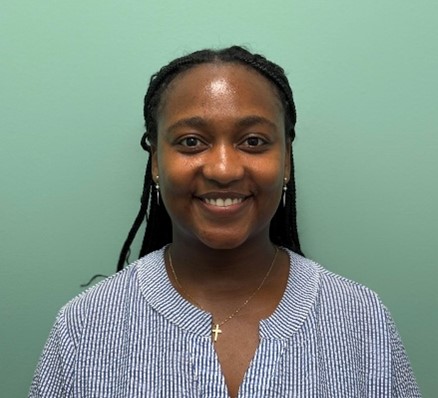
Makhala Henson is a Mandela Washington 2025 Fellow [3] and a passionate entrepreneur and statistician dedicated to sustainable innovation. As Managing Director of Molhen Paper Solutions [4], she leads the production of eco-friendly packaging in Lesotho, driving environmental stewardship, youth empowerment, and community impact while blending data-driven insight with purpose-driven leadership to create scalable, climate-conscious business solutions.
References
[1] https://www.gkff.org/
[2] https://givingusa.org/
[3] The Mandela Washington Fellowship for Young African Leaders is the flagship program of the U.S. Government’s Young African Leaders Initiative (YALI). Established in 2014, the Fellowship has brought nearly 7,200 young leaders from every country in Sub-Saharan Africa to the United States for academic and leadership training. The Fellows, between the ages of 25 and 35, are accomplished innovators and leaders in their communities and countries. Accessed online 22 July 2025.
[4] https://molhen.com/

Fairer society
We are passionate about working with researchers globally to deliver a fairer, more inclusive society. This perhaps has never been more important than in today’s divided world.
Share this content