

Can we build a future we can’t predict? Designing regenerative resilience through participatory Living Labs
22nd April 2026
Share this content


Authors: 1 Aoife Houlihan Wiberg, 2 Manish Kumar Dixit, 2 Mana Nemati Aghdam, 3 Arild Gustavsen, 4 Claudiane Ouellet-Plamondon
1 School of Architecture, College of Design Construction and Planning, University of Florida, United States
2 Department of Construction Science, Texas A&M University, College Station, TX 77843, United States
3 Department of Architecture and Technology, Faculty for Architecture and Design, NTNU – Norwegian University of Science and Technology, Trondheim, Norway
4 Department of Construction, École de technologie supérieure (ÉTS), Université du Québec, Montréal, Canada
Abstract
This article addresses the question, “Can we build a future we can’t predict?” by examining how the built environment can respond to extreme weather events over the 60-100-year life cycle. The article proposes and discusses the unique concept of Living Labs in the built environment and proposes Climate-Resilient Regenerative Living Labs (CRRLLs) as a transdisciplinary co-design systematic framework that integrates climate mitigation, adaptation and ecological regeneration applied in vulnerable, climate-exposed contexts and part of the NFRF project ‘PARCS Participatory collaborative research to enhance climate change adaptation and mitigation in underserved communities in Asia and North- and South America’.
Three diverse international Living Labs are leveraged to develop this co-design framework and include: a peri-urban community settled on La Iguaná micro-basin in Colombia, a rural fishing and rice farming community in the lowland coastal Kandanghaur district in the Indramayu regency of Java, Indonesia, and a coastal community in the city of Port Arthur (Texas) in the Gulf Coast of the USA. Though structurally different, these three communities are located in tropical and subtropical regions all experiencing increased climate change and socioeconomic vulnerability stemming from disruptions in the water cycle and nearing the temperature threshold for human livability.
The analysis draws on future thinking and uncertainty theory to evaluate how Living Labs operate under non-predictive conditions. Living Labs enable integrated dual mitigation and adaptation strategies, foster-stakeholder legitimacy and support participatory co-learning. When embedded in governance systems and guided by regenerative principles, they generate multi-benefit outcomes across climate, ecological and social domains. However, anticipated outcomes point towards limitations which can include weak institutional alignment, short-term funding cycles, limited long-term monitoring and insufficient engagement with compound risks and deep uncertainty.
The article proposes five enabling principles for advancing Climate-Resilient Regenerative Living Labs (CRRLL) from experimental pilots to durable governance infrastructures: early and continuous participation, integration of both mitigation and adaptation strategies, scenario-based design, climate adaptive pathways and institutional embedding for long-term capacity building beyond the life of a project. By linking regenerative design, Living Lab methodology and uncertainty theory, the article reframes climate resilience as a collective capacity-building process rather than purely an optimisation exercise. It contributes a resilient futures-oriented model for built environment transformation capable of operating under unpredictable clmate conditions.
Keywords Climate resilience; regenerative design; living labs; uncertainty; co-design; built environment
1. Introduction: Designing in an age of uncertainty
The accelerating rise in global surface temperatures is intensifying the frequency, severity and interaction of extreme weather events [1]. The United Nations’ declaration of a “code red” for humanity underscores a marked escalation in severe meteorological phenomena, including floods combined with landslides; heatwaves straining energy systems; storms trigger cascading failures in housing, transport and water infrastructure [2, 3]. These impacts disproportionately affect vulnerable and underserved communities where socio-economic inequities intersect with fragile physical and ecological systems [4, 5].
Historically, the built environment has addressed climate change through two parallel agendas: mitigation (reducing greenhouse gas emissions) and adaptation (managing climate impacts) [6, 7]. While both are essential, they often rely on predictive modelling and performance optimization [8]. Under accelerating and uncertain climate change, however, the reliability of prediction itself is increasingly challenged [9, 10].
Deep uncertainty describes conditions in which stakeholders cannot agree on system models, probability distributions or even the range of plausible futures [9, 11]. In such contexts, planning for a single expected future becomes inadequate [9, 11]. Instead, the challenge shifts toward designing systems based on thorough scenario analysis, capable of adapting across multiple plausible futures. This article argues that Climate-Resilient Regenerative Living Labs (CRRLLs) may offer a methodological response to this challenge. By integrating participatory co-design, systems thinking and regenerative principles, they enable built environment transformation under uncertainty.
2. From Net Zero to regenerative resilience
The pioneering development of the Norwegian Zero Emission Building (ZEB) and Zero Emission Neighbourhood (ZEN) definitions, calculation methods. Frameworks and Living Labs marked a critical milestone in climate mitigation [12, 13]. These approaches introduced life-cycle carbon accounting, ambition levels and key performance indicators that significantly advanced emissions reduction strategies in the building sector [14]. Advancements in computation technologies also gave rise to single- and multi-objective optimization methods to balance emission tradeoffs between e.g. operation and material emissions, and find optimal building designs [15].
However, even if mitigation targets are achieved, substantial warming and extreme events are already locked in the climate system. Buildings must, therefore, do more than just an emissions reduction. They must withstand shocks, adapt to changing conditions and contribute positively to ecological and socio-economic systems to reinforce community capacity for resilience [16].
Regenerative design extends conventional sustainability by moving beyond “doing less harm” toward generating net-positive impacts. It prioritises ecological restoration, biodiversity enhancement, social cohesion, economic viability and systemic vitality [17]. Under deep uncertainty, regenerative systems, characterised by diversity, redundancy and adaptability, are inherently more resilient than optimised but brittle systems [18]. The transition from Zero Emission Buildings to Zero Emission Resilient Buildings, and further toward regenerative resilience, represents a necessary paradigm shift in the built environment [17, 18].
Living Labs as futures-oriented methodologies
Living Labs are user-centred, place-based innovation environments in which researchers, public institutions, private actors and communities collaborate and co-create solutions in real-world contexts [19–21]. Unlike conventional pilot projects, Living Labs emphasise iterative learning and continuous stakeholder engagement, ensuring solutions are not only technically robust but also socially acceptable [22, 23] (see Figure 1). Previous studies indicate that Living Labs consistently:
- Strengthen collaboration across sectors [24–26]
- Integrate local and scientific knowledge [27–29]
- Foster stakeholder ownership and legitimacy [26, 30–32]
- Enable simultaneous mitigation and adaptation strategies [4, 33–35]
Because Living Labs are process-oriented rather than outcome-fixed, they are particularly suited to uncertain conditions [27]. Solutions evolve over time, informed by feedback and lived experience [28]. However, studies also reveal fragmentation in definitions, focus and implementation approaches [36, 37]. Many Living Labs remain technology-focused, short-term or weakly embedded in governance structure [22]. Explicit engagement with uncertainty, through scenario planning or adaptive pathways, is rare [38].
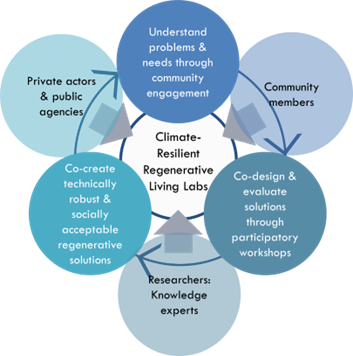
Figure 1. Stakeholder engaged CRRLL framework to co-create regenerative adaptive solutions
To address this gap, the concept of Climate-Resilient Regenerative Living Labs (CRRLLs) is proposed. These explicitly integrate mitigation, adaptation and regeneration within participatory governance frameworks designed to operate under uncertainty. In alignment with previous studies, three living labs in Indonesia, USA, and Colombia show examples of how the communities perceive climate change and adaptation from their own vernacular knowledge and actions from different levels of governments.
A co-design Living Lab framework for regenerative resilience
A three-phase interdisciplinary co-design framework is proposed to implement CRRLLs in climate-vulnerable contexts, particularly in littoral and water-sensitive regions.
Phase 1: Environmental Risk Narratives and System Mapping
The first phase integrates scientific environmental risk assessments with lived sociocultural experiences captured and perceived through structured citizen–institution dialogues, participatory mapping and workshops. Climate risk is understood not only as a technical construct but also as a socially perceived and culturally mediated phenomenon. This phase builds trust, aligns knowledge systems and develops a shared understanding of vulnerabilities and capacities. Communities are sharing that the socio-cultural aspects are important to consider in finding solutions.
Phase 2: Scenario-Based Participatory Design
Rather than designing for a single projected future, multiple climate and socio-economic scenarios are explored. Participatory design tools, charrettes, visual simulations and digital modelling enable stakeholders to test and visualize interventions across diverse conditions. Resilient regenerative solutions may include:
- Nature-based mitigation strategies,
- Water-sensitive infrastructure,
- Decentralised renewable energy systems,
- Circular construction strategies,
- Adaptive housing typologies,
- Biodiversity-integrated public spaces.
The objective is to identify a robust palette of strategies viable across diverse uncertainty scenarios. The vulnerable communities can decide what they want according to the socio-cultural preferences and capacity.
Phase 3: Adaptive Pathways and Knowledge Embedding
Implementation is framed as an adaptive and evolving pathway rather than a fixed plan. Interventions are linked to monitoring triggers, enabling adjustment as conditions evolve. Knowledge mobilisation is continuous. Toolkits, governance guidelines and training programmes embed learning within institutions and communities, transforming Living Labs into long-term learning infrastructures.
Expected outcomes: Opportunities and constraints
The evidence suggests that CRRLLs can generate multidimensional benefits when embedded within governance systems and supported by long-term, continuous collaboration. They enable integrated mitigation and adaptation strategies while strengthening social cohesion, economic viability and local capacity. However, several anticipated outcomes are still to be investigated in this research:
- Power asymmetries between institutions and communities,
- Weak alignment with policy frameworks,
- Need to maintain symbols of cultural identity.
- Limited long-term monitoring and evaluation,
- Short-term funding cycles,
- Predominant focus on single hazards,
- Limited application of uncertainty-based tools for scenario planning
For CRRLLs to achieve transformative impact, they must move beyond isolated pilots toward long-term durable governance and learning structures for long-term capacity building.
Future research directions: Enabling principles for scaling regenerative Living Labs
Five enabling principles emerge for advancing CRRLLs:
- Early and continuous participation with genuine power-sharing,
- Identification of the cultural element to preserve and promote,
- Integration of mitigation and adaptation from project inception,
- Scenario-based design to address deep uncertainty,
- Adaptive pathways and long-term monitoring,
- Institutional embedding and policy alignment.
When these conditions are met, Living Labs can evolve into systemic infrastructures capable of guiding transformation under uncertainty. Figure 2 illustrates these five principles.
Conclusion: Building capacity for unpredictable futures
We cannot predict the precise trajectory of future climates, economies or social systems. However, we can design processes and institutions capable of learning, adapting and regenerating. Climate-Resilient Regenerative Living Labs shift the focus from certainty to capacity. They prioritise diversity over optimisation, participation over control and mitigation, adaptation and regeneration over mitigation alone. Building a future we cannot predict is therefore not about forecasting accuracy. It is about cultivating collective adaptive capacity across social–ecological–technical systems. When embedded within governance frameworks and guided by regenerative principles, Living Labs offer a viable pathway toward resilient, biodiverse and socially just built environments capable of navigating uncertainty.
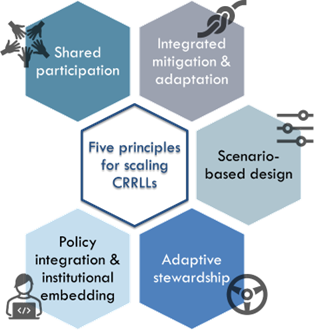
Figure 2. Five essential principles for scaling climate resilient regenerative living labs
Acknowledgements
We acknowledge the support of the Government of Canada’s New Frontiers in Research Fund (NFRF), attributed to the Natural Sciences and Engineering Research Council of Canada (NSERC) and the Social Sciences and Humanities Research Council of Canada (SSHRC), [NFRFI-2023-00561]
PARCS Participatory collaborative research to enhance climate change adaptation and mitigation in underserved communities in Asia and North- and South America’.
Author
- Aoife Houlihan Wiberg, School of Architecture, College of Design Construction and Planning, University of Florida, United States
References
[1] E. Laino and G. Iglesias, “Extreme climate change hazards and impacts on European coastal cities: A review,” Renew. Sustain. ENERGY Rev., vol. 184, Sep. 2023, doi: 10.1016/j.rser.2023.113587.
[2] J. Higham, X. Font, and J. (Snow) Wu, “Code red for sustainable tourism,” J. Sustain. Tour., vol. 30, no. 1, pp. 1–13, Dec. 2021, doi: 10.1080/09669582.2022.2008128.
[3] IPCC, “Summary For Policymakers,” in Climate Change 2021: The Physical Science Basis.
Contribution of Working Group I to the Sixth Assessment Report of the Intergovernmental Panel on Climate Change, V. Masson-Delmotte, P. Zhai, A. Pirani, S. L. Connors, C. Péan, S. Berger, N. Caud, Y. Chen, L. Goldfarb, M. I. Gomis, M. Huang, K. Leitzell, E. Lonnoy, J. B. R. Matthews, T.
K. Maycock, T. Waterfield, K. Yelekçi, R. Yu, and B. Zhu, Eds., Cambridge, United Kingdom and New York, NY, USA: Cambridge University Press, 2023, pp. 3–32. Accessed: Feb. 24, 2026. [Online]. Available here.
[4] R. P. H. Snep, J. Klostermann, M. Lehner, and I. Weppelman, “Social housing as focus area for Nature-based Solutions to strengthen urban resilience and justice: Lessons from practice in the Netherlands,” Environ. Sci. Policy, vol. 145, pp. 164–174, Jul. 2023, doi: 10.1016/j.envsci.2023.02.022.
[5] S. C. Winter et al., “Extreme weather should be defined according to impacts on climate-vulnerable communities,” Nat. Clim. Change, vol. 14, no. 5, pp. 462–467, May 2024, doi: 10.1038/s41558-024-01983-7.
[6] W. Horan, R. Shawe, and B. O’Regan, “Ireland’s Transition towards a Low Carbon Society: The Leadership Role of Higher Education Institutions in Solar Photovoltaic Niche Development,”
Sustainability, vol. 11, no. 3, p. 558, Jan. 2019, doi: 10.3390/su11030558.
[7] A. Tiwari, L. C. Rodrigues, F. E. Lucy, and S. Gharbia, “Building Climate Resilience in Coastal City Living Labs Using Ecosystem-Based Adaptation: A Systematic Review,” Sustainability, vol. 14, no. 17, p. 10863, Aug. 2022, doi: 10.3390/su141710863.
[8] F. J. Othmer, J. P. Schmitt, and S. Greiving, “Numerical modelling of the urban climate as an
integrated part of environmental assessments,” Sci. Total Environ., vol. 731, p. 138774, Aug. 2020, doi: 10.1016/j.scitotenv.2020.138774.
[9] C. Folke, S. R. Carpenter, B. Walker, M. Scheffer, T. Chapin, and J. Rockström, “Resilience Thinking: Integrating Resilience, Adaptability and Transformability,” Ecol. Soc., vol. 15, no. 4, p. art20, 2010, doi: 10.5751/ES-03610-150420.
[10] C. S. Holling, “Understanding the Complexity of Economic, Ecological, and Social Systems,”
Ecosystems, vol. 4, no. 5, pp. 390–405, Aug. 2001, doi: 10.1007/s10021-001-0101-5.
[11] B. Walker, C. S. Holling, S. R. Carpenter, and A. P. Kinzig, “Resilience, Adaptability and Transformability in Social-ecological Systems,” Ecol. Soc., vol. 9, no. 2, p. art5, 2004, doi: 10.5751/ES-00650-090205.
[12] C. Skaar, N. Labonnote, and K. Gradeci, “From Zero Emission Buildings (ZEB) to Zero Emission Neighbourhoods (ZEN): A Mapping Review of Algorithm-Based LCA,” Sustainability, vol. 10, no. 7, p. 2405, Jul. 2018, doi: 10.3390/su10072405.
[13] R. Woods, D. Baer, T. Berker, and L. Arne, “ZEN living labs definition, ideas and examples,” SINTEF. Accessed: Apr. 13, 2025. [Online]. Available here.
[14] C. Maduta and D. D’Agostino, “Readiness of Zero-Emission Buildings (ZEBs) implementation in the European Union,” E3S Web Conf., vol. 523, p. 04009, 2024, doi: 10.1051/e3sconf/202452304009.
[15] D. Pinel, M. Korpås, and K. B. Lindberg, “Cost Optimal Design of Zero Emission Neighborhoods’ (ZENs) Energy System: Model Presentation and Case Study on Evenstad,” in Advances in Energy System Optimization, V. Bertsch, A. Ardone, M. Suriyah, W. Fichtner, T. Leibfried, and V.
Heuveline, Eds., in Trends in Mathematics. , Cham: Springer International Publishing, 2020, pp. 145–163. doi: 10.1007/978-3-030-32157-4_9.
[16] A. Nocente, B. Time, H. Mathisen, T. Kvande, and A. Gustavsen, “The ZEB Laboratory: the
development of a research tool for future climate adapted zero emission buildings,” J. Phys. Conf. Ser., vol. 2069, no. 1, p. 012109, Nov. 2021, doi: 10.1088/1742-6596/2069/1/012109.
[17] C. Lausselet and H. Brattebø, “Environmental co-benefits and trade-offs of climate mitigation
strategies applied to net-zero-emission neighbourhoods,” Int. J. Life Cycle Assess., vol. 26, no. 11,
pp. 2263–2277, Nov. 2021, doi: 10.1007/s11367-021-01973-3.
[18] S. Koutra, “From ‘Zero’ to ‘Positive’ Energy Concepts and from Buildings to Districts—A Portfolio of 51 European Success Stories,” Sustainability, vol. 14, no. 23, p. 15812, Nov. 2022, doi: 10.3390/su142315812.
[19] L. Compagnucci, F. Spigarelli, J. Coelho, and C. Duarte, “Living Labs and user engagement for innovation and sustainability,” J. Clean. Prod., vol. 289, p. 125721, Mar. 2021, doi: 10.1016/j.jclepro.2020.125721.
[20] S. Leminen, “Q&A. What Are Living Labs?,” Technol. Innov. Manag. Rev., vol. 5, no. 9, pp. 29–35, Sep. 2015, doi: 10.22215/timreview/928.
[21] T. Masseck, “Living labs in architecture : open innovation and co-creation towards a more sustainable architecture and lifestyle,” presented at the WSB 14 Conference Proceedings, 2014.
Accessed: Feb. 24, 2026. [Online]. Available here.
[22] H. T. Nguyen and P. Marques, “The promise of living labs to the Quadruple Helix stakeholders: exploring the sources of (dis)satisfaction,” Eur. Plan. Stud., vol. 30, no. 6, pp. 1124–1143, Jun. 2022, doi: 10.1080/09654313.2021.1968798.
[23] K. Valkokari, K. Hyytinen, and J. Leväsluoto, “Living Labs as Enablers for Collaborative Innovation – Exploring Success Factors and Impacts: [Special Issue on Living Labs and Collaborative Innovation],” J. Innov. Manag., vol. 12, no. 3, pp. 158–174, Dec. 2024, doi: 10.24840/2183-0606_012.003_0007.
[24] M. Ghodsvali, G. Dane, and B. De Vries, “The urban living lab as an adaptive governance
mechanism for the transdisciplinary Food-Water-Energy nexus,” in Designing Sustainable and
Resilient Cities, 1st ed., New York: Routledge, 2022, pp. 27–57. doi: 10.4324/9781003112495-11.
[25] G. Lupp, A. Zingraff-Hamed, J. J. Huang, A. Oen, and S. Pauleit, “Living Labs—A Concept for Co-Designing Nature-Based Solutions,” Sustainability, vol. 13, no. 1, p. 188, Dec. 2020, doi: 10.3390/su13010188.
[26] M. Menny, Y. Voytenko Palgan, and K. McCormick, “Urban living labs and the role of users in co-creation,” GAIA - Ecol. Perspect. Sci. Soc., vol. 27, pp. 68–77, 2018, doi: 10.14512/gaia.27.s1.14.
[27] A. Crosby, D. Fam, and A. Mellick Lopes, “Transdisciplinarity and the ‘Living Lab Model’: Food Waste Management As a Site for Collaborative Learning,” in Transdisciplinary Theory, Practice and Education, 2018, pp. 117–131. doi: 10.1007/978-3-319-93743-4_9.
[28] D. Fam, A. M. Lopes, K. Ross, and A. Crosby, “The Transdisciplinary Living Lab Model (TDLL),” in Universities as Living Labs for Sustainable Development, W. Leal Filho, A. L. Salvia, R. W.
Pretorius, L. L. Brandli, E. Manolas, F. Alves, U. Azeiteiro, J. Rogers, C. Shiel, and A. Do Paco, Eds., in World Sustainability Series. , Cham: Springer International Publishing, 2020, pp. 167–182. doi: 10.1007/978-3-030-15604-6_11.
[29] U. Pasquier, R. Few, M. C. Goulden, S. Hooton, Y. He, and K. M. Hiscock, “‘We can’t do it on our own!’ - Integrating stakeholder and scientific knowledge of future flood risk to inform climate
change adaptation planning in a coastal region,” Environ. Sci. POLICY, vol. 103, pp. 50–57, Jan. 2020, doi: 10.1016/j.envsci.2019.10.016.
[30] L. Amenta et al., “Managing the transition towards circular metabolism: Living labs as a co-creation approach,” Urban Plan., vol. 4, no. 3, pp. 5–18, 2019, doi: 10.17645/up.v4i3.2170.
[31] M. Busse, J. Zscheischler, F. Zoll, S. Rogga, and R. Siebert, “Co-design approaches in land use related sustainability science – A systematic review,” Land Use Policy, vol. 129, p. 106623, Jun. 2023, doi: 10.1016/j.landusepol.2023.106623.
[32] I. Mahmoud and E. Morello, “Co-creation Pathway for Urban Nature-Based Solutions: Testing a Shared-Governance Approach in Three Cities and Nine Action Labs,” presented at the Green Energy and Technology, 2021, pp. 259–276. doi: 10.1007/978-3-030-57764-3_17.
[33] J. Byrne, M. Mouritz, M. Taylor, and J. K. Breadsell, “East Village at Knutsford: A Case Study in Sustainable Urbanism,” Sustainability, vol. 12, no. 16, p. 6296, 2020, doi: 10.3390/su12166296.
[34] C. Nava and G. Mangano, “Living Lab for the design and activation of energy communities in the inner areas,” TECHNE-J. Technol. Archit. Environ., vol. 26, pp. 120–130, 2023, doi:
10.36253/techne-14495.
[35] E. Omrcen, U. Lundgren, and M. Dalbro, “Universities as role models for sustainability: a case
study on implementation of University of Gothenburg climate strategy, results and experiences from 2011 to 2015,” Int. J. Innov. Sustain. Dev., vol. 12, no. 1/2, p. 156, 2018, doi: 10.1504/IJISD.2018.10009937.
[36] M. Mačiulienė and A. Skaržauskienė, “Sustainable urban innovations: digital co-creation in
European living labs,” Kybernetes, vol. 49, no. 7, pp. 1969–1986, 2020, doi: 10.1108/K-07-2019-
0514.
[37] S. P. Mbatha and J. K. Musango, “A Systematic Review on the Application of the Living Lab
Concept and Role of Stakeholders in the Energy Sector,” Sustainability, vol. 14, no. 21, p. 14009, Oct. 2022, doi: 10.3390/su142114009.
[38] B. Baccarne, S. Logghe, D. Schuurman, and L. De Marez, “Governing Quintuple Helix Innovation: Urban Living Labs and Socio-Ecological Entrepreneurship,” Technol. Innov. Manag. Rev., vol. 6, no. 3, pp. 22–30, Mar. 2016, doi: 10.22215/timreview/972.

Sustainable structures and infrastructures
We are passionate about supporting researchers, policymakers, and practitioners in their efforts to minimise the environmental impact of structures and infrastructures.
Would you like to talk to someone about our ICE Publishing products?
To find out more about getting access to our ICE Publishing products, please fill in the form and one of our team will get in touch with you.
You can also use the form to recommend this product to your budget-holder or librarian if you are not the budget holder yourself.
Share this content