

The future is self-directed: rethinking how we learn podcast
Share this content


What happens when young people are trusted to take charge of their own learning?
Self-directed education (SDE) is an approach that challenges the traditional schooling model by placing responsibility, choice, and autonomy in the hands of learners themselves. As interest in SDE grows, so too does the need to understand its impact, limitations, and potential.
In this episode of the Emerald Podcast Series, host Rebecca Torr speaks with two leading educators and researchers who have both contributed to a new special issue of On the Horizon on this very topic:
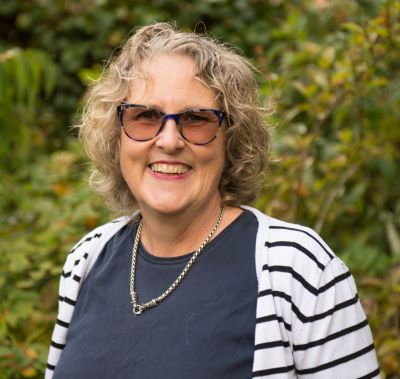
- Dr Christel Hartkamp-Bakker, researcher at the Open University and co-founder of several Sudbury model schools in the Netherlands, whose work examines the long-term outcomes of self-directed learning.
- Dr Melissa Riley Bradford, a senior professional lecturer at DePaul University in Chicago and board president at Tallgrass Sudbury School, whose research focuses on democratic education and value-creating leadership.
They explore the history and relevance of self-directed education today, the systemic issues in mainstream schooling that have prompted families to look elsewhere, and the diverse ways in which SDE is being adopted across communities. The conversation also highlights key contributions from their special issue, including research on Black homeschooling, the deschooling journeys of former teachers, and the vulnerabilities inherent in learner-led models.
For more information on self-directed education research, see On the Horizon’s Special Issue: ‘Reimagined ways of knowing, being and doing: understanding the value of a self-directed educational context’.
Speaker profiles
Dr Christel Hartkamp-Bakker has a master's degree in geology from the University of Utrecht and a PhD from the Technical University in Delft in the Netherlands. After 1992, she worked in the oil industry in both the Sultanate of Oman and the Netherlands until 2011. She has previously written several scientific publications in that field. Since 2003, she has been a co-founder and part-time staff member at several Sudbury model schools in the Netherlands and most recently at Sudbury School Amersfoort. Her passion for academic work resulted in a second PhD study about the impact of Sudbury model schools on the adult lives of graduates, which started in 2019 at the Open University in the Netherlands.
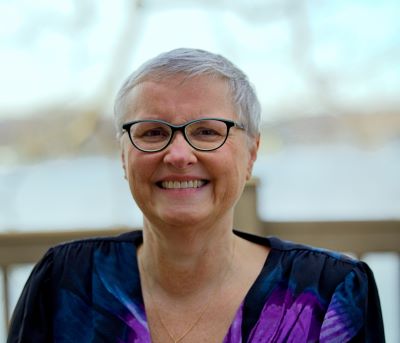
Professor Melissa Riley Bradford is a senior professional lecturer in the Department of Leadership, Language and Curriculum at DePaul University’s College of Education. She teaches educational leadership, curriculum studies, research methods and Value-Creating Education for Global Citizenship and coordinates the College of Education doctoral program. Her research interests center on Self-Directed Education, democratic education, dialogue, and value-creating leadership. In 2008, Melissa founded Tallgrass Sudbury School in Riverside, IL, and currently serves as the president of its board of directors.
Find Professor Riley Bradford on LinkedIn.
Podcast Host
Rebecca Torr is the Publishing Development Manager for Sustainable Structures and Infrastructures. She works with authors and organisations in engineering subjects such as civil engineering and the build environment to further the impact of research in the real world. Rebecca is also co-producer of the Emerald Podcast Series and enjoys interviewing experts who use research to make a difference in society.
In this episode:
- What is self-directed education?
- How does the legacy of self-directed education shape its relevance today?
- What challenges in conventional schooling are leading families and educators to explore alternatives?
- What are the vulnerabilities of self-directed education, and how can they be addressed through research and practice?
- How might self-directed education evolve in the future, and what role does academic research play in its development?
Transcript
The future is self-directed: rethinking how we learn
Rebecca Torr (RT): Hi, I’m Rebecca Torr and welcome to the Emerald Podcast Series. Today, we’re exploring self-directed education – a learner-led approach that’s been gaining interest in recent years as more people begin to question the limits of traditional schooling. I’m joined by two passionate advocates and researchers in this space: Dr Christel Hartkamp-Bakker, researcher at the Open University in the Netherlands and co-founder of several Sudbury model schools, and Dr Melissa Riley Bradford, senior professional lecturer at DePaul University’s College of Education, whose research focuses on self-directed and democratic education. In this conversation, we unpack the meaning of self-directed education, the challenges of conventional schooling, and how self-directed approaches are being adopted by a growing and diverse range of communities. We also discuss a new special issue of On the Horizon – an Emerald Publishing journal – which both guests have co-edited and which delves into the vulnerabilities, possibilities, and future of this educational model. Let’s get started.
Christel Hartkamp-Bakker (CHB): Self Directed education is sometimes a little bit misunderstood as self directed learning. Self directed learning is really about learning, quite in a in a conventional context, but self directed education is much more about self determining the ways that one learns, and it's much more based on the biological foundation of how people learn in the first place by all kind of means, like play, like exploring things like or watching others do things by going to libraries, by going to meeting other people, talking, conversations, you name it. You can learn through many, many different ways. And actually, everybody is doing it. Everybody is doing it constantly. The moment that you start waking up in the morning, you start learning because you start to interact with the environment. But we specifically with this special issue, wanted to focus on school children's learning, because school children in many countries, perhaps not in all, but in many countries, have no choice go to school. Like in the Netherlands, we have an attendance law that, by law, students need to be in a school, and homeschooling is actually not allowed formally. So, and there are other countries as well that don't allow homeschooling. So I think it is much more. It's much broader than only the type of environments that we are discussing in our special issue. And we don't want to focus only on that.
RT: Also, there has been a massive increase in self directed education in recent years. And I was just wondering, Melissa, if you could maybe talk to us about, you know, why there is an increase, but then tell us about the sort of history and the legacy of self directed education today.
Melissa Riley Bradford (MRB): Sure. And thank you so much for having us. So what we're seeing is an increase in student and family unhappiness, more than anything else, with their educational experiences. Families are under a lot more stress today, and the children themselves are in under quite a bit of stress, and depending on the community that you're looking at, there's also a mismatch between the values that are being inculcated through the school system and the community values. So that mismatch is a problem. I think that in the US certainly, there's been so much of an emphasis on standardised approaches to learning and top down scripted curriculum testing. All of that has made the environment more and more dehumanising. You know, I think we always had a factory style system, you know, since the 1800s in this country, the mass education approach. But I think that the tensions that are in that kind of approach to education have just gotten worse and worse. While students are yes, they're struggling with mental health, they're struggling with neurodivergence, they're struggling with, you know, gender identity. There's so many things that are creating almost a pressure cooker, a school violence, you know. And so all of that, I think, is part of the impetus for people turning to self directed education. And then, of course, COVID certainly contributed to the shift. There was already an increase. But then I think when COVID happened, it went up. And again, in the US, we're seeing a lot of truancy, absent student absenteeism has skyrocketed. And yeah, so I think all of that is sort of conspiring to cause people to really turn to a very radical, radical in the sense of so different from conventional schooling, you know, approach for their for their children.
RT: Fantastic. Thank you, if I may I've got a question about sort of neuro divergence, and I know you touched on this earlier. I just wondered, sort of, with this approach, this sort of self directed educational approach, how does it support children with neurodivergency like dyslexia. I mean, those sorts of you know that you do see in mainstream schools, not necessarily, sort of like some of more of the specialised schools, but obviously in mainstream education, you see lots and lots of children with dyslexia. I just wondered how this sort of supports those children and beyond dyslexia, you know, the ones that do go to mainstream schools. How does this approach sort of support them, and what can it offer?
CHB: Well, what we see is that we actually take off pressure. So usually within self direct education, and I can't really speak for all places, but at least I can speak for what we do in our school. We take off pressure. We don't demand anything. And I have in my research one example, one participant who suffered, really, from dyslexia, and he came to a separate type of school, and he was a young boy, I think he was eight years old, and he was very enthusiastic, and he there was a national day coming up, and he wanted to present something in front of the whole school meeting, and he had to read it in front of the school meeting. And he had a severe dyslexia. He didn't dare to do anything about reading beforehand, but he was so interested in organising this event that he stood up and he started to read these two lines, I think it was something like that. The moment that he did it, he understood that this environment actually didn't judge him. There was nobody laughing. There was nobody saying, Hey, you should mention or you should read it out like this, or you should just do it like that. Or everybody was waiting until he finished, and then really something dropped in front of his eyes that he really saw, okay, I am accepted the way I am with all my incapacities, with all my not completeness. I'm not perfect yet, but okay, and that is actually the way that self directed education is functioning. It's working from inside out. It's working from this intrinsic motivation to do something else, to do a job or to be part of organising something that make people learn and do things and feel competent and feel and have the confidence to do things, and that's how we learn.
RT: Wow, that's so touching that I mean that these children, adults are able to thrive in an environment that allows them to express themselves in the way that they feel comfortable. Thank you so much. I think we should get into some of the papers that you that are in the special issue, because they do cover different aspects of of self directed education. And I just wonder if we can start with Renee Tougas’ literature review, and she talks about, in this literature review, she talks about the vulnerabilities of self directed education. And I just thought, if you could, Melissa, sort of if you could tell us about this paper and what sort of stood out to you.
MRB: Absolutely, I think that this article presents a critique that is a really important for people in self directed education to be considering, because it's about our social obligations, our connection to community and sometimes, self directed education is presented as a very individualistic approach. It's just me and my kids, and you know, as if any of us live in a bubble, the role of community and the role of relationships is so essential to self directed education and the kinds of connections, the kinds of relationships that families are able to have, allows for, for everyone to really thrive and learn together. However, as Tougas, explains the there's a an underlying ideology throughout our western world society that is based on neoliberalism, which, of course, is a big word that gets tossed around a lot. But what does it mean? It means approaching life in an effectory style right standardise everything, push kids through by age, and all together, 30 kids, move them here, move them there, commodifying everything, looking at education as if it's something that you buy, that you're a consumer and you're purchasing it, the notion of meritocracy. Oh, I didn't get here from, you know, from all the other people who helped me and my ancestors and everything else. No, it's just me. I earned it all by myself. And so, you know, we can see a lot of this causing a lot of destruction in our society today. So I think Tougas is asking us to make sure in self directed education that we are aware of this external ideology that permeates everything, and consider how self directed educators are creating a more humanising environment, that although they are allowing for student voice and agency, they also have cooperation, community, the relationships, because it's age mixed. They're so different. Just a quick story, when I was in public school teaching eighth grade science, the distance between me and my students was so palpable, you know, I was the bad guy because I was the adult. So, you know, keep things secret from the adults. You know, yes, they're going to force us to do stuff, and we'll be compliant, or maybe we will resist. But you know, we're not in this together, and that was always really disturbing to me when I was teaching school, just it just didn't feel right. But in a self directed education community, whether it's a democratic school or another type of school setting, or it's a liberated learner centre, or it's unschooling, you know, with other families, because it's only age mix. The dynamics are so different. The kinds of relationships that are fostered in this environment are so much, so healthy, so natural, so respectful, so kind. It just goes with the territory. But we forget to talk about that because we are in this neoliberal society. So we might want to argue, oh, kids can get into college. They make certain amount of income when they leave these types of settings. And, you know, we try to maybe defend it based on neoliberal standards. And Tougas article, she also, she turned specifically to black homeschoolers, because she says, this is a community that was already resisting this neoliberal ideology and turning to a community so she utilises those experiences to help illuminate how self directed education can resist this neoliberal approach to life.
RT: Amazing. Thank you. That sounds such an interesting area of research, actually, and sort of you know what, what they've turned to, and how it's made a difference. And I just wondered if I could come to you Christel as well. And there was an article which was talking about teachers and how they had transitioned as well. Because, I mean, both of you sound like you were maybe, you know, you've been exposed to, like the conventional systems, but actually have transitioned as well. So I just wondered, sort of, you know, what were their de schooling journeys and in and, you know, sort of, how did that play out, and what the research focused on?
CHB: Yeah, thank you. This article that's by Justus-Smith and she explored, actually, the experience of 11 former teachers, which is quite interesting, because normally, we always focus on the students. You know, how are students doing, or what are they doing after these schools? Or what are the experiences, but for teachers, moving from a traditional system into a self directed learning school or centre or whatever, is as much a de schooling adventure as for children. You know, we recognise that this unschooling process within children very well, but actually this happens with teachers as well. We always say to staff when they come to our school, it takes two years to really understand the skills you need to have to become a good staff member in our school, because it takes a lot of time, because it's such a totally different environment, and it needs such a different pedagogy, pedagogical and ways of working, knowledge behind how you approach things, how you talk with students in an equal way, how you treat students in an equal way, how you support their autonomy, how you build on their competence, and things like that. So I was really pleased to see this article coming into our our special issue, because this explores exactly this transition that you see that people coming from a traditional system running into questioning their own assumptions, because they they go to to become teachers, because they they have this ideal in their mind that they want to to make a difference in children's lives, and the reality is so different. So as soon as as teachers start to understand that their reality is so different from what they envisioned, it sometimes come so far that they start to question what they're really doing in those schools and things like understanding that they themselves are actually so ingrained by the institution themselves, even from from a beginning. You know, we all went to conventional schools. I'm I'm a conventional school person, and I can say, well, it perhaps didn't harm me. But if I really take a good look back, did it really support me? I'm not sure, because I really already knew very well what I wanted to become and what I wanted to do after schools, and actually I became what I am, more despite the school than because of the school. So I believe much more in how young person, when you're really can develop your own ideal, in in your in society, that you you can develop yourself into that direction in a much more focused way. Then what we do now with with schooling children till they are 18. And in fact, what teachers learn is crowd control, and it's also something that you read. Here you read one of the participants actually said, Well, you know, I was actually more busy with yelling at the children then, then doing some more positive things. Or there was another participant in her research that said, Well, you know, I recognise two groups of children in my class. One is like robot-ing their way through it, ticking off every box of the rubric, not but not taking any risks. And there's another group, like zombies through it. They they zombie through it. And just like trying to get to the end of the day, doing as little as possible, and that made, you know her awareness of when, what am I doing. And then coming from that system, going into this more directed educational setting, they started to understand that they really had to transform and let loose a lot of their own assumptions and things that they were told, yeah, she does it with this, this book of Ivan Illich as as a guiding lens through her entire research, which I believe is also a very interesting way of looking at it yeah.
RT: Fantastic. That's, that's, I think that's great, isn't it, to have that other perspective, because it, you know, like you said about the relationship, it's not just children that are learning. I guess in this environment, the adults are learning, the teachers are learning. And they go, they're all going on the journey together, which is really which is really interesting. Christel, can we talk about your paper? Because obviously you've published a paper as well, and your paper looks at the Sudbury model and I just wonder if you could tell us a bit about that, what it is, and sort of what led you to that, I guess, led you to the conclusions in your paper.
CHB: Yeah, I focused on the supreme supreme model, and first, maybe explain a little bit it's just a very distinctive approach to education, and it emphasises the complete student autonomy and democratic governance in one organisation, and it originated from the Sudbury Valley School, which was founded in 1968 and it led had the operation of the school is based on the belief that children are naturally curious and capable of directing their own their own education, and treat them as full human beings, I must add. So in Sudbury mother schools, there are no mandatory classes or grades or tests, and instead of that, students really entirely choose spend their time pursuing their activities that interest them, and they run the school democratically together with the staff, and they all have an equal say in the decision making processes in that school, including rule setting and staff hiring and, for example, in the budget. And that is how the Sudbury Valley School is organised. There are many schools around the world that actually operate more or less same way, I must say, more or less, because not all of them really call themselves Sudbury school, and maybe some of them they call themselves Sudbury school, but maybe they don't follow the entire way that Sudbury Valley School is organised, so I but I took this model because it is a fair, clear model, very clear model, and I base my research on at least eight schools in three different countries, and I had 14 participants, and it's a qualitative research as well. So having this set of of themes grouped together, I came to a subset of themes where actually the role of the structure is very important in building a culture of non interference, not not interfering with the personal choices that students made. And I looked specifically through the lens of self determination theory, which is quite a strong motivational theory, which is based on three psychological needs, the need for autonomy, competence and relatedness, and they all three need to be supported in an equally high way to yeah, to have the most effect on well being and on on persons feeling of striving and psychological well being as well. So I took that as a lens, and then I looked at, how do they describe their education in terms of having being able to choose, on a day to day basis, what they wanted to do and how does the whole community around it. What kind of role does that have? Is that important or not? Because religion is an important pillar under this self determination theory. And then you see that it is, in fact, a very, very important part of becoming self determined in the end, and finally, also being the protagonist of their lives, because that's what, what they told me that happened because of this type of environment, being able to choose, on a day to day basis, what you wanted to I mean.
RT: I have so many more questions that we would probably need many more hours on this podcast, which is, we've sort of just touched on lots of different issues. And, you know, there's just, I'm sure listeners will want to find out more, but I guess that's what it's about. It's just about, you know, touching on these different points. And actually, it's a growing area. And I'm sure we'll, we'll do more of this, and thank you for sharing that. And I guess we, we're running out of time, so we need to wrap up. And so I just wanted you to, if you could, just to when you're reflecting on the special issue and the fact that you know you've done this special issue, there is growing interest in this area, how do you what are your predictions? How do you see the future of self directed education? Is it ever going to be mainstream? You know, what hope do we have of benefiting from this approach? Again? So I. Should I come to Melissa first and then to you Christel? Thank you.
MRB: Such a great question. I think we ask ask ourselves that same question. I think you know, globally, democracy is under threat right now, so to have environments that are actually protecting the rights of the participants. It all, in some ways, is going against the grain of authoritarianism that we see spreading so so there's some kind of tensions happening right now. I think there's a move for parent rights, at least in the US, and there's a move to privatise education. There's a move to protect Christian homeschooling and Christian schools, and, you know, a little more broadly, private schools. But do they really want schools that are democratic, where students are where, where we emphasise children's rights and students have autonomy and are really learning how to be democratic people. I think that, I think that I don't know how that political tension is going to play out, but I would say that we are thinking that we may reach a tipping point, because children are so unhappy, because families are going to always put their children first as these this movement grows, you know, it's it's postulated that perhaps we can reach a tipping point. And if we do, I think there will be a shift where people start to say, Oh my gosh. Why are we torturing children the way that we are when we don't have to, we don't have to do this. Why not create beautiful, wonderful, harmonious, happy spaces, when I ask my university students to share a favourite childhood memory, it's usually outdoors, it's usually with children, and it's usually there's no adults around, and almost never. In the hundreds of times I've asked this question, do the people say school, that's that's a tragedy, that's a tragedy. Why are we doing that to our children?
CHB: Yeah, I really back back up, Melissa. Her answer, of course, my ideal would be that at least in the near future, self directed education is accepted as a full alternative to mainstream education, standardised systems, because we are so prone to standardised systems that we we don't even recognise that we are enforcing the standardised system by doing a lot of research on the standardised system, we don't even acknowledge that the results from these researches is actually enforcing the system, because we take it for granted. We don't even mention the system anymore. It is just the way that we treat children. So this is the way we treat children. We do research on it, and we come to conclusions to enforce that system, because there's no other system that we look at. We don't compare it with something else, because we don't have anything to compare it with. Having said that, I think it is really time that we should acknowledge that there is much more on the world than only one particular standardised system, because there is one size does not fit all, and a lot of students, as Melissa also said, are suffering In this system, perhaps not all. Perhaps there are students that are very happy, that are really, that really love to be taught every day what to do. Just please let those systems be there together. Because I feel that we can't even promise that self directed education is good for everybody. So I believe that we really need to go to a much more plural, pluralistic system of alternatives for people to choose from, rather than presenting just one, one system demanded by the policies of the politics. So that is actually what I hope for in hopefully already in a in the near field.
RT: Thanks for listening to this episode of the Emerald Podcast Series. We’ve heard how self-directed education offers an alternative to conventional schooling, grounded in trust, autonomy, and curiosity – and how it’s being explored across diverse contexts. To find out more, check out the episode notes on our website. Huge thanks to my guests and to the studio, This is Distorted, and to you for listening. This is Rebecca Torr signing off. See you next time!

Quality education for all
We believe in quality education for everyone, everywhere and by highlighting the issue and working with experts in the field, we can start to find ways we can all be part of the solution.