

Emerald Publishing has launched its global Time for change report 2021
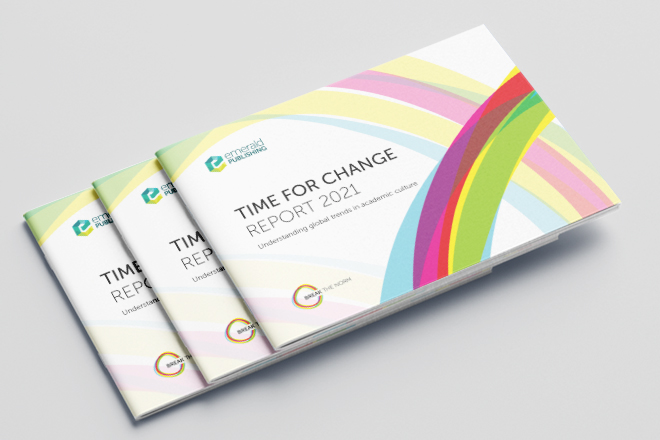
We have published our third academic culture survey, which gathered views on change during July and August 2021 from more than 2,000 academics, librarians and students within Emerald’s literati community.
Topics covered attitudes to research evaluation, cultural challenges within academia, openness and transparency, and the evolving role of the publisher. As well as a new theme which was introduced this year on the widening inequalities within academia.
Across the globe we have seen that in response to COVID-19, academics have made radical changes to the way they work, teach, collaborate and research. However, at a time when academia should be thinking about making further changes to help tackle the biggest societal issues in decades, the report highlights that their appetite for change remains static and, in some areas, may have declined.
The report found that globally many academics appear to have ‘change fatigue’ and want to maintain the status quo, however, others are keen to transform the system. Those wanting change are concerned over the future of academia, they see widening inequalities and divisions between groups. They are worried about the way citation-based systems disadvantage academics living in low- and middle-income countries (LMIC), the effect of remote working on research (particularly among women academics), and the impact of the digital divide on academics in the global south.
Furthermore, they see growing divisions among groups, including the inequalities between men and women, early career researchers and established academics, and the global north and the global south.
In Asia, the report highlights:
- Due to COVID-19 over half (53%) of respondents believe their research will take a hit because there are now less opportunities to travel and collaborate. Researchers in Asia and ME&NA worry most about this issue (64%).
- Globally, most agree (64%) that publishers should do more to support research in underfunded areas. Agreement is high in Asia with 70% agreeing
- The personal impact of the job on academics depends on where they live in the world. Academics in the West seem to be more negatively affected than those in low to middle income regions. Asia scored very low in all areas and were under average in areas such as the impact on mental and physical health sleep patterns and family / personal relationships
Wan Yat Seng, Regional Manager, East Asia at Emerald Publishing, commented on what the report highlights in Asia:
Balance is a very important element to everything we do, especially in such an ever-changing environment where we start to see demand and the need for change from different stakeholders. Balancing the immediate needs against the foreseeable future demand is crucial at this crossroad juncture for us
Read the full report and look at how this compares to other regions.