

Decentring whiteness: A conversation with Natalie Wall on white generosity podcast
Share this content


The pervasive narrative of white generosity has deep historical roots, tracing back to the African slave trade and continuing through to contemporary efforts to undermine progressive social movements. This concept often manifests as a form of benevolence that masks underlying power dynamics and perpetuates racial hierarchies. By examining these themes, we can better understand how historical and modern narratives shape our perceptions of race and identity.
In this episode of the Emerald Publishing Podcast Series, host Daniel Ridge engages in a profound conversation with Natalie Wall, an interdisciplinary researcher whose latest book, Black Expression and White Generosity: A Theoretical Framework of Race, delves into the complex themes of race, history, and narrative, offering a critical examination of the concept of white generosity and its implications.
Throughout the episode, Natalie and Daniel explore the responsibilities of white interviewers in discussions about race, the reactions to the queen’s death among Black communities, and the portrayal of white generosity in popular media, such as the Netflix show The Crown. Natalie provides insightful examples and personal anecdotes to illustrate how white generosity manifests in everyday life and its role in perpetuating white supremacy. She also discusses the erasure of Black histories and the reimagining of the British Empire as benevolent, highlighting the impact on modern national identities in countries like Canada, the UK, and the U.S.
Speaker profile
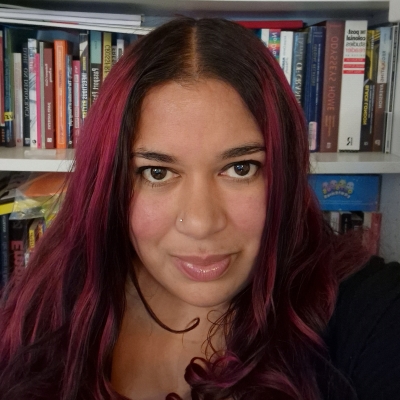
Natalie Wall, PhD, currently serves as the Research Impact Lead (Social Sciences) at King’s College London, where she supports the faculties of Social Science & Public Policy, King’s Business School, and the Dickson Poon School of Law. Natalie also provides external impact training through the Association of Research Managers and Administrators (ARMA). An interdisciplinary anti-racist researcher, Natalie holds a PhD in Caribbean Canadian women's performance and has published peer-reviewed articles on EDI, dub theatre, and mixed-race literature. She is a member of the Arts & Humanities Research Council Peer Review College and the Board of Trustees for Lambeth Carers' Hub.
Podcast Host

Daniel Ridge, PhD, is a Books Commissioning Editor at Emerald Publishing and the DEI lead for the book's program. He works with authors across the social sciences and business fields with the goal of promoting underrepresented voices and scholarship. He is also the producer of the podcast series and enjoys speaking to authors and editors across the disciplinary spectrum.
In this episode:
- How does white generosity perpetuate racial hierarchies?
- What responsibilities do white interviewers have in race discussions?
- How do reactions to the queen’s death and The Crown illustrate white generosity?
- What role does storytelling play in reclaiming erased histories?
- How do social media and digital culture affect our memory of injustices?
Transcript
Decentring whiteness: A conversation with Natalie Wall on white generosity
Daniel Ridge (DR): Welcome to the Emerald Publishing Podcast Series. I'm your host. Daniel Ridge, a commissioning editor at Emerald Publishing. Today, I'm thrilled to be joined by Natalie Aall, an interdisciplinary researcher whose work focuses on black women's performance artivism and anti-racist practice in the Caribbean diaspora. Natalie serves on Equity, Diversity and Inclusion committees for numerous public bodies and leads on research impact at King's College London. In this episode, we delve into her latest book, Black Expression and White Generosity, A Theoretical Framework of Race. This book tackles the pervasive narrative of white generosity, tracing its roots, from the African slave trade to contemporary efforts to undermine the quote, woke agenda. While her in her book, she incorporates her own personal experiences with race issues from an auto ethnographic point of view, she also offers a theoretical framework for anti-racist scholars, students and activists to interrogate this attitude of white generosity and its role in perpetuating white supremacy and marginalising nonwhite people. Join us as we discuss these critical themes and more with Natalie wall, you won't want to miss this episode.
So, you know, your book really unpacks a lot of complex issues around race and history and narrative and given the subject matter, I want to be totally transparent with our audience that I am white and you are black, and you explicitly say that your book is for black folx. How do you feel about engaging in conversations like this across racial lines? And really, what responsibilities do you think myself or just white interviewers, have in discussions about race?
Natalie Wall (NW): For sure. I think that's a fantastic question, and I think it gets at the heart of kind of one of the central pieces that I talk about in this book, which is audience. The book is about stories in a lot of ways, but not just kind of the teller, but who's listening and how they react to those stories. So I do start the book by saying, this is a book written for black folks, but that's not but also not to say that no one else could read it. I think in the same way that most books are not written with me as the audience, I think it is important to understand where those lines are, and it's important to understand that in the kind of more conversational. And I mean, this was kind of what I wanted for this book, is to be conversational, intimate, open, and those are, those are ways that I engage with black communities, not necessarily all white communities. I'll say also, and I think, and I do say this in the book, I identify as black, but I am mixed race, and I think that looks different across the different contexts of the book. So in Canada and in the UK and the US, that identity might be quite different. In in Canada, I'm just black. That's always been the case since I moved to the UK. Things are it's not quite the same. So I tend to tell people that I identify as black, but, but it also means that my background is very different, you know, you know, when my when my white mother, read my book, you know, and she's saying, Oh, God, I have a lot of feelings about this, and it's making me think about things in a particular way, and it doesn't feel good, you know? I accept that that's a possibility. I don't think it's meant to make anyone feel. I don't know it's meant to make you feel, but it's not meant to make you feel any particular way. I think, you know, saying, Hey, I'm white. I'm reading this book. These are my feelings about it. Are all healthy ways of engaging in the same way that if I read a book that's clearly not meant for me, or, you know, frankly, the news, all the news.
DR: Yeah, well, you do point that out. You point that out right away that if you know, most books just don't even mention the race of the narrator, and then you just assume they're white.
NW: Yeah, there's this amazing quote from Zora Neale Hurston about the sharp white background, talking about how she feels most raced when she's kind of positioned on that normative whiteness, you know, in front of that normative whiteness, so that she stands out, and everything else disappears. And that's it. That's, that's the idea is like, when we don't identify an audience, we assume that they're white. And this book can be, it can be interesting for any number of people. And certainly, I've had white people who tell me that they think this book is awesome and that, I mean, I. Supposed to no one come up to me to tell me it's crap, but nobody's, you know, they've said, Oh, it speaks to them in a particular way. You know, mixed people have told me it speaks to them a particular way. Black people told me it speaks to them a particular way. And I think those are all okay. I think let's have feelings. Let's talk about those feelings, but let's not prioritisse anybody's feelings over another. Does that make sense? Yeah, yeah, definitely. So, I think, yeah, you asked kind of what responsibilities white interviewers have. I think, I think kind of, you know, thinking about, what's my personal, subjective, kind of positioning, you know, where am I coming from with this? How am I engaging with it? You know, how am I engaging with you? I acknowledge that, you know, I'm not the intended audience, but you know, this interests me in these particular ways. And I think I always wanted this book, like I said, it focuses on blackness and black studies, but it's not to say it's not interesting for other groups of people. And I say, you know, certainly with race, but I gotta say, like today, you know, watching the US, you know, thinking about women and women's positioning and having rights taken away, you know, and this idea of, you know, things that were given could be taken away, I would say that's relevant for white women now, in a way that I wouldn't have conceptualised when I wrote the book.
DR: It's a complicated moment, and we're all trying to grapple with what's going on. But I want to get to really the heart of your book, which is the concept of white generosity. And you begin and end the book with discussions about the Queen's death, and you also talk about the scene that's in the Netflix show the crown. And I think the queen can kind of serve as maybe an entry point for our discussion about what white generosity is. And I'm hoping you can kind of introduce us to this idea of white generosity and perhaps give us some examples for our listeners.
NW: Sure, I'll start with thinking about white generosity. So white generosity is kind of a framework that I developed to think about a lot of the narratives that I was seeing. I think it was kind of in politics and kind of pop culture and kind of just contemporary kind of works. But I think the more I thought about it, the more historical it became, you know, this kind of omnipresent thing where, and I think to distinguish, because we were just talking about kind of white people as audience or not audience, I think whiteness is also what this book is talking about. It's not really talking about people. It's talking about whiteness as in, you know, the kind of systems of oppression that you know create environments where white people you know have more privilege and are more able to succeed in certain scenarios, and that non white people have less privilege. So White generosity is kind of that, that idea of giving, you know, that something can be given, it kind of relies on the idea of the the white savior myth, you know, you know Kipling's kind of white man's burden. And this idea that whiteness itself is benevolent. And then so I think it was, I think it was when, you know, there was a lot of talk in the media about kind of reparations, or, you know, kind of, I think it was on the back of the National Trust, kind of doing more decolonial work and kind of examining historical roots of colonialism in its sites. And, you know, people said, you know, there was a lot of kind of people on social media, but also in the press, who kind of said, we, you know, the British people, you know, liberated, the slaves we emancipated. And, you know, I suppose, I guess for me, it really kind of drew a line between how you understand that story, you know, you can, you can't emancipate people who were enslaved to start with. So, you know, it kind of like cuts the story in half, you know. So the idea is, yeah, yeah, you know, we have given you this, we've given you this. But the idea is, you, you cannot give somebody freedom, you know, you can take it away, but you cannot give it because you never should have owned it to start with. So, yeah, I think it was, you know, I think also there was lots of stuff in the UK media at the time about kind of different groups who had just been given too much and weren't grateful enough.
DR: I think that gratefulness is such a key part of your argument, you know,
NW: Yeah, yeah. And I think it was during, it was after Kamala Harris was announced to be running for president. And you. JD Vance kind of announced that, and I was, you know, this is like I said that, you know, it's all these things happening after the book, he says that she was not grateful enough to run for president. She'd never expressed enough gratitude to the United States of America to manage this. And it's such a bonkers thing to say. You would never say that about a White candidate. Never. So, yeah, so the queen, I think, I mean, so, I guess the book is about the inherent violence of this. You know, when you make these casual statements, or when there are these narratives about kind of white benevolence, and there are, there are these stories that continue, you know that we're all here by kind of the whims, you know, these, you know, when people are talking about getting rid of, you know, immigrants, when they're talking about Exodus, you know, for refugees, when they're talking about all these ways in which people are unwelcome in the country, and, you know, in various countries, you know, this is suggesting that we've given enough, and now it's time for you people to go, which is a very real narrative. It has real implications for people who don't have anywhere else to live, you know. And we're getting into, again, like I said, we're getting into the point where we're breaking up families. We're breaking up, you know, people are losing their jobs, their homes, etc. So these are, these are real implications. So I think the inherent violence of white generosity is something I really wanted to hammer home at the beginning because, because it's insidious. And, you know, there are lots of less inherently violent versions of it, but they're all part of a spectrum that that harms people. And I think the Queen was a really good example of that, who, you know, she was, you know, she was an old woman who kind of acted as a mother to the nation. And I think, yeah, and across the three, you know, across Canada, the US and the UK, you know, there's this kind of respect inherent. And I think when she passed, it allowed people to step back from that narrative and think, Oh, actually, I don't know how I feel about this. So I think, you know, I missed, I missed Black Twitter. You know, if Twitter gave us anything positive, I missed Black Twitter because it was so interesting to see these discussions being had. And then Irish Twitter was coming along, and then Indian Twitter and Indian Twitter, yeah, it was amazing all these So, all these groups who had felt, you know, that they couldn't speak under this kind of like narrative of the delightful old woman who shows up in waves at events, you know, all of a sudden, kind of remembered this, these quite violent acts that were not that far in the past, that are all part of her reign. And I don't think anybody really wants to talk about that. Nobody wants to think about that in any in any real way, I'm thinking in the in the British press, but, but it brought people together to think about, well, actually, this is quite difficult. And like you said, I come back to it at the end with the amazing play serving Elizabeth by Marcia Johnson, where she's looking and again, it's like this idea of kind of generosity she's looking at the scene from Netflix, and she she reproduces it in the play. And it's kind of, you know, this, this black African just kneeling and kissing the feet of Elizabeth after her father passes. And it's, it's an absurd moment, if you again, you know coming at it from different perspectives, different audiences, and this is how you know the audience for the crown is not a black audience, because this is, this is a bizarre moment, and I've got to say full confession, did not watch the crown before I read the play, but I didn't. I was what I thought, for sure she was exaggerating, but she wasn't. No, it was, it was maybe even worse. It might have been worse. The British, the British Empire, is not even in its kind of most recent monarch that passed innocent, I think, is really the point of it. All you know that there's complicity there, and that that complicity is overshadowed by an idea of benevolence.
DR: Yeah, well, so I think it's easy for us to talk about things like the queen or slavery. But then there's also, every day, things that you experience in your life, and you know, you enter your story, or you tell your story from a very personal point of view, and you begin with a very personal story, and that's something that's just so banal that are, you know, I hate to use the word banal, but it's just, it's an everyday occurrence that you didn't you were, you have this incident with a gentleman in a bar, and then you, you didn't even tell your friends about it. Can you tell us a little bit about that? And how that reflects white generosity.
NW: Yeah, that one. So I think, yeah, that's in the preface, isn't it? So it's not even like part of the proper book, I think, but it's, I think, what I really wanted to show there was how innocent, how somebody construct to their own acts as innocent, and they can feel violent towards somebody else. So the story is, this is like back when I was in uni in Halifax, Nova Scotia, and I was, I was friends, and we were at this bar, I went to go get drinks, and as I mentioned, identify as black, but I'm mixed race. And often, I won't say it doesn't happen here, but in Canada, I would. And I mean, this is just one example of kind of a million, where people would demand to know my race and my background, perfect strangers for no better reason than curiosity. But to them, it was an act of generosity. They were giving me a chance to identify myself. I suppose it was, it was a very, I'm not sure, but I know it was meant as a kindness, but it never felt, it always just felt intrusive. So he says, Oh yes, you're from India. And I'm like, you know, no, I'm not. And you know, this is, this is often the conversation. And again, in, like I said, in different countries, this looks different. Some the US, often I get Hispanic, but in Canada, I would get Indian. And I'm not, you know, it's not. There's absolutely nothing wrong with being Indian. I'm just, I'm just not. And so I think, you know, I'm trying to just calm him down, get my drinks and go. And he just continuously gets more riled up and really angry with me as the conversation moves on, and then he starts to tell me it's okay, it's okay to be Indian, as if I need his reassurance in order to express my race. And it's again, just this idea of him offering me something, when really all he's offering me is violence. I'm not sure if I'm going to be able to get back to my table safely and I don't bring it up. I don't tell anyone I'm the only non white person there, because they won't understand, and they will minimise it. And I'm not interested in having my experiences minimised, even again, in the spirit of generosity, to make me feel better, you know, because it wouldn't make me feel better, it would just make me feel less seen. But yeah, so I think this, this book, I use stories and again, like, like, now, I think you know, these everyday stories. So I think, you know, it's a work of auto ethnography in its methods, and the storytelling is part of that, you know, just thinking, you know, what are the So, one, what are the stories we tell? How do the stories affect us? How do these narratives work as stories, these kind of, you know, structural narratives that the nations use to define themselves, but then like the individual stories to like, how do we feel? I think it's, it's easier to connect with someone when you have pieces of them, and that's what these stories are. They're just little pieces of me. And I don't, I mean, it was, it was a bit awkward, honestly, you know, kind of like putting them into the world, but personal, yeah, yeah, it is. But I think it's universal. Yeah, they're universal, and they just help. So I think, you know, the big issues are there, like, there's these big issues we're talking about people's lives, you know, at stake. But then there's, like I said, the spectrum towards the little and the everyday as well, and the ways that, you know, black people come up against kind of these, these moments of generosity. And they can be, they're just so constructed on one end and received at a different way on the other end. You know, what somebody believes to be generous can be, can be, you know, quite difficult for the person on the receiving end. And it's just about thinking, thinking about those conversations, and thinking about the way that that we move through the world, you know, and how we see these moments
DR: Well, to move on to a little bit of a different subject, you you talk about the concept of the moment as text in your book, and which suggests that history is often compartmentalised and forgotten, that it's just a moment you mentioned. You mentioned moments in the history of slavery and moments in the civil rights movement, for example. So what do you mean by moment as text, and when does a moment become a movement?
NW: Oh, nice, yeah. So I'm, I'm a you know, English literature grad at heart, right? So those books filled with, kind of taking discrete moments and then reading them as text. So I suppose in the story examples, um. So, you know, it's kind of thinking about all the pieces of that that came together to and how we can unpick them. But also kind of stories in, you know, in the news stories in, you know, when we talked about the crown on Netflix, thinking about all of these, these pieces and then moments, I think, I think we need, we need to break things down into moments in order to analyse them, you know, so, you know, I think I talked about, kind of in the book, I talked about Keir Starmer calling Black Lives Matter a moment. And you know how different that is to a movement, because a moment is transitory, transitory. It's only there for a bit and then it's over. And I think that we need to take things in moments in order to to think about them. And a lot of this book is about slowing down. So I think I was a bit of a headache to when I was kind of just when I was telling people how I wanted the text to look when we were printing it. But a lot of it is about slowing down, and some of the text slows down as well to reflect that idea of taking a moment, stopping for a moment, and thinking about how we analyse these moments, but also in terms of how these moments add up. And that's what the moment as text is about. Is not just kind of leaving it at the discrete moment, but putting those moments together. What do we learn? You know, and I gotta say, like it can be really difficult. You could see history repeat over and over and over again. You can see the same events happening decade after decade after decade. And you just think to yourself, actually, if we move those all together, they would be that would be revelatory. You know, we can see that this has happened before. We can see this is the likelihood we you know, black people have been facing prejudice and oppression for centuries. This is not new, and yet, I think, you know, the narrative is, we'll get over it. That's history. That's not today. When it's all today, it's all today. There's nothing that separates us from history, because history is lived today as well. So I think the momentum, you know, of these moments is when it becomes a movement, is my argument, you know. So all from the same root word. And so we think about how these moments, you know, charge. And I think, you know, if you think about, you know, the Haitian Revolution, if you think about the French Revolution, if you think about, you know, Mark's talking about the proletariat rising up, you know, all of these moments build towards something, and we have to, we have to appreciate the beauty of that, but we also have to take them apart so that we can look at them and then put them back together so they can become something bigger, uh, than they are separate. Yeah.
DR: Well, I want to go back to a point that we discussed earlier, and that's your use of your personal experience. So you know, you bring in your personal experience to illustrate these broader historical and social issues. So I want to ask you, you know, how has writing this, this book, affected your own sense of identity and placed within these larger narratives?
NW: So I suppose there's lots of stories that didn't make it into the book, and I think those stories are probably the ones that helped me rethink my own positioning more so than the ones that made it into the book, if that makes sense, because they didn't fit right, or they just kind of were maybe too personal, or they were maybe a tangent. You know, I can go off on a tangent sometimes, but it was really interesting to see the things that didn't make it in, and to think about how I felt about that. So it might be, you know, like, and I think, and they might have been tied up in in kind of thinking about emotional moments in my life and trying to exercise them through writing. But they didn't fit the book because they weren't really intended for that audience. They were almost intended for me. Does that make sense? Yeah, and I think that was that was really, really cathartic. I'm not generally a fan of catharsis, because I don't think it's helpful, but there was something about kind of writing, and I just believe in the power of writing. I love writing. I love storytelling. I love reading.
DR: As you mentioned in the in the text, it slows you down. Yeah, you know, it lets you, you know, I was kind of thinking too about the different spellings of words you use. I mean, even the word folks with the X and just different spellings of words and how that makes you stop. You know, it makes you stop. And think about it.
NW: Absolutely. Yeah, no, I think so folks, it's just, it's just meant to be an include, inclusive term black folks, an inclusive term for a black audience, you know. So even while kind of saying, Well, this is the audience, but within that, you know, you want to make sure that you're not, you're not, you're not gatekeeping, you know, within that so, you know, especially today, where we've got so many kind of opinions, I think. But yeah, so no, it's meant to slow you down like, you know, again, kind of identifying an audience and saying, you know, is that might not be you, but it's not to say you can't read this book and that you can't take away something from this book. It's just not written for you. These are ways to slow you down. I think, you know, I think you know, there's even bits from like, you know, breathe in, out, in, out, and it's just yeah, there's Yeah, yeah. I think, do you know it's a gift, right, to be able to slow down. Haha, sorry, generosity. But it is, it is. It's, um, how's this? It's uh, it is good. It is good to be able to slow down. You know, life is ongoing. You know, we all come at things. We all have our own problems. We all I don't know what your story is, Daniel, I have no idea what you've got going on outside of this podcast, and, you know, and you don't really know what I mean, you know a little bit, actually, if you've read the book, but you know that we all live in our own little worlds, and to just slow down for a second and like, pause together, is is a beautiful thing. And I think I've seen this in anti racist circles and kind of Black Studies groups, and you know, just just to pause and be in the moment is something that's so difficult.
DR: Yeah. Well, what surprised me about that, and kind of what I wanted to end on, is that, you know, you're discussing something that is so serious and so heavy and so real and affects people's material lives. But you come from a place of joy, honestly. Like, I don't know if joy is the right word, but you end. Not not only do you end, but throughout the book, there's, there is a sense of optimism, and so, you know, I wonder if maybe we could, we could end on that note as well, if you could talk about the optimism you feel, and where do you get that, and where do you see it taking us? Yeah,
NW: I'm sure I'm really happy to hear you say that. I think sometimes I worry that the irony and the text takes over and and it doesn't come through as kind of optimistic. I think there's no point in discussing what's wrong. There's no point in pointing out white generosity. There's no point in thinking about, you know, racism or oppression or whiteness, if we don't think there's a way forward, right? You know, otherwise, let's just give up. Don't write anything. Just watch Love is blind. Move on. But no, I think for me, it's the joy I get in seeing what art people can make in this world, kind of not in spite of these histories and these difficulties and these oppressions, but because of it. And so I think my, like I said, my backgrounds as English Lit person, but I'm a big performance theater person. And, yeah, so I think the last chapter is, like, all plays, isn't it? And there are people and amazing plays, and these women are doing amazing things and creating, and it excites me, it makes me happy, and it gives me a lot of joy and they, you know, it's just moving and hopeful, and it's not about tragedy. It's not about thinking constantly about kind of, you know, I think, you know, you've kind of got this, like trauma porn when we're talking about black history, sometimes, you know, where we just keep seeing the same types of movies and the same types of media. It's not about that. It's not about unhappiness for the sake of unhappiness or exposing terrible things for the sake of it's about talking about what this means to us as a community. I look at black women, just because that's the area that I tend, that I study, and what that means for black women, and where can we find joy? So one of the artists I look at is to be young, Anita Fiona, and that's always the question for to be is, where do we find that joy? And I think you know, in these communities as well, you know, how do we lift each other up? So. I don't remember if this is in the book or not, but I always find it super awkward because, you know, anti racist communities and kind of anti racist activists are, like, the nicest people, and always, like, really emotive and like, you know, just kind of, you know, I wish you love and joy and happiness, because it's hard work. So you have to, like, just have a really positive vibe. You have to have a positive state of mind. You have to believe in good things. And for me, it's like, so now I'm always trying. I'm like, I love you and I wish you good things in life. And it's really, it's really not my natural state of mind. I'm quite a sarcastic person, but I'm trying, you know. And I think it's that community building, it's, it's, you know, and again, it's not about people, it's about systems. It's not that all people are bad or all people are good. It's that people just need to talk to each other. And I think that, and you know, for me, I think art and storytelling is a great way to start those conversations, but I think for someone else, it might be completely different.
DR: Thank you for listening to today's episode. For more information about Natalie Wall and for transcript of today's episode, please see our podcast web page. I'd like to thank my guests today and the studio This is Distorted.

Fairer society
We are passionate about working with researchers globally to deliver a fairer, more inclusive society. This perhaps has never been more important than in today’s divided world.