

Can we build a future we can’t predict? podcast
Share this content


How do you plan for a future you can’t predict?
From climate shocks to rapid urbanisation, uncertainty is the new normal. Yet, the infrastructure decisions we make today will shape the world for decades to come.
In this episode of the Emerald Podcast Series, Rebecca Torr talks to Dr Anna Murgatroyd, Lecturer in Hydrology at Newcastle University and Editor-in-Chief of Water Management. Together, they explore how engineers and policymakers can embrace uncertainty, the role of interdisciplinary collaboration, and the innovations helping us prepare for a future we can’t fully forecast.
Speaker profile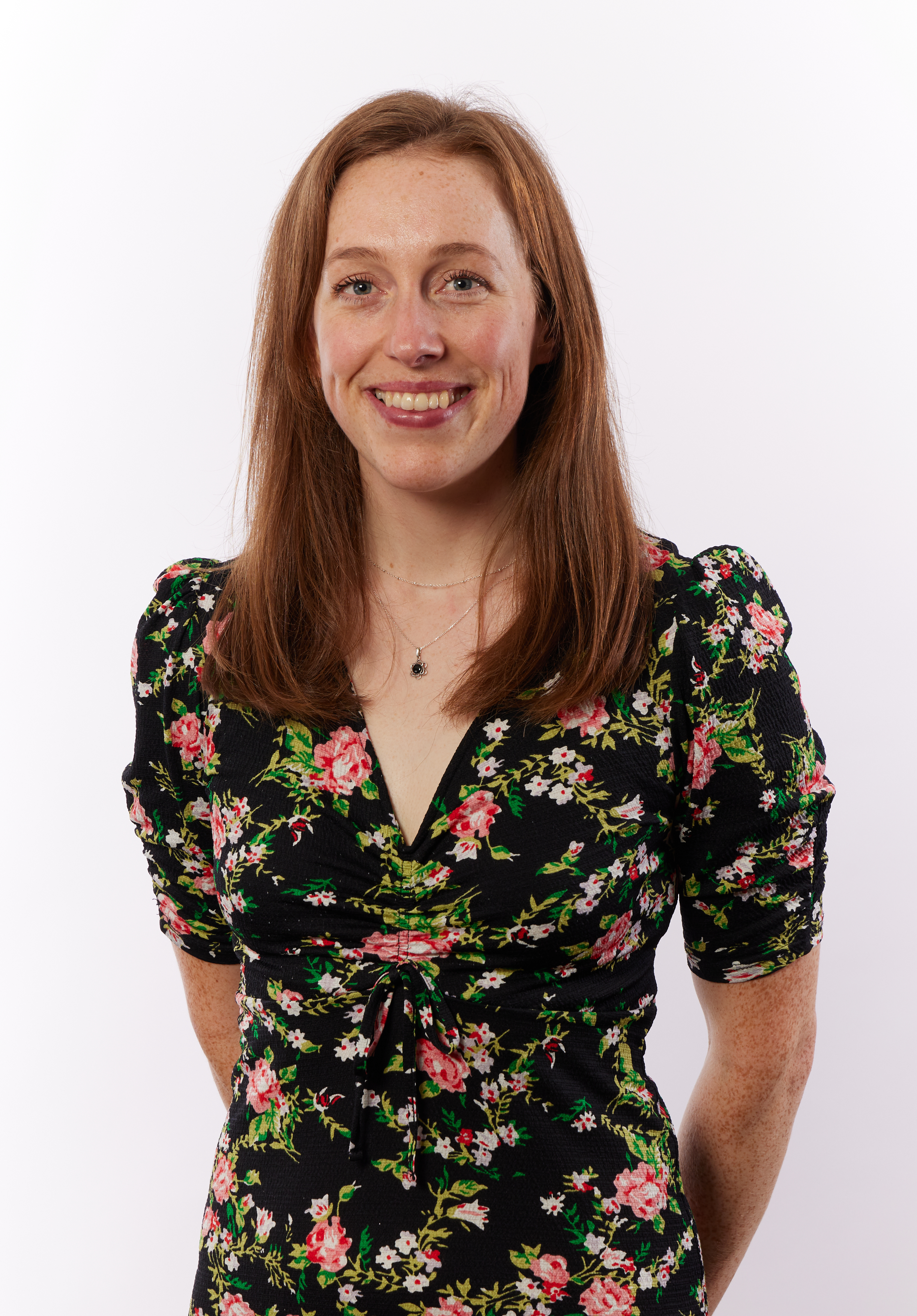
Dr Anna Murgatroyd is a Lecturer in Hydrology at Newcastle University. Her research focuses on water resources planning and management, global food systems, multi-objective optimisation and climate impacts analysis.
She has worked on past projects which aim to provide universal access to safe and reliable water, both now and in the future. She has expertise in modelling water systems, examining the vulnerability of water supply systems to climate change and changing demand, and assessing the potential of new water supply infrastructure, demand management schemes, operating policies and regulatory rules.
Find Dr Anna Murgatroyd on LinkedIn
Check out these blogs Anna wrote about planning under uncertainty:
- How do we make water infrastructure investments less risky in an uncertain future?
- Climate shocks, adaptation and water security: how research can support action
Podcast Host
Rebecca Torr is the Publishing Development Manager for Sustainable Structures and Infrastructures. She works with authors and organisations in engineering subjects such as civil engineering and the built environment to further the impact of research in the real world. Rebecca is also co-producer of the Emerald Podcast Series and enjoys interviewing experts who use research to make a difference in society.
In this episode:
- Can we truly build for a future we can’t predict?
- How do engineers account for uncertainty in water systems?
- What happens when extreme events fall outside traditional models?
- Which innovations are tackling unpredictability head-on?
- Why collaboration across disciplines is critical for resilience.
Transcript
Can we build a future we can’t predict?
Rebecca Torr (RT): Hi, I'm Rebecca Torr and welcome to the Emerald Podcast Series. Today, we're asking a critical question, can we build a future we can't predict. From climate shocks to rapid urbanisation, uncertainty is shaping the way we design and manage infrastructure, but when the future is unpredictable, how do we make decisions that stand the test of time? To help us explore this, I'm joined by Dr Anna Murgatroyd, Lecturer in Hydrology at Newcastle University and Editor-in-Chief of Water Management. Anna's research focuses on planning under uncertainty and creating water systems that are resilient in a fast-changing world. Join us as we uncover what it really takes to plan for the unpredictable.
Anna Murgatroyd (AM): I think it's a huge challenge to build for a future we can't predict, especially for water management, I think that we must shift away from traditional planning methods that rely on single, predictable futures, and instead, we need to embrace new approaches that prepare us for a range of possible futures, and even those we can't foresee. I think, historically, water infrastructure planning has used point and probabilistic predictions, and those essentially are best guess, best case scenarios for things like climate and population growth. And this has worked when challenges have been slow, and they've been predictable, but today we're facing deep uncertainty from things like rapid climate change, shifts in the pattern and the type of water demands that we get. There are also fast paced technological advancements that we need to take advantage of and we're also seeing evolving regulations as things like new policies are introduced, and there are shifts in power. We've seen in the past that sometimes planning doesn't work, and that's because we're facing these uncertainties. So, a good example of this is Australia's Millennium drought, which was a huge drought in Australia, which was affected because traditionally, water planning in Australia has relied on predictions that might have been wrong, and so during the Millennium drought, millions was invested in desalination plants, and those were great at the time, but when the drought ended, they became essentially, largely unnecessary. So, there was a huge cost invoked during this drought period that perhaps could have been avoided with better planning. And so, I think to combat this, especially now, water planners need to adopt some more robust and adaptive strategies. So, a robust strategy might be one that performs well across a wide range of possible futures, rather than being optimised just for one, whereas an adaptive strategy is one that's perhaps more flexible and can be adapted over time as new information becomes available.
RT: Obviously, there's so many challenges, as you've sort of mentioned there, and our response to it is just more complex and more complex as the time goes on. And you spoke about robust strategies, and I was just wondering, obviously, something needs to happen, you still need to predict. So, when it comes to that sort of practical side of things, how do water engineers and planners currently account for uncertainty, whether that's climate change or population shifts or technological disruption? What do you do?
AM: Absolutely, yeah, great question. And I think actually it's something that we've been talking about for quite a while, and we are seeing water planners now consider uncertainty in their planning. So, instead of historically relying on perhaps a single prediction of what the future might look like, water planners are now focusing on strategies that are resilient across a wide range of possibilities, possible futures. So, a plan, their goal might be to identify a robust policy. So, something that, a plan that will form well, or satisfactorily no matter what the future holds. So, it might be one that a plan that can handle both, a severe drought followed by a period of really heavy rainfall without failing. The idea is that you're not trying to find the best policy for one specific outcome, but one that is consistently good across many outcomes. An alternative way to approach robust planning is to instead look at a plan that can perform well across lots of scenarios, might be to identify those key failure points. So, as planners, we might look intentionally for those conditions under which a policy or a plan might fail, and then by understanding what's going to make a plan break, we can proactively design our plans with safeguards or trigger points for adaptation that helps us to avoid those catastrophic failures, if they happen in the future. And I appreciate that all of this is good in theory, but does it actually work in practice. And I think we do have some really good examples of this working well. One good example close to home is the London Thames Estuary 2100 plan, which is has been designed to address the risk of tidal flooding in London, which, as time goes on, is increasing due to rising sea levels. And the 2100 plan doesn't propose a single final solution, but instead it sets out a series of sort of pathways for the next 100 years that design a set of actions depending on what happens in the future. And so there are specific trigger points for when an action should be taken based on things like, sea level rise and new climate data that that emerges. And the great thing about this is that it avoids us making those really big investments prematurely and allows for flexibility as things like climate science and hydrological science evolves over time.
RT: That's so interesting because, I mean, that's literally what I wanted to ask you next, really, was that, you know, obviously traditional forecasting is very costly, isn't it? I mean, there's a lot of investment that goes into that, and then if that isn't where the scenario goes, then it's a lot of wasted time and effort and money, and so, that's really interesting just to find out that the ability to plan for different scenarios and sort of how that sort of pans out, because that's kind of what I wanted to know, like, how do you plan beyond the traditional forecasting? Because there are these flash floods, there's rapid onset droughts and, you know, you mentioned that example in the London Thames, you know, sort of the rises there, and the impact that it could have or it might not have, you, I mean, I don't know if there's even uncertainty around that. So, they have to invest in something. I would have thought. So, at what point do they do that then, if traditional forecasting has failed, really, so how do they sort of mitigate that? How do they go about it?
AM: So, there's a really interesting line of thought that's come out of the Netherlands in the last 10 years, which is this idea of adaptive policy pathways, which, instead of committing to a fixed, long-term plan like you've just outlined, it can be really hard to know when exactly to make the right decision. Instead, you create these flexible strategies that can be adjusted over time, based on real world observations. So the adaptive policy planning approach explicitly acknowledges that there is deep uncertainty in our understanding about the future and future conditions such as climate change, population shifts, economic developments, which can significantly impact whether or not the financial resource is available at a certain point in time to build new infrastructure, or even thinking about things like delaying or modifying infrastructure investment decisions. So, the whole concept is built around this mal adaptation avoidance you really want to make sure that you don't make irreversible decisions or actions that later prove unnecessary. And so just focusing on that adaptive policy planning pathway framework, it's based off on two key components. So, the first are essentially a sequence of possible actions over time. And the best way to think about this is if you imagine the London Underground map where you have a series of pathways, which they all connect, or all our routes connect to stations, and you get to a station and you can either stay on that line, or you can jump to another line, and you can transfer to another platform and head in a different direction. Policy adaptive pathways are kind of like those tube line maps, where you get to a station and you decide, okay, do I want to stay in the direction I'm going or based on my updated knowledge and I now know that actually there's a big delay on this line, and so I can get to the place that I want to go quicker or more efficiently by jumping to a different line. And so, these policy pathways are based, essentially based on building in flexibility and the ability to adapt through time rather than fully committing to a single course of action. But you're absolutely right that how do you know when you get to that station that you need to move to another pathway? It's really hard to know that. And so, this framework actually builds in we call them tipping points, or triggers, whereby if we reach a certain point in our environment, or we understand that the economy, perhaps is on a different trajectory, we know that our current plan doesn't work. And so, we identify a tipping point, which is essentially a monitoring system put in place with specific predetermined triggers or signposts that if we get to that point, we're then going to switch to another plan. So a good example in water infrastructure, which is my area of research, is we might have a water supply plan for a city, and we have a trigger that's defined by the total amount of water that's in the reservoirs that supply that city. And we know that if our reservoirs drop below, say, 20% capacity, so they're essentially they're really low, we know that we need to take an action, either activating a new policy, such as accelerating the construction of a water reuse plant, or we need to implement some strict water use restrictions. So that might be triggering a host pipe ban. We know that we need to do something otherwise. The current plan that we're on, we're leading to significant failure. And so it's building in those triggers and the things that you can actually monitor in real time that allow you to incorporate some flexibility into your plan.
RT: I mean, it just leads me on to think does the way that stakeholders, I mean different, sort of like you've got the engineers and the policy makers, has this shift in modelling or predictability, like predicting the future, has it changed the way that they will interact with each other? Be interesting just to find out how that's impacted, just the way that you're planning has impacted the relationship, I guess.
AM: Yeah, that's a great question, and it's still something that I think we don't tend to focus on a lot, especially as academics, we come up with these fantastic ideas, but don't actually talk to the people who make the decisions on the ground. And I think we talk a lot about collaboration and interdisciplinary collaboration, and that's crucial. You can't have an engineer working solely by themselves and not talking to legal experts and the policy makers that ensure that our regulations are flexible and align with infrastructure design, or the data scientists who, day to day monitor things like reservoir levels and rainfall that inform, like, day to day operations. So, it's important for everyone to talk, and for there to be that collaboration. I think, whilst this is recognised in theory, it is a challenge in practice, I think decision makers, especially in the public sector, for instance, can often suffer from decision paralysis when you're faced with so much uncertainty. How do you know, given we know that the climate is uncertain in the future, and our leaders might change office in five years’ time, two years’ time, or eight years’ time. We don't know what that future is going to look like, and so I think that does lead for a preference for the more traditional fixed solutions, because they can feel more certain. But the issue is that they might be less effective in the long run. And so, I think the key is that we need to shift the mindset. So rather than it being a scary thing that halts progress, I think uncertainty should be viewed more as a design challenge. So, we need to be transparent about it, it's there, it's not going to go away, but we can use the right tools and the collaboration to move past it. And whilst there's a long way to go, we do see positive examples of this. So, the Netherlands have successfully integrated a variety of disciplines into their water planning. They've engineered levees, whilst also incorporated social planning for living with water into their policies. And equally, over in the States, in California, where there are huge water supply issues. The water management teams over there have increasingly involved collaboration between urban planners and agricultural economists and environmental scientists to tackle long term drought challenges. So, we're not, whilst it's important to incorporate that technology and find sometimes a technocratic solution, there's a lot to be learned and embraced by bringing people from other disciplines together.
RT: Absolutely. I think that's how all these big challenges that our world is facing, I think that's often the conclusion that it is about these different disciplines coming together, those different perspectives, and how they will relate to each other, and the impact that each has on each other, and then working for a common goal. And just to understand the bigger picture. Because without those different sectors, it's really challenging. But then the challenge in itself is how you bring those people together and exchange that information. And, you know, for years, it was always talking, you know, you always talk about knowledge transfer and, you know, and it's beyond that now and I do wonder, I mean, if you've got anything to say about this. But, you know, with the rise of AI and the use of I'd say more information, but I mean, whether it's helpful, more information or not, obviously there's a lot more information out there. And I just wonder, I mean, will it feed into the design and the planning perspectives? I mean, will AI be used more for those sorts of activities?
AM: I guess, yeah, great question. It's something that we're facing, even at a syllabus level teaching our civil engineering students, is we're not going to escape the AI revolution. It's only getting more powerful and bigger. So how do we learn from it and incorporate it into our teaching and our practice? I don't think there's a good answer, yet I think we're still learning. We're almost learning on the job. I absolutely can see that things like large language models that are essentially part of AI will become much more useful in terms of digesting data, looking at data from multiple sources, and trying to learn from it. So one thing I'm really interested in is, if we've got, and we're very fortunate in the UK and that we have a huge hydro metric monitoring station, so we essentially have hundreds of river gaging networks that daily and sub daily, essentially store data and collect data, and there's so much that can be learned from that wealth of data, but it's really hard to process it, and it's hard to know how you look at that, both at a system level or at a specific location, and what we can actually learn from it. And so, incorporating some AI technologies into that data processing and data understanding, I think, has huge potential. How it will be done, I'm not sure, and that's something that I think our new scientists and students right now will hopefully get to grasp with over the coming decade.
RT: We'll definitely have to bring you back for that, and maybe some of your students next time, just to sort of see how that impacts and does it change the nature of collaboration. I mean, that's another completely different chapter of this discussion, but we could definitely look at that another time. I think it’s so interesting. I just wanted to now tap in, because you mentioned obviously, about the syllabus at the university. But I was thinking, obviously, you are the editor in chief of Water Management, a journal that we produce, one of the ICE journals. And I was wondering, from your editorial perspective, sort of, what emerging trends that you're seeing, or emerging research that you're seeing that are tackling unpredictability head on. And you know, how has it changed? I wonder, maybe because AI is so popular, if you're receiving so many more publications about AI, and potentially what sort of special issues you're thinking that you might even focus on?
AM: Yeah, so I think there are some really interesting topics that are emerging, both within water management and also more broadly, in climate science, in engineering science. So, AI is one of them, I think, as I've touched on harnessing big data and really understanding the patterns and the trends within it really interesting. Another thing that I think is particularly relevant for water management is there is a new way of thinking about things like climate uncertainty, whereas historically, we've often opted for, let's look at hundreds or 1000s of future scenarios, and let’s optimise for those. But something that's kind of the upper end of the spectrum, but I think is getting more traction right now is using this thing called a climate storyline, which is an approach which focuses on plausible, physically consistent narratives, rather than probabilistic outcomes. And so it's an approach which focuses on an event or a narrative of past, present, or plausible future climate events that we can use to explore almost ‘what if’ scenarios so things such as, how would we react now if we were exposed to historical drought which historically caused widespread water insecurity, a good example would be the 1976 drought, which caused water shortages across, up, and down England. What would happen if that sort of drought was experienced it now but are layered on top of that. We have our current level demands. So, water demand has gone up. How do we plan for that? And how do we ensure that our water system is resilient to that? And that's not saying that we then have to design our water system specifically for that event. But the approach, the climate storylines approach, allows us to stress test our systems and then communicate the risk in a given storyline to decision makers, to water planners, to water companies, and essentially chat to them in a more open, transparent way, and perhaps more accessible way, about plausible, physically consistent events that they can plan for and maybe plan beyond. So, I think it's a really interesting concept that could be used and be a very complementary approach to current water management and water infrastructure development planning. And something that I am excited to perhaps see come through in the literature and see more examples of I love this idea.
RT: I love this idea. I mean that for me is that you've already taken out all that sort of background learning that a decision maker would have to go through to get on board with even understanding the language of, you know, research language. Even from that basic, you know, sort of like understanding level. But that's already done because people know the history. People know what happened, they know the outcome. So, you haven't got go over that. And it sounds like it would be less to convince it's tried and tested. It's done. You know, we can see from the past that that happened, that is it, you know, there's no argument about that. So that when it comes to investment, or looking at different scenarios and what you would do, it's human nature to be sort of more on board with something you understand, and you feel that it could happen. I find that really interesting. And I think from an accessibility point of view, but an engagement point of view, from, you know, if you're talking about other perspectives and other sort of stakeholders, from the news angle, even how that's communicated, you know, if we can just relate it straight to that scenario that we all know and understand, then you've got the buy in, you've got the engagement, you've got the attention, and possibly you've got more funding for that as well, I don't absolutely know.
AM: You're absolutely right. And it's, it's that classic thing of people are more likely to respond if they can empathise with something.
RT: Yeah
AM: If you if someone can relate to Oh, yeah. I remember that a couple of summers ago, I wasn't allowed to use my hose pipe to wash my car. And so, you can relate to that. And they go, okay, yeah, I can understand why we perhaps need to invest in this new infrastructure to avoid those sorts of things happening in the future. Or I remember our local river was almost dry and we could see fish dying and there was no vegetation. And again, it has to be rooted in science, right? You can't just pluck these things out of thin air, but if you can bring the science together with the more social side of things, and actually try and build these narratives that people can understand and we can use to communicate things like risk and uncertainty. I think that's only a good thing.
RT: Yeah, fantastic. So hopefully we will, you know, be able to see some more of this sort of research coming through, and potentially more special issues or something like that in the future. And I just wondered, we've spoken a little bit about knowledge transfer and sort of, you know, sort of understanding about the issues, but I just wondered, when we think about what are the sort of the common misconceptions around risk and uncertainty in infrastructure? I just wondered, if you had any that you could sort of address or that you could explain a bit and sort of what you've seen. Maybe some of the barriers that you have because of the misconceptions.
AM: This barrier almost stems from how great the discipline is and that it's very dynamic and it's constantly moving. But I think a consequence of our science constantly advancing and growing and improving, is that one of the biggest misconceptions for things, especially like infrastructure, which are huge investments and have really long time planning horizons, is that we have to wait for the perfect data or a more clearer understanding of the future before we can act. And it's always Oh, we know that we're going to get a new climate model soon, so let's just wait, because that's going to be better. But actually, this can lead to costly delays, and I think missed opportunities, and so we need to maybe challenge the common misconceptions associated with that in the decision-making space. So, I think the reality is that the perfect data doesn't exist, and the perfect model doesn't exist. The future is uncertain, and it's going to stay uncertain. I don't think we're ever going to be able to perfectly predict what's going to happen. And the issue with that is that if we wait until that perfect data comes about, we risk the problem worsening. So, delaying a project that might deal with water scarcity, for instance, means that certainly in the near term, that problem might intensify, and the eventual solution might end up being far more expensive and maybe even insufficient for those problems that we were experiencing earlier on. And so, I just kind of want to get over, over that ridge of we must wait for better information, because it might not turn up. And there's that risk that next year we might have the biggest drought that we've ever seen in history, and it leads to people's taps turning off. Hopefully it doesn't happen and touch wood that doesn't happen, but if we delay our actions, then we do risk that happening. I think a second thing that perhaps we might challenge is that risk and uncertainty are the same thing. So, in traditional planning, risk is the known threat, which we can often quantify with a probability. So that might be, what is the risk of a one in 100-year flood event? And that's commonly built into things like flood adaptation and flood management, but uncertainty refers to those conditions that we can't predict with a high degree of confidence. So for example, the exact rate of sea level rise, and I think there's a risk, I'm falling into the wrong language here, but a mistake is to treat those uncertainties as quantifiable risks, and that can lead to those overly rigid plans that might be built for the wrong future. And so instead, we use the tools like climate storylines and adaptive pathways to manage and navigate both the risk and the uncertainty, and so incorporating some sort of flexibility into planning will lead us to be better prepared in the future.
RT: I mean, it's very enlightening to hear those two examples that you gave there, and why you chose those. Because, I think, yeah, you know, again, as humans, you know, if you're looking at policy, because you've got to sell that decision that you've made, you want to be as certain as possible. So, yeah, you want to almost have a guarantee that this happens, we'll do this. But that isn't life, and that's especially with climate. That's not what we're seeing, is it at all? I mean, we never know now, really, whether we're going to get from, you know, we can predict that. And like, you know, sort of, in the UK this year, it's been like a hot sort of this, what they're saying hot summers and wetter winters, but milder winters. So, I think we're already seeing that this year. So, you know, because there's some level of prediction, but you can never be 100% sure of what's going to happen, and so that's really interesting, that just to challenge those misconceptions and actually be a bit more open minded about when you need to take a decision.
AM: Yeah
RT: It's been such a fascinating conversation, and given us a lot to, yes, challenging our fundamental sort of understanding and beliefs around sort of unpredictability and planning. Because most things now, you know, when we talk about climate, it is uncertain. It's very difficult to predict, but still we have to, I just wanted to ask you a final question, which really was, you know, your personal belief on this really, about, sort of, if you were looking ahead and you wanted to sort of change one thing in the way that we approach infrastructure planning today, what would it be and why? I guess this is like the dream, sort of, you know, scenario, if you could paint one.
AM: Oh no, that's a great question. I think there are lots of things one could say about the planning process and how to improve it. I think one thing I found, especially recently taking on new teaching roles and lecturing roles, is that there's a huge value in fostering and empowering a culture of innovative thinking from the ground up. So traditional approaches rely on established methods and best practices, and we teach those they're core skills and knowledge, and they're essential, and I absolutely don't want to diminish them, but I think I actively want us to encourage our young professionals and our students to think outside the box. So, to think beyond those methods, because they're the ones that are going to have to live with the consequences of today's long-term infrastructure decisions. and I think this next generation will hopefully be the ones that come up with the solutions to the challenges that we're facing now. There's unprecedented challenges of climate change and rapid urbanisation, and I think it's safe to say that this new generation, our new generation, they're more digitally native, they have a more intuitive grasp of technologies, those things like AI and big data that I mentioned earlier. by giving them a voice and encouraging them to think outside the box, hopefully they can come up with some disruptive technologies for planning that will help make our systems, our water infrastructure systems, more efficient, adaptable, more robust to future challenges. And so, it's not an easy fix, but I think it's just really trying to encourage and create an environment where people feel like they can explore those more challenging and innovative technologies going beyond our traditional planning frameworks.
RT: That’s all for today’s episode of the Emerald Podcast Series. A big thank you to Dr Anna Murgatroyd, for sharing her expertise on building resilience in uncertain times. If you’d like to learn more, check out Water Management, where Anna curates research tackling these challenges head one. You’ll find the full transcript and more resources on our website. This episode was co-produced by me, Rebecca Torr, with the support of our studio partners at This Is Distorted. See you next time.

Sustainable Structures and Infrastructures
We recognise the transformative power of sustainable engineering, design and building practices in creating a world where our planet and its inhabitants can thrive. Our aim is to help research influence real world change by supporting the work of researchers, policymakers, and practitioners and bridging the gap that can exist between research and practice and different disciplines.