

Is AI helping us make better choices, or quietly making them for us? podcast
Share this content


Artificial intelligence is increasingly shaping how we consume – influencing what we buy, wear and eat, often in ways that aren’t immediately visible. From personalised recommendations to behavioural nudges, AI is quietly transforming everyday decision making and raising new questions around ethics, trust and responsibility.
In this episode of the Emerald Podcast Series, Tom Shiels speaks with three experts: Professor Sima Hamadeh, Dr Rosy Boardman and Dr Alexandros Karakostas. Together, they explore how AI is influencing consumer behaviour, where the line sits between empowerment and manipulation, and what a more responsible, transparent consumer landscape could look like in the future.
Speaker profiles
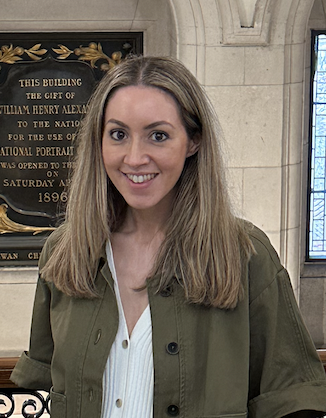


(Left to right, Dr Rosy Boardman, Sima Hamadeh, Dr Alexandros Karakostas)
Dr Rosy Boardman is a Reader in Fashion Business at The University of Manchester, UK. Her research examines how emerging technologies and digital platforms can be used or managed to advance social justice and support more sustainable practices in retail and marketing, alongside improving the consumer experience.
Much of her work focuses on the fashion sector, from consumer behaviour and retail innovation to digital sustainability solutions such as Digital Product Passports and their role in improving supply chain transparency and enabling a more circular economy. She also examines wider digital consumer cultures, including online communities and how to design age-inclusive shopping technologies.
Sima Hamadeh is a Professor of Public Health Nutrition-Science Communication & Journalism and Head of the Nutrition and Dietetic Sciences Department at Haigazian University- Lebanon. She is Editor-in-Chief of Global Smart Food Systems- A Gold Open Access Emerald Journal, a Governing Council of the Food and Nutrition Section at the American Public Health Association, and a member of the Global Food Regulatory Science Society.
Her transdisciplinary work focuses on public health nutrition, food systems, food and fashion consumerism, science communication, and media information literacy, with numerous publications, communications, and international recognitions. She collaborates with all sectors on research, policy, and community initiatives, and actively engaged in global mentorship and consultancy roles for SHAPE-USA, APHA, UNESCO, and TED among others.
Dr Alexandros Karakostas is a behavioural economist and Professor at ESSCA School of Management, France. His work examines how people decide when incentives, social influence, and technology shape their choices. He uses experiments to study how different environments affect what people notice, trust, and choose, from cooperation and risk-taking to authority and persuasion.
His recent work extends this perspective to AI, examining how large language models respond to incentives, social cues, and the contexts that shape their behaviour.
In this episode:
- How AI is already shaping everyday consumer decisions
- The line between nudging and genuinely empowering better choices
- Where AI is improving food systems—and where it still falls short
- The tension between fast fashion, sustainability and AI driven consumption
- How bias in AI systems can widen inequalities
- The ethical risks of AI quietly influencing behaviour
- The role of transparency, trust and consumer awareness
- What responsibility policymakers and companies hold—and where regulation struggles
- What a responsible AI powered consumer ecosystem could look like in the future.
Transcript
How AI Quietly Shapes Everyday Consumer Decisions
0:02
How AI Quietly Shapes Everyday Consumer Decisions
So when using ChatGPT to search for products, consumers are changing the way that they're searching.
They're more inclined to describe the outfit ideas than just type in a specific brand like they might do in Google in the past.
Instead of search engine optimisation, we're now seeing generative engine optimisation.
0:21
Geo.
0:23
Speaker 2
Hello, I'm Tom Shields and this is the Emerald Podcast series with research LED conversations about ideas shaping real world impact.
Today, we're exploring a question that's becoming harder to ignore.
How is AI quietly shaping what we buy, what we wear, and even what we eat?
0:40
I'm joined by Seema Hamada, a professor of public health, nutrition science communication and journalism, and head of the Nutrition and Dietetic Sciences department at Hagazian University, Lebanon, Doctor Rosie Boardman, a reader in fashion business at the University of Manchester, UK, and Doctor Alexandros Caracostas, a behavioural economist and professor at ESSCA School of Management in France.
1:06
Across this episode, we'll unpack where AI's influence is already happening, where it raises questions around trust and responsibility, and what a more responsible, transparent consumer landscape might look like in the years ahead.
1:21
So let's start by setting the scene a bit.
Seema, from your perspective, how is AI shaping everyday consumer decisions, especially in areas like food and fashion and where my people not even realise it's happening?
1:35
Speaker 3
First of all, thank you, Tom for having us today with with you and to discuss this very important topic.
Actually, it's not only about AI and consumerism, but also it affects our health, community, societies and in different ways.
And yes, first I will start with some generalities about how AI is really transforming the consumer behaviour by moving from, let's say, reactive broad segment marketing to more proactive hyper personalised experiences.
2:05
And today, AI is not anymore just an experimental tool.
It is going more into a core component of our daily consumer routines since it's quietly embedded in everything and the systems that we are using every day, let's say.
2:21
And that's how it is shaping and reshaping fastly the consumer behaviour in subtle but powerful, let's say, ways by influencing what people see, how they decide what they ultimately choose.
And this actually again happened in ways that feel natural and rather than engineer.
2:39
So at the basic level, we can say that AI is personalising the consumer experience.
Some examples like recommendation that we can see on some websites where we buy our product, land food or fashion products to content feeds on our social media platform, TikTok, Instagram etcetera.
2:59
And here individual are constantly exposed to option tailored to their preferences or health needs, thus increasing their satisfaction and engagement at the same time.
By that this will increase the convenience, right?
But also it will narrow their decision space because certain choices are more likely than others they they are exposed to these choices.
3:22
For instance, AI helps brands analyse consumer preferences to create let's say in the food system, more plant based products that are promoted as more sustainable items or protein product that are marketed as healthier options.
But at the same time, AI will accelerate the decision making of consumers by suggestion suggesting curated items, let's say productive search and one click purchasing.
3:49
Consumer will spend less time on one Click to evaluate other alternative or but everything is relying on the algorithmic cues.
So it is something that's helping, accelerating decision making, reinforcing habits and biases.
4:05
But because if someone like for instance, frequently buys a certain type of product, the system will keep reminding them of recommending similar items, creating a feedback loop rather than just encouraging different options or more sustainable options.
4:21
It has like positive and negativity and effect.
It also enhance the customer services.
So AI power chat, chat bots handle inquiries and provide 24/7 services which will help the buyers and the sellers at the same time.
4:36
In fashion, it's almost similar.
Let's say AI will curate what people discover and buy through also more personalised feeds on social media platforms like Instagram, TikTok, etcetera.
And trend cycles are now more accelerated by this algorithm that amplifies certain styles based on engagement rather than just traditional seasonal design process.
5:00
So online retailers are using these AI for fit accuracy let's say or size prediction or virtual try on using the augmented reality method and more targeted advertising.
So meaning consumer are more likely to see and buy these things that align with their preferences, with their needs, but not necessarily they are conscious about their choices.
5:25
And what's interesting today is that AI powered chat bots are acting also as virtual stylists, offering instant conversational styling advice too.
So they feel like no one is talking directly to them, personally to them.
5:40
So it's important to mention that both fashion and food industries, by using AI, they also encourage the circular economy growth or what we call ecommerce.
And this is a good thing.
It helps the sustainability.
5:56
It pushed our sustainability.
But again and again, all this impact or influence in food or fashion industry is often invisible.
So consumers, they think they are in control and they are making a dependent decision.
However, in reality, their choices are being shaped and reshaped by this is created environment.
6:17
What is shown prioritised more, made convenient, more convincing let's say.
And if we're going to summarise it like AI doesn't force or replace consumer choices, but it will frame it or maybe structure and making some decision easier, faster, maybe more likely than others.
6:35
But at the same time, it narrows the consumerism in ways that can reinforce habits, preferences, and even biases.
So indeed, from a food system, fashion industry or public health perspective, all this will raise many important questions that I believe we're going to tackle with with Alex and Rosie today in this podcast.
6:57
But at the same time, we need to go next in this AI impact on consumer behaviour with multidisciplinary key stakeholders and with several sectors to cover a lot the ground of all that what's happening on the ground from AI powered food and fashion system to rewriting commerce, e-commerce, e-commerce.
7:18
Because today this in 2026, consumers are turning to large language models, which is our advanced AI systems that to understand, generate and summarise human like text code and content instead of search engine that the consumer will used to use to find, compare and purchase products soon.
7:40
So yeah, it's it has a very positive impact and but at the same time it could be negative.
7:46
Speaker 2
Thanks Seema.
It's a certainly a change in worlds.
7:49
The Impact of AI and Generative Engine Optimisation on Fashion
Rosie, if I could bring you in here to focus in on that fashion angle.
Does what seem to say in match what you're seeing, and what's changing your point of view?
7:57
Speaker 1
Yeah.
Thanks, Tom.
Absolutely.
Yeah, totally agree with Seema.
I can see everything that she said.
You can definitely see in the fashion industry, beyond the advertisements that we're seeing, the personalised advertisements, we're seeing this shift in behaviour through large language models.
8:15
And again, as as Seam has touched upon, they're becoming this new search engine.
So large language models like ChatGPT, Cloud, Gemini, they're now becoming a part of the fashion shopping journey itself.
So younger consumers in particular are using these tools to request product suggestions.
8:33
In many cases, they're completing their purchases through the links to products that the large language models provide.
And this is going to get more advanced soon because in 2026, we're going to see direct check out.
It's actually being integrated into these large language models as well.
8:50
So the shopping experience will get even easier through apps like ChatGPT.
And this has got huge implications for the future of consumer behaviour.
It's not the same as simply searching for products on Google.
The difference here is the natural language element that's being used.
9:08
So instead of typing in keywords into Google like wedding guest dress, spring, people might say to chat, ChatGPT, I'm going to a wedding in a northern French castle in May.
What should I wear?
9:24
So ChatGPT understands the occasion, understands the weather, the vibe, even that consumers preferred brands.
So it's going to refine the options that it presents to that person, like a personal stylist.
So when using ChatGPT to search for products, consumers are changing the way that they're searching.
9:45
They're more inclined to describe the outfit ideas than just type in a specific brand like they might do in Google in the past.
So for example, they wouldn't type in show me some Levi's denim jackets.
They would say something like I need a lightweight jacket to wear over a green MIDI dress for a summer barbecue in the UK.
10:04
Can you suggest me some options?
So this is creating whole new priorities for brands.
Instead of search engine optimisation, we're now seeing generative engine optimisation Geo.
So Geo helps brands appear and the products appear in AI generated responses, so on apps like ChatGPT, large language models.
10:27
But as I said, it's not the same as SEO for brands to manage either.
You can't just pay for specific search terms.
ChatGPT doesn't sell ads or keywords.
So they've got to work on having those more detailed product descriptions to make sure that their brand and their products are more searchable.
10:45
So that's becoming a huge priority for for brands.
You know they might.
For instance, on their website, instead of just describing a dress as formal, they will now have descriptions that are large language model friendly, like ideal for summer garden parties or outdoor weddings where you want to wear something elegant but breathable.
11:05
Or instead of saying describing their trousers as elasticated waste And more useful large language model friendly description would be trousers that are designed for long days at the office or commuting with an elasticated waistband that adapts comfortably to movement.
11:23
So this is important because fashion has such an information overload problem.
There are way too many products out there, way too many platforms, and people have such little time these days.
So it's really understandable why they're turning to apps like ChatGPT to help shop for them and to find products that will meet their exact needs.
11:45
And I'm quite interested in my research on how much people will actually trust these AI to shop for them.
But I also wanted to mention another example of how AI is shaping the shop, fashion industry and consumer behaviour, and that's through the websites and apps themselves.
12:02
It's guiding people through their journey with brands have seen the success of large language models.
So they're trying to integrate these into their own apps, their own, their own websites.
So have things like chat box and AI stylists to help refine searches for people and suggest items based on their style preferences, their size, you know, informed from past return data and so on.
12:26
So just to provide more personalised shopping experiences.
And we're also seeing AI generated review summaries on websites as well, where platforms are able to now condense thousands of reviews into a single paragraph to summarise what other people have said about the product, which will very much influence if someone wants to buy that product or not.
12:48
And so I'm sure many people have seen this on Amazon, for example, whether there's an AI aggregated summary of all the reviews at the top of them.
And many people will will know that this is AI because it's disclosed on websites like Amazon.
But actually, interestingly, in my research, we've been looking at how much people would trust those AI summaries, some research that I'm doing with my colleague Dr Courtney Crimes at the University of Manchester.
13:15
And we found that some people surprisingly haven't actually realised that AI are even doing the summaries.
So yeah, it's, it's been, it's been quite an interesting project that.
So just to I guess, sum up, I think when we're talking about how AI is shaping the fashion industry, it's happening on multiple levels.
13:35
From invisible targeting that seem has talked about that shapes what people see when they're browsing online to the chat box and the review summaries when people are actually on retailers, websites or their apps.
And then the large language models that are increasingly acting as personal stylists and providing those personal personalised product recommendations for people.
13:55
Speaker 2
Thanks, Rosie.
That's absolutely fascinating really that I wonder how many of our listeners would actually have been on an app or a website and not realised that AI was informing their decisions.
So on that Alexandra, so I wonder if we could bring you in here and talk about that idea of influence.
14:11
Defining the Ethical Line Between AI Nudging and Consumer Manipulation
You know, when we talk about AI shape and decisions, where do you think the line sets between nudging people in a certain direction and genuinely helping them to make better choices or, or maybe the right choice or whatever that might be and, and who actually decides where that line is?
14:27
Speaker 4
Hi Dom and hi everyone, and thank you for the invitation.
I think the simplest way to draw the line between empowering people through AI to to to make better decisions and manipulating consumers in order to to to maximise profit is to ask for whom is the AI working for?
14:51
Is it like an assistant for the consumer or like a salesperson for the platform and AI?
Nothing can be genuinely empowering when it helps people make choices that feed their own goals.
A food delivery app that helps consumer compare prices, delivery times and the iterary options.
15:12
It reduces cognitive load.
It makes choices easier, right?
And this creates benefits code for the consumers and the restaurants.
And that's perfectly fine, right?
Similarly, if it offers a discount for a newly opened restaurant, it can be welfare enhancing if it marches a user to try a new option rather than use the one that they would habitually been inclined to search based on past experience.
15:38
Problems start arising when the same system is not trying to serve a user's preferences, but shape them at the interest of the platform, right?
For example by offering aggressive discounts on ice cream at 3:00 at night because it not from previous data that this is the way to get the user to giving in to a purchase they know they they they shouldn't been doing and the platform is doing this.
16:09
Or the AI is doing this in order to to to maximise profits rather than maximise the consumer welfare.
Even worse can have an example when an AI platform offers aggressive discounts when someone first signs up in order to to get them into the habit of using the app frequency, right?
16:35
Then we are starting moving away from optimising for consumer welfare and we're optimising for profit margins and repeat purchase, right?
So the AI is no longer helping the user, sure.
16:52
Nor is focusing on making the life of the user easier, right?
It is leading them to choices the user knows shouldn't be doing by shaping the social environment around the platforms objective front.
17:09
Maximise profit with some sort of, you know, disregard to to the user's welfare.
So the line for me is about alignment and verifiability.
Is the system transparent about what is optimising for, not just what data it uses?
17:30
Can I set my own priorities such as, you know, cheaper, healthier, more durable or more sustainable?
Do I have control over what I'm presented and how it is presented to me so that I can make the choices that are best for me?
Is it profit maximising by maximising consumer welfare or is it profit maximising by exploiting my weaknesses and manipulating?
17:55
Speaker 2
Interested stuff.
I was wondering, Sima, would you like to here and talk a little bit about that from, you know, food and public health perspective, what does that look like, You know, when people are starting to get targeted notifications and things as 3:00 AM for ice cream, what kind of what does that do for public health?
18:14
Speaker 3
Yeah, actually it's a problem for public health experts because eating ice cream midnight after midnight then need to to health issues.
But with promotion, maybe it's better people that as as Alex mentioned some people they are different factors will impact our consumerism and first of all is the price, the promotion etcetera.
18:35
So AI is expert in using these factors, these determinants that can influence people.
And at this time, they will forget about the impact on their health on the planet on many things.
So and and AI is using, as I mentioned before, marketing tools, sensory marketing tools that will make us more profoundly influenced by what's there and what we can see, etcetera.
19:05
So I totally agree with Alex.
This is the responsibility.
The line here is to define who is responsible about all that.
But let me, let me from my point of view, the line between AI nudging and empowering decisions comes down to ethics as well and responsibility.
19:24
And here I'm going to talk more about sharing responsibilities because there is no one stakeholder who is responsible about that.
And here both of them like ethics and responsibility will impact the intent, the transparency and accountability of ethical AI use and consumer and consumerism.
19:43
To make it more easier for us and to understand who will will be more responsible or at least distribution of roles and sharing responsibilities, we need to define more how to know more about what how AI will empower and how AI will will nudge or will manipulate our decisions.
20:02
We can say that AI empowers when it expands our choices or provides clear and unbiased information for people, or support people and making informed decision aligns with their own goals.
So for instance, in food system, let's say the delivery apps, again, I'm going to take the Uber Eats example that clearly labels nutritional value or highlight healthier options without hiding any alternative.
20:28
Support will inform our decision maker making or our choices or our behaviour in fashion for instance.
I'm going to also give another example like because I was talking before about virtual try ONS or size recommendation by some website or platforms that will sell our clothes can reduce the uncertainty as well and returns genuinely helping consumer choose better for instance.
20:57
And here we are talking about empowering.
AI will empower if when it becomes more nudging or even manipulation, as Alex said, when it's subtly prioritised outcomes that serve the business core and the platforms core over user well-being by quietly and unconsciously steering behaviour toward outcomes that primarily serve not only commercial, but sometimes the platforms that we are using their interest, their profit without the user awareness.
21:28
An example from the food system, for instance, they promote nowadays more and more the high protein product or maybe the ultra processed food items at the top of the menus, regardless of health impact or of sustainability impact in fashion.
21:46
At the same same example, algorithm on social media can also amplify the fast fashion trends based on engagement pushing over consumption without use of any also real how their preference are being shaped and reshaped.
So the real question here isn't it's not just where the line is, but who will define it and enforce it.
22:08
And that's why we need to talk about a shared responsibility between developers and companies who must design systems with ethical intent and transparency built in in for built in and these platforms for user benefit, not only for their benefit, not just engagement and optimise for profit.
22:30
At the same time, responsibility is also for policy maker and regulators who should set ethical Wardrose to protect consumers and the public health and the academic voices who should help define what better decision actually mean in terms of well-being, health and sustainability.
22:51
And us whenever we are teaching in our classes, we should mention and incorporate these concepts as well.
And again the consumer responsibility too.
They shouldn't ask their self more questions and criticise what they are seeing and what they are exposed to.
23:10
So ultimately, responsibility alone cannot do the work.
It should go in parallel with ethics and ethical AI in consumer behaviour is not just about what technology can do, but what it should do and for whom.
23:24
Speaker 2
Yeah, I think a lot of people and a lot of people listen probably agree that's it's quite a scary time and a certain time to come see AI and there's a lot of work to be done from what you're saying to ensure the people are kept safe.
23:39
How AI Impacts Food Systems and Sustainable Fashion Choices
But I'm wondering seeing if you could talk a little bit about, you know, where we're already seeing some pauses, but there's somewhere we might be seeing AI actually improved food systems, you know, help people make healthier choices, maybe reducing their food waste or, you know, better awareness for our nutrition And maybe touch a little bit on where that is still falling short.
23:57
Speaker 3
AI can help in making food system more efficient, more responsive, data-driven, but again and again, it's true impact will depend on aligning these advances that I mentioned before with health with equity and sustainability goal.
24:13
So in practical is yes, improving our food system, often invisible way, but an invisible way.
But the benefits are uneven till now and sometimes misaligned as I mentioned with the public health goals.
24:29
So this is something that we should more and more take into consideration work on because still till now they are optimising.
They are optimised for sales, for engagement, for for profit, as my colleague mentioned before, not for health or sustainability.
24:47
And and here we should mention again.
And there is also a digital and data gap be because these benefits are not equally accessible across all populations and AI models may not reflect diverse cultural diets, for instance, or local food realities that some app are suggesting for different group of our cultural food.
25:12
So while AI has really clear potential to improve our food system, its current impact, as I mentioned before, depends heavily on how it is designed and what is optimised for.
And again, without any stronger ethical framework frameworks and public health integration at risk to reinforce the very challenge that it could help to solve as well.
25:35
Speaker 2
Thank you, Sima.
And I think we'll pick up on that accessibility points a little bit later on.
But Rosie, if you come back to you just to talk about fashion for a minute again, you know, Seema mentioned this earlier about that tension between fast fashion and more sustainable choices.
Do you think that you know AI is reinforcing overconsumption, or could it realistically help shift consumer culture in a completely different direction?
25:58
Speaker 1
Yeah, very good question.
We're definitely seeing this really interesting tension emerge.
I've not got a clear answer.
On the one hand, AI is making shopping smoother, more personalised and potentially more sustainable.
But on the other hand, these same tools can push people towards faster, more repulsive consumption.
26:18
And both of these dynamics are happening simultaneously.
So, for example, as I've mentioned, one of the clearest places that we see AI at work is through these personalised recommendation engines.
And these systems are analysing people's browsing histories, past purchases, their size, their favourite colours, the time of day that they shop, and then they curate a feed of products that are or feel anyway perfectly tailored to that person.
26:46
So in some ways you can see that this would be genuinely really helpful, especially as I mentioned, people are really time poor now.
So just having AI cut through that noise, do all this hard work for you could be really helpful.
It could recommend the right size based on person's measurements.
27:04
There's tools like virtual try on, as Seema mentioned, that could help look at the the fit accuracy.
It could also be making recommendations based on that person's order history and what reasons they've returned previous items for.
So it might be really helpful that that could then reduce the amount of time someone's going to return an item.
27:26
And returns is a huge issue in the fashion industry that has a really detrimental environmental impact.
So in that way, you could argue that it's been helpful and could encourage more thoughtful purchases.
But on the flip side, if AI is constantly showing people items that they're likely to love when they're just browsing online, they might be watching videos on YouTube or scrolling social media and they're constantly being peppered with with items that it knows that they're likely to like.
27:59
Then this could encourage overconsumption.
So you know you're not just browsing anymore.
You're effectively being nudged into buying things that you like but you don't necessarily need.
And these nudges can be incredibly effective, as as we've discussed.
28:15
So I can definitely see this increase in impulse purchasing, and this could have serious implications for people's financial health.
If they're overspending, they might get into debt, for example.
Well, I say that it's, you know, an interesting question and a not a clear answer because AI also has real potential to support more sustainable behaviour.
28:36
And this isn't an area that I'm also exploring in my own research.
So one idea that we're looking at is how AI could suggest more sustainable alternatives for people when they're shopping.
So say at the moment that they're going to purchase something just before they purchase it.
28:55
Could AI be used to recommend an item that's the same or similar but is currently on a second hand platform?
It could potentially be used to suggest similar items from more ethical or sustainable brands.
It could highlight similar items that have been created with more sustainable materials, like lower impact materials, or encourage the consumer to buy from more sustainable brands that have slower shipping options or to use a slower shipping option on on the site that they were going to and encourage them and explain to them why that's really important.
29:30
It could use its power for good, not just not just for bad.
And then another interesting area that I'm also looking at is digital wardrobe app, so that where you download an app and you can digitally catalogue your whole wardrobe.
So you can put in or upload all the products that you own in your wardrobe at the moment.
29:48
And AI could be used to identify gaps in your wardrobe and recommend products that genuinely will go with your wardrobe.
If you're looking to shop in the 1st place that is.
It could recommend those products from second hand websites too, rather than just pushing people into the to fast fashion all the time and just purchasing products just for the sake of it.
30:10
So yeah, these nudges could be used for good.
So yeah, it's not a simple story.
It's not good or bad in my opinion.
I think AI used to improve fit recommendations, support more thoughtful purchasing, but it could clearly also intensify that fast fashion cycle driving post purchasing and keep people in that constant loop of consumption guests.
30:31
Like any technology, it's just how it's being used by the person which determines whether it's got a positive or a negative impact.
30:40
Speaker 4
I completely agree with both of you.
30:43
Speaker 2
Yeah, I think it's one of those ones where like I think we're already probably going down a road of over consumption before AI came along, some of us.
So it'll be interesting to see how that all develops and whether we do.
But I think that's a very interesting point, Rosie, But the idea around it being the individual who decides where they use it for good, good or bad as well, Alexandra.
31:03
Unpacking AI Biases, Widening Inequalities, and Ethical Concerns
So if we look at the risks here, Seema mentioned earlier about accessibility, there's obviously gaps between who has access to digital tools and who doesn't.
And I wonder if we could look at those biases that are built into AI systems and how do they start to widen now that AI is making these decisions for us?
31:24
And you know, if you use sick food for as an example and sustainable products, even reliable information, how how do these biases translate into real world arm?
31:33
Speaker 4
Falling from what Shiran Rosy was saying earlier, I completely agree that AI has great potential for for both good and and bad.
And one thing is important that is important to realise is that as AI, it's becoming more capable and becomes more able to provide recommendations and tailored recommendations.
32:00
It also becomes a lot more persuasive and becoming a lot more persuasive in ways that are a lot more subtle and how this persuasiveness is used.
It can have very important effects, especially if consumers are not fully aware whether the, the AI or the large language model they're interacting with is optimising for what it thinks is best for them or what's best for, for a platform or for a particular company.
32:40
Biases in AI can widen inequality because AI system do not just predict they, they allocate their visibility, they allocate attention and they, they determine and define the, the choice set and the choice architecture by which, you know, we get to choose what we actually presume.
33:02
And so when AI makes recommendations and we're not fully aware of what was the full set and we only see an A curated and narrated set.
33:13
Speaker 2
See that if we can come to you we we know that you know from what's being discussed here.
AI is and will continue to influence choices and and how that evolves is still up for debate.
But we know that some consumers from what we said understand that AI is a sister choices and others may not be so aware.
33:33
But if we assume a little bit, Sima, what's do you see as the biggest ethical risks involved here?
33:39
Speaker 3
Yes, actually again and again I will go back to the AI, the aspect of ethics and the use and misuse of AI and consumer behaviour ecosystem because the bias and AI isn't just a technical defect, it's actually an ethical issue with real world consequences because when systems are trained on incomplete or skewed data, they can systematically favour certain groups while disadvantaging others, right.
34:07
So if going to take like only a few examples from let's say food system, the recommendation engines on what the delivery platform or social media platforms may prioritise what sells most, for instance, or what's popular and higher income areas.
34:24
And by that, this can mean less visibility for healthier or cultural diverse option in another communities, reinforcing unequal access to nutritious food.
Similarly, we can see that nutrition apps like My Fitness Pal, for instance, may not fully reflect local diets, leading to gaps in guidance or misrepresentation of traditional food as well.
34:49
I'm going to give a brief example from fashion industry too, because from my previous experience and my previous ITS research, fashion and food are widely interlinked together from different aspect because they are affecting each other related to body image, body image dissatisfaction, following certain diet source to be socially accepted, et cetera.
35:20
So and here my example from the fashion industry that algorithms on social media like Instagram or TikTok, they often amplified dominant beauty standard, right and fast fashion trends.
And this can marginalised diverse body types, cultures, sustainable brands while pushing over consumption and unrealistic norms and what creates body image dissatisfaction issues here and thus more risk to develop eating disorders and health or social problems.
35:52
So the ethical concern is that these biases are often invisible but scalable.
This is alarming and they quietly shape and reshape millions of decisions daily and sometimes based on miss or this or malinformation.
So the harm is not just at individual level, it widens inequalities and has access, representation and trust as well.
36:15
So addressing this will require responsibility in design and education and governance, sharing governance.
And for that we need more and more to have inclusive data, transparent algorithm, as I mentioned before, increase digital literacy among consumers and accountability for health, sustainable social outcomes, not just for performance.
36:41
So the technology isn't the constraint, the incentive behind it are sometimes.
36:46
Speaker 2
Alexandros, if we can bring you in here just to follow what Seema was saying there.
36:50
Policymaker, Company, and Consumer Responsibilities in AI Regulation
We've taken into account what we discussed and when we're talking about responsibilities.
And what do you think from your point of view, should policymakers and companies do here?
Where is the regulation struggling to keep up and where the responsibility lie?
37:02
Speaker 4
Right.
So where responsibility lies, the responsibility primarily falls with policymakers, right?
But all these makers and companies have different share of responsibilities and they cannot pass the problem to each other.
37:23
Like companies have the responsibility because they design the system to decide what the AI optimises for and they should not be able to say the algorithm did it or it is the user's possibility to make sure that the choices they make they are genuinely the best for them.
37:44
If if we are promoting healthy bundles for to vulnerable consumers or a fashion platform uses personalisation intensify overconsumption.
This is not just a technical issue, it's a governing issue inside the Fed.
38:03
So companies should be expected to test their system for manipulation and set certain constraints to, to, to to minimise this.
But ultimately it is not the role of the companies to self regulate, but it is not the role of the Comm.
38:24
It is not the the the responsibility of the companies to, to, to be the ones that set the boundaries to, to, to, to what is appropriate and what is not.
It is policy makers who have the responsibility to set the floor.
38:41
So if, if you wish, these policy makers are the need to define what films cannot do, create the rights for consumers, require audits where systems can cause harm, and make sure regulators and the broader scientific community has access to data.
38:56
While at the same time promote competition between films so that we avoid monopolies because we know that monopolies tend to be detrimental to consumer welfare.
Now on the where regulation has struggled, the issue there is that AI driven consumer influence often sits between existing categories.
39:17
It is not a always a classic advertisement.
It's not always a clearly hard rule decision, like denying credit or employment to a specific minority or ethnic group.
It is a ranking.
It is a recommendation, default personalised price.
39:37
It's output suggestion.
It's small.
Intervention may look harmless in itself.
They can, but together they can strongly save behaviour.
In short, there's possibilities of companies to stop treating consumer attention and vulnerability as raw material for organisation and develop business models that put consumer welfare and social welfare as a priority that leads to profit maximisation.
40:07
But the responsibility is of policy makers to make sure that frames and companies developer responsible designs.
And this this is not a commercially optional choice.
40:22
Speaker 2
It's tough.
And and Rosie, if we come to you on that point, do you agree with what Alexander's are saying here and from a fashion point industry point of view, how do you think that these corporations and businesses will will see all this from a commercial point of view?
40:38
Speaker 1
Yeah, thank you.
I mean, I do agree with it certainly from an ethical standpoint, but it's, again, it's just not that clear cut in terms of how the fashion industry, the, the retailers will be viewing it themselves.
So for example, we talk about sustainability a lot.
40:55
And I think when we talk about sustainability, we're primarily talking about environmental sustainability most of the time, but there's also economic sustainability.
That's part of the, the definition.
It's environmental, social and economic sustainability.
41:10
And businesses need to be financially healthy to survive.
So it is important to bear this in mind as well.
You know, businesses create jobs, they support local economies, they keep the the wider fashion industry functioning.
41:25
So I do agree that policymakers absolutely have a role to play in in setting guardrails here.
But we do also need to be sympathetic to some of the commercial pressures that the companies themselves are operating under.
41:41
Because, you know, from a business perspective, the benefits of AI can be really significant.
It can save time, reduce costs, make their marketing much more effective, much more relevant and resonant with consumers.
It can help them tailor content and personalised recommendations, streamline their internal workflows.
42:01
So it can be super helpful, helpful in particular for managing administrative tasks and even aiding with some of the creative tasks like mood boarding and and helping with the ideation stage of the fashion range planning.
42:16
So for many companies, especially in a fast moving sector like fashion, these efficiencies are really helpful and and really essential for some of them to helping them stay competitive.
But integrating AI isn't straightforward.
That's also important to know for them.
42:34
So they are struggling with with that.
In some cases it requires a huge financial investment.
It requires skilled staff and often a complete rethink of their existing processes.
Larger retailers can absorb these costs a lot more easily.
42:50
But for smaller retailers and medium sized retailers, the barrier could be much higher.
Many of them don't have in house tech teams.
So again, you know, it's it's just being sympathetic that they've got a lot to grapple with in the 1st place.
43:07
And we also don't want there to be this widening divide between the big brands who can afford these big tech teams and legal teams and then these smaller brands, independent brands who who can't and are just struggling to survive in the 1st place.
43:23
So yeah, I guess this brings us back to the question of responsibility in that policy makers need to ensure that the AI systems are transparent, they're fair, they're accountable, especially when they're influencing consumer behaviour.
43:38
But they also need to protect these smaller brands.
You know, large language models really favour the larger brands as well, because you know when, when when somebody asks for product recommendations, if they're not putting really detailed prompts in and large language models will just search the top products, for example, that the top sellers in of the year.
44:00
So I think there's there's important regulations or policymakers can help with that and making sure that these smaller brands are not algorithmically sidelined and that consumers aren't just manipulated through these personalised nudges that they might not fully understand.
44:17
But companies also have responsibilities.
So they also need to make sure that they're adopting AI ethically, that they're investing in training, that they use these tools to support their customers rather than exploit them.
And they also need to be transparent about how AI is being used.
44:36
Speaker 2
Thanks, Rosie.
And so see if I could just ask you to talk a bit about that and dig a little deeper into where AI is quietly shape and what we consume and how much do consumers actually understand how much AI has influenced their choices?
And should transparency be treated as a right here or is it a shared responsibility?
44:53
Speaker 3
Actually, here is the problem because the most consumers don't fully understand how much AI creates what they see.
And there is like limited awareness does exist among most consumers worldwide who don't fully grasp how ranking algorithm or default auction or recommended for you labels are constructed whether on delivery platforms, for social media platforms, etcetera.
45:19
And this requires working more and more on the digital literacy among people to make informed decision and to build mutual trust.
So that's why transparency is should be actually right and the responsibility at the same time a right for the users, for consumers, so they know when and how they they were being influenced and how they were influenced.
45:43
And by that it's clear disclosure should be accessible there on the on whatever they are seeing or using and reading.
And what I mean by clear disclosure, it's why items are recommended, whether ads are paid or paid placement, how prices are personalised.
46:03
And this is really important to help them to have an informed choices or behaviour.
But at the same time, it's a transparency is a shared responsibility.
As I mentioned, the previously responsibility for companies who should design explainable systems that we call ethical by default system that should be clear these, these closure clear disclosure should be already there without asking them to do that.
46:31
And for regulator as well, there are responsible to set standards and for the consumer also to question these generated recommendation.
But again and again they need the minimum of digital literacy to understand what's happening around them.
46:47
So this shared responsibility is important to make that influence clear, accessible, accountable and not buried in fine print.
And here again, I would like to mention briefly that some frameworks are done at the the policy level, national level to help control the AI matters and how they are used by companies.
47:13
For instance, the European Union AI Act, which is pushing toward greater accountability, including requirements for transparency and high impact AI system and which could reshape the food and fashion retail practises.
47:30
We have something similar in different countries, but not in all countries.
Like in South Korea, Canada, China, Brazil and USA, they have some approach, but they don't have one single federal AI law.
So things are happening somehow, but it's important these frameworks are a step forward actually.
47:51
But enforcement and sector specific guidance, especially in food and fashion, still lag behind real world practises.
So without this transparency and accountability, of course, AI risk whitely steering consumption and ways that undermine the health, as we mentioned before, sustainability and equity, while keeping consumer largely unaware about what's happening around them.
48:17
And these proactive measures, such implementing ethical frameworks and ensuring human oversight are really necessary to mitigate these these risks.
But again, we need to understand why some regulation are happening or not happening and how much they can have an impact.
48:34
I mentioned before that there is a difference in the, the fast way technology evolves, but low are very are less fast to to be to adapt to this AI technology.
We're still behind.
And also when we because we are talking about food and fashion systems, they are cross borders and the regulation is mostly at the national level.
48:58
So also we should understand this gap and know how to work on it to have better regulation impact.
At the same time, it's, it's more we have to align the goals as we all mentioned before, the goals of individuals, health, sustainability, planetary health and the engagement and the profit and goals of our commercial pressure behind all this.
49:24
Speaker 2
Thank you.
See, man, you know, as rosy as it's where dear the technology is changing so fast that it's hard for supposed to keep up, I'm sure.
And there's so much we could talk about here.
There's loads to unpack, but unfortunately we are running at a time.
So for the last sort of section here, I would like to ask each of you just in a sort of quick fire away.
49:44
A Vision for a Responsible AI-Powered Consumer Ecosystem
It's a massive question.
So I do appreciate it's difficult to answers in a quick fire style.
But if we do Fast forward in our minds 5 or 10 years from now, what would genuinely responsible AI powered consumer ecosystem look like and what needs to change to get us there?
50:01
Alexandra, So they come to you first on that one.
50:03
Speaker 4
In my view, the the single most important change is to stop treating responsible AI as a question of corporate ethics and start treating it as a question of market zone.
Responsible behaviour does not arrive because fame become more vituous, It arrives when responsible behaviour is the only commercially viable option, right.
50:26
That means changing what films face, not what films believe.
Because as Rosie was saying earlier, you know, condemn.
Sustainability is a core criterion of of films and this is what they've been designed to, to, to, to to maximise.
50:45
Speaker 2
Thank you, Alexandra and Rosie, In terms of culture and industry, where do you see all this in five to 10 years?
50:52
Speaker 1
I think for me a genuinely responsible sort of AI powered consumer ecosystem would be 1, where the technology's not manipulating anyone and it's supporting that healthier culture of consumption.
Personalisation is only going to get more sophisticated, but we need to have consent based personal personalisation where people choose how much AI is adapting to them rather than just being tracked by default.
51:19
And I think we have that culture of responsibility in for organisations as well.
They need to embed ethical thinking into their culture and it not just be an add on at the end when it comes to a their use of AI.
So that's going to to involve training and designing systems that are much fairer and more transparent and how they use it.
51:43
But also I think that the of I speak for the fashion industry as as a whole rather than every industry, but I think that there are some industry wide norms that need to change.
Businesses do need to become a bit more responsible when it comes to disclosure in, in AI use.
52:02
And you know, there could be maybe some certification frameworks that come into place a bit like we've got an environmental sustainability, for example.
But yeah, businesses just being more responsible in their use and hopefully the policy makers supporting that.
52:17
So I think for me, responsible AI in terms of the industry is 1 where the technology is being used to support that healthier consumption.
We've got the creativity of it that it can enhance, but it's been used fairly and it's benefiting people as well as profits, and that's really what I stand for as a researcher as well.
52:41
Speaker 2
Thank you, Rosie and Seema.
Rosie was saying there about, you know, that there was these sorts of frameworks around sustainability responsibility from an ethics and consumer empowerment point of view.
Where do you see us in the next 5-10 years?
52:53
Speaker 3
I believe that as Alex and Rosie mentioned, I will add that in five to 10 years from now, a genuine responsibility, high-powered consumer ecosystem should and would balance ethics, empowerment and widespread digital literacy as mentioned before, with aligned incentives, governance, culture, regulatory enforcement and industry practises.
53:18
They are all these pillars, they are distinct, but they are also connected.
So both ethics and empowerment would first help the consumer to see and shape how AI will influence them.
A clear why this is recommended for you, labels or opt in personalisation, etcetera.
53:37
And also ethics and empowerment will enable companies and industries to prioritise health, sustainability, social impact over profit driven.
So yes, what need to change is to align these pillars, incentives with public and social good, to strengthen the enforcement, to build consumer literacy, as we mentioned before.
54:01
So both ethical design and real user control become the default, not the exception, where AI becomes more and more a decision support tool, not a hidden persuader.
And I think such a podcast will help a lot to start somewhere or to complement something that exists already.
54:21
But we need more and more from this kind of podcast or round tables where different stakeholders from different disciplines and sectors come together to to share their expertise and their the recommendation for a better, secure and safe use of AI in not only food and fashion systems, but in all what we are living nowadays.
54:52
Thank You and Episode Wrap-up
Well, and I think you're right, seem I think this is probably fairly early days in terms of all these discussions.
And I think it was kind of unfair to put you under the 5-10 years question there.
But yeah, I think it's been fascinating.
And I'm sure we'll be having this discussion again as things develop and there's lots of food for us out there.
55:09
Seema Rosie Alexandros, thank you so much for joining me on the AMBLE podcast today.
I really appreciate it.
55:14
Speaker 3
Thank you, Tom, and thank you Rosie and Alex, you very much.
55:18
Speaker 1
Thank you.
55:20
Speaker 2
That's all for today's episode.
You will find the full transcript, guest profiles and related research on our website.
This episode was produced with the support of our studio partners at This is Distorted.
Thanks to my guests and to you for being part of the conversation.
See you next time.